Early modern · science
Copernicus
A cathedral canon on the Baltic coast spent decades on a book that set the Earth moving, and, legend says, saw the printed pages on the day he died.
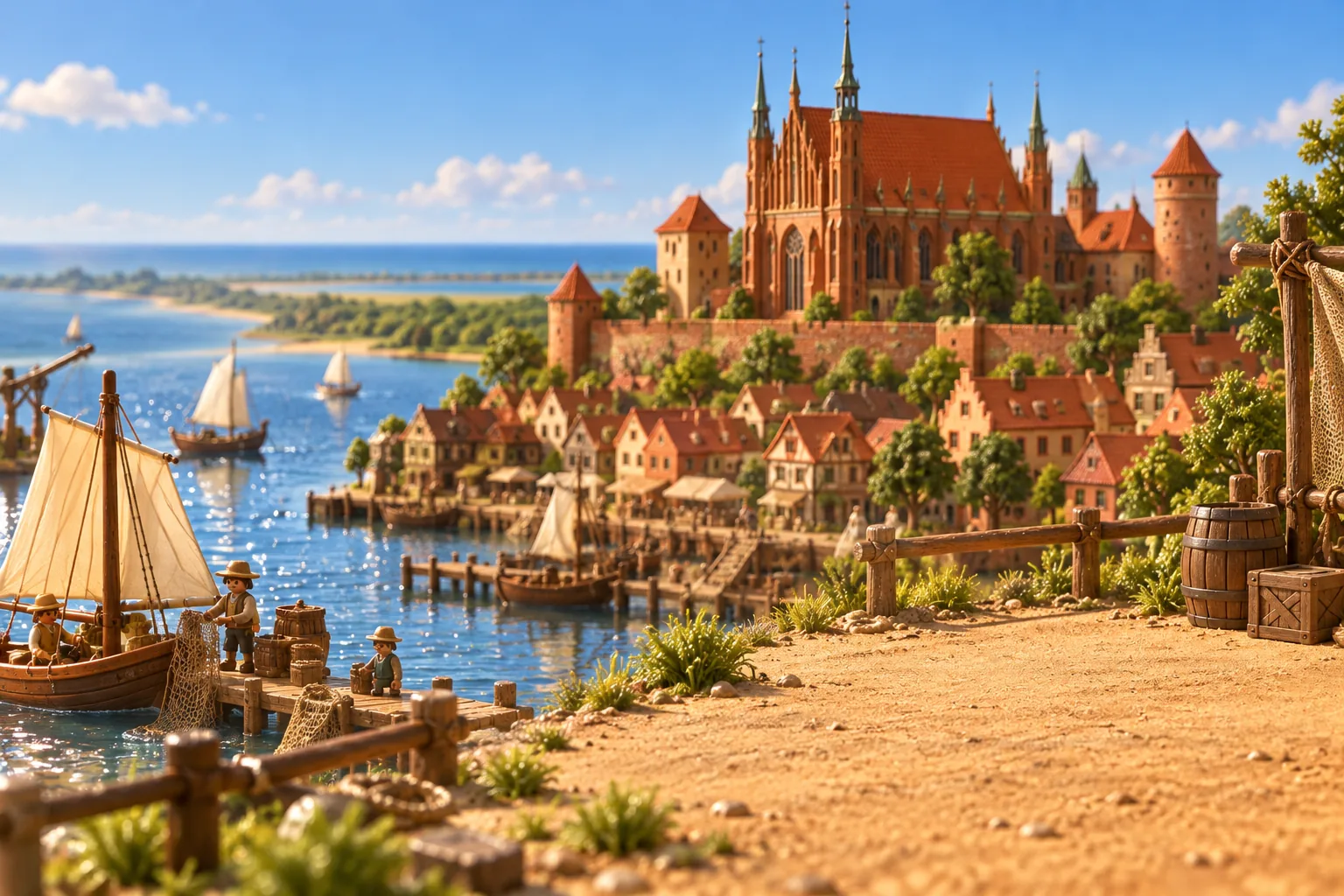
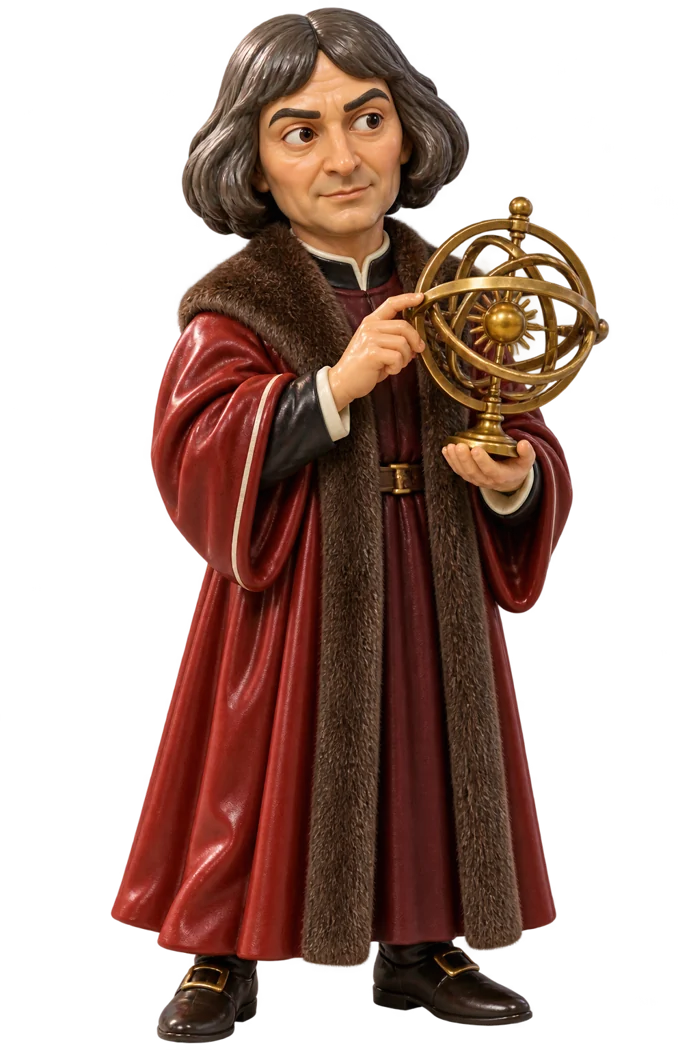
Nicolaus Copernicus was born in Toruń in 1473 and spent most of his adult life as a canon of the Warmia cathedral chapter in Frombork, a small town on the Vistula Lagoon. He held a doctorate in canon law and worked as a physician, administrator and economist as well as an astronomer. Some time before 1514 he passed a short manuscript, the Commentariolus, to a few friends. In it the Earth turns daily on its axis and travels around the Sun like the other planets.
For years he held back the full version, perhaps from fear of criticism. In 1539 a young mathematician from Wittenberg, Georg Joachim Rheticus, came to study with him and pressed him to publish. The manuscript went to the printer Johannes Petreius in Nuremberg. When Rheticus had to leave, the Lutheran theologian Andreas Osiander took over and added an unsigned preface saying the theory need not be true, only useful for calculation.
De revolutionibus orbium coelestium appeared in 1543, dedicated to Pope Paul III. Late in 1542 Copernicus had suffered a stroke, and he died on 24 May 1543. The book was dense with mathematics and its first run of 400 copies did not sell out, but it reached the astronomers who mattered, Kepler and Galileo among them. In 1616, during the Galileo affair, the Catholic Church suspended it until it could be 'corrected'.
Read more on Wikipedia
Sources: en.wikipedia.org/wiki/Nicolaus Copernicus, en.wikipedia.org/wiki/De revolutionibus orbium coelestium


