Early modern · politics
Constitutional Convention
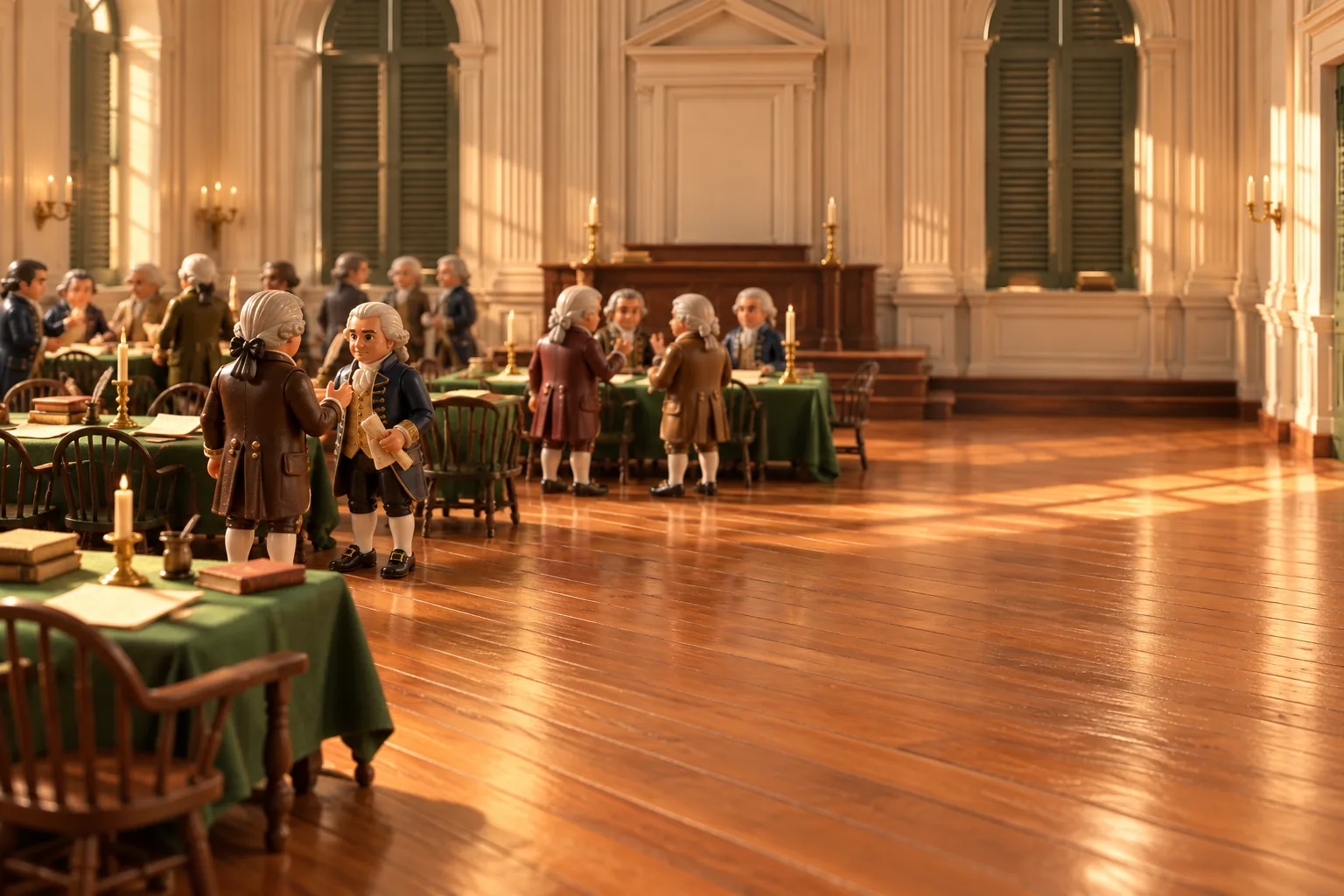
Through a sweltering Philadelphia summer, delegates argued behind windows nailed shut so that no one outside could hear what they were inventing.
After independence the thirteen states were held together by the Articles of Confederation, which gave Congress no power to tax. Rhode Island alone could veto a tax on imports, and in 1786–87 indebted farmers rose in Shays' Rebellion in Massachusetts. So the states sent delegates to Philadelphia, officially to revise the Articles. Rhode Island refused to send anyone. The convention opened on 25 May 1787 in the Pennsylvania State House, today Independence Hall, and chose George Washington to preside. Its debates were kept secret, and James Madison's notes, our main record, were only published after his death in 1836.
Madison's Virginia Plan, with three branches of government, became the starting point, but large and small states fought over representation. On 16 July a close vote adopted the Connecticut Compromise: the House would be elected by population and every state would have two senators. A deal over slavery counted three-fifths of enslaved people towards a state's population. Delegates also argued over a single president, how he would be chosen and how long he would serve.
Gouverneur Morris wrote most of the final text, including the preamble. On 17 September 1787, 39 delegates signed it. Thirteen had already gone home, and three refused to sign: Edmund Randolph, George Mason and Elbridge Gerry. The Constitution then went to the states for ratification and became the plan of the American government.
Read more on Wikipedia
Sources: en.wikipedia.org/wiki/Constitutional Convention (United States)


