Antiquity · person
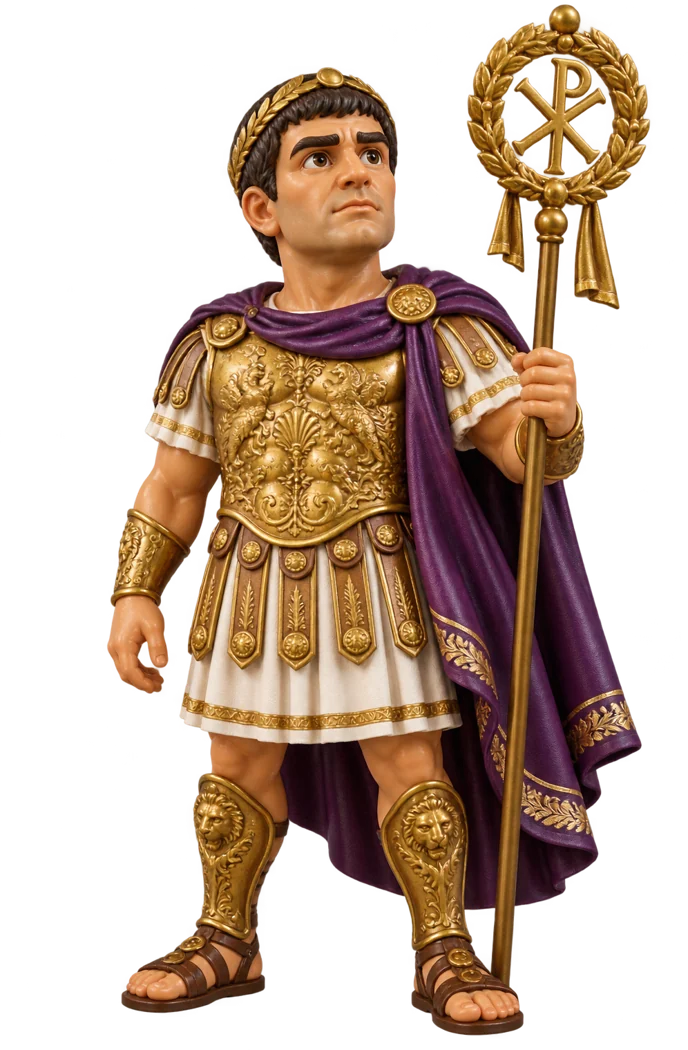
Constantine the Great
Before the battle for Rome he had a sign painted on his soldiers' shields, the Chi-Rho of Christ, and his victory at the Milvian Bridge changed the faith of an empire.
Constantine was born on 27 February 272 at Naissus, now Niš in Serbia, the son of the army officer Constantius and of Helena, a woman of low birth. His father became one of the four emperors of Diocletian's Tetrarchy, and Constantine grew up at Diocletian's court in Nicomedia, where in 303 he saw the start of the Great Persecution of Christians. When Constantius died at Eboracum, now York, on 25 July 306, the army there proclaimed his son emperor.
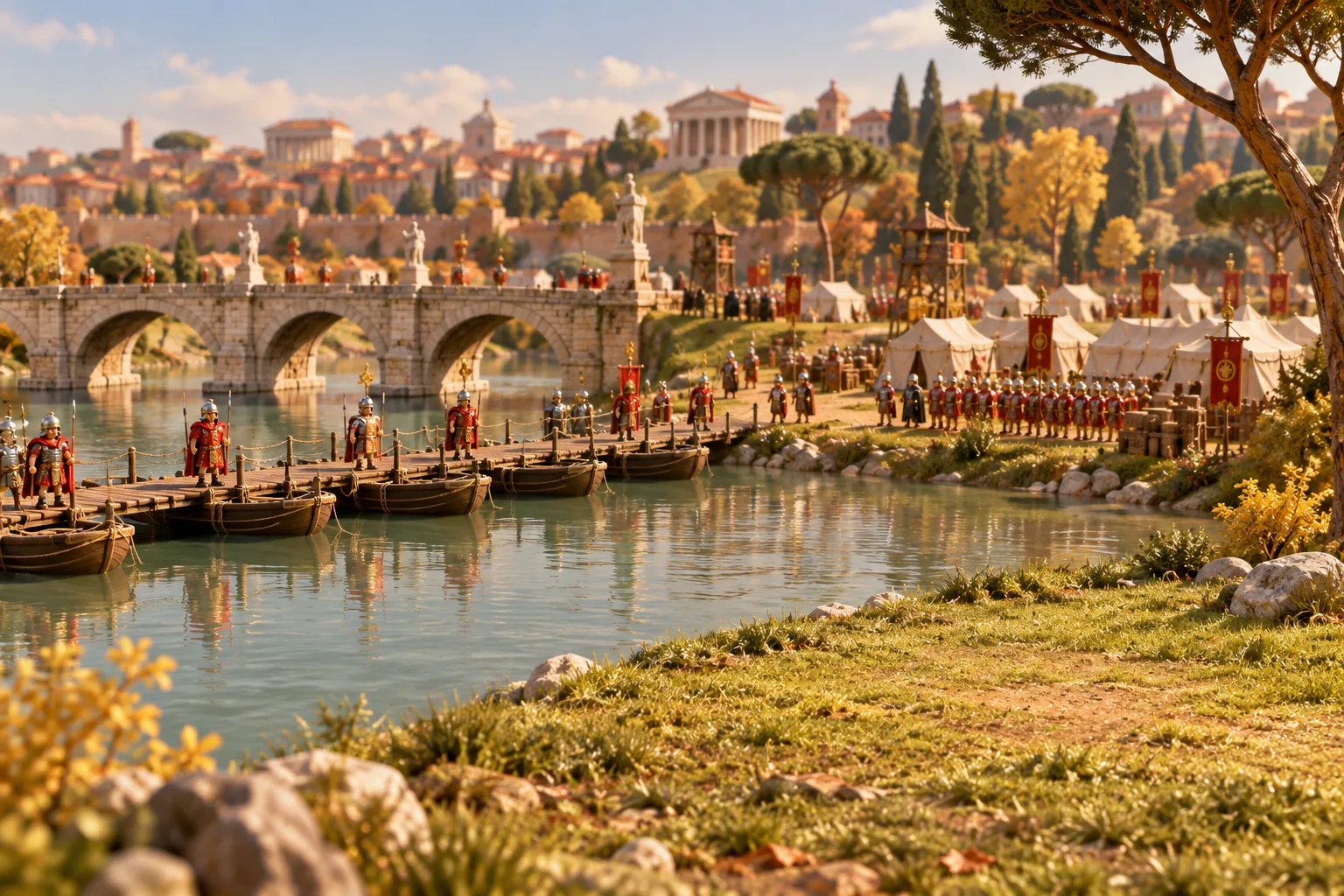
In 312 he crossed the Alps and marched on Rome against his rival Maxentius. Lactantius says a dream told him to put the heavenly sign on his soldiers' shields, the Chi-Rho, the first letters of Christ's name in Greek; Eusebius tells of a cross of light in the sky with the words "In hoc signo vinces", "in this sign you will conquer". On 28 October 312, at the Milvian Bridge on the Tiber, Maxentius' army broke and he drowned trying to cross a bridge of boats. In 313 the Edict of Milan legalised Christianity. Constantine defeated his co-emperor Licinius to rule alone from 324 and summoned the Council of Nicaea in 325, which produced the Nicene Creed.
He rebuilt Byzantium as a new capital, dedicated on 11 May 330 as Constantinople. In 326 he had his eldest son Crispus and then his wife Fausta put to death. He was baptised only on his deathbed, by Eusebius of Nicomedia, and died near Nicomedia on 22 May 337. His city stayed the capital of the eastern empire for more than a thousand years.
Read more on Wikipedia


