Middle Ages · exploration
Columbus reaches America
Christopher Columbus sailed west to reach Japan and China, and on 12 October 1492 he stepped onto a small island in the Bahamas convinced he was in the Indies.
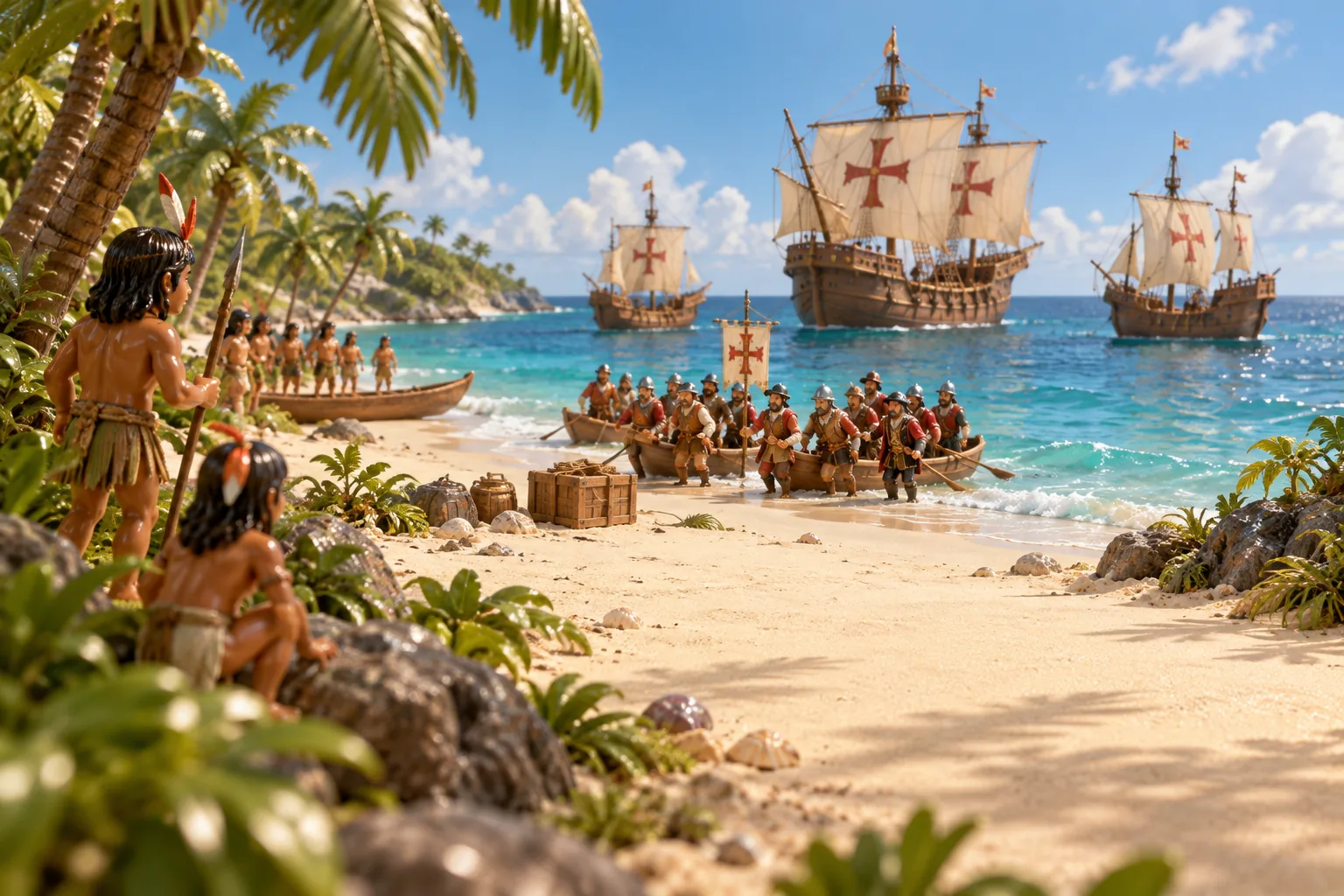
Columbus, a navigator from Genoa, wanted to reach the spice lands of Asia by sailing straight west. A royal committee told the Catholic Monarchs that he had badly underestimated the distance, and they were right. But after Granada fell in January 1492, Isabella and Ferdinand agreed to back him. On 3 August 1492 he left Palos with three ships: the carrack Santa María and two smaller caravels, the Pinta and the Niña.
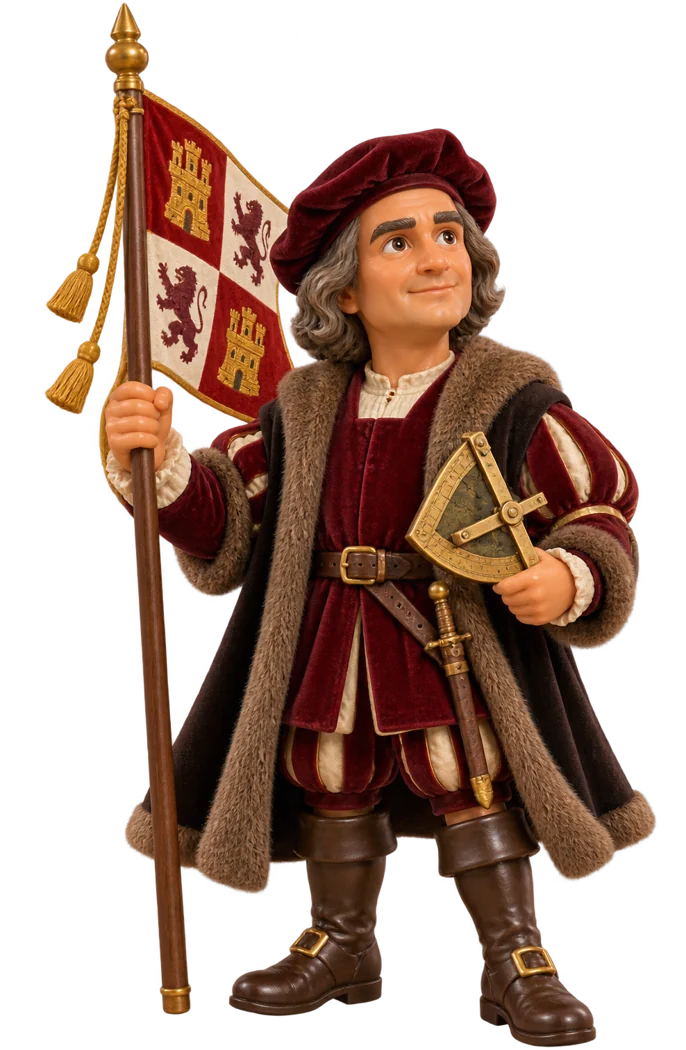
After 29 days out of sight of land, the crew followed flocks of birds, and on 10 October Columbus put down a mutiny. In the small hours of 12 October a sailor on the Pinta, Rodrigo de Triana, shouted that he saw land. That morning Columbus went ashore with the royal banner on an island the Lucayan people called Guanahani. He named it San Salvador. In his journal he noted that the islanders "ought to make good and skilled servants". He sailed on to Cuba and Hispaniola, where the Santa María ran aground on Christmas Day; 39 men stayed behind in a fort built from her timbers.
Back in Spain in March 1493, Columbus showed off gold, a hammock, tobacco, pineapples and Taíno people he had taken captive, insisting he had reached Asia. His voyages joined two worlds that had been apart for thousands of years. For the peoples of the Caribbean, they began enslavement and an epidemic of Old World diseases in which their populations collapsed.
Read more on Wikipedia
Sources: en.wikipedia.org/wiki/Voyages of Christopher Columbus, en.wikipedia.org/wiki/Christopher Columbus


