Early modern · politics
Colony of Virginia
The first lasting English colony in America nearly starved to death, was saved by a supply fleet at the last moment, and then got rich on tobacco.
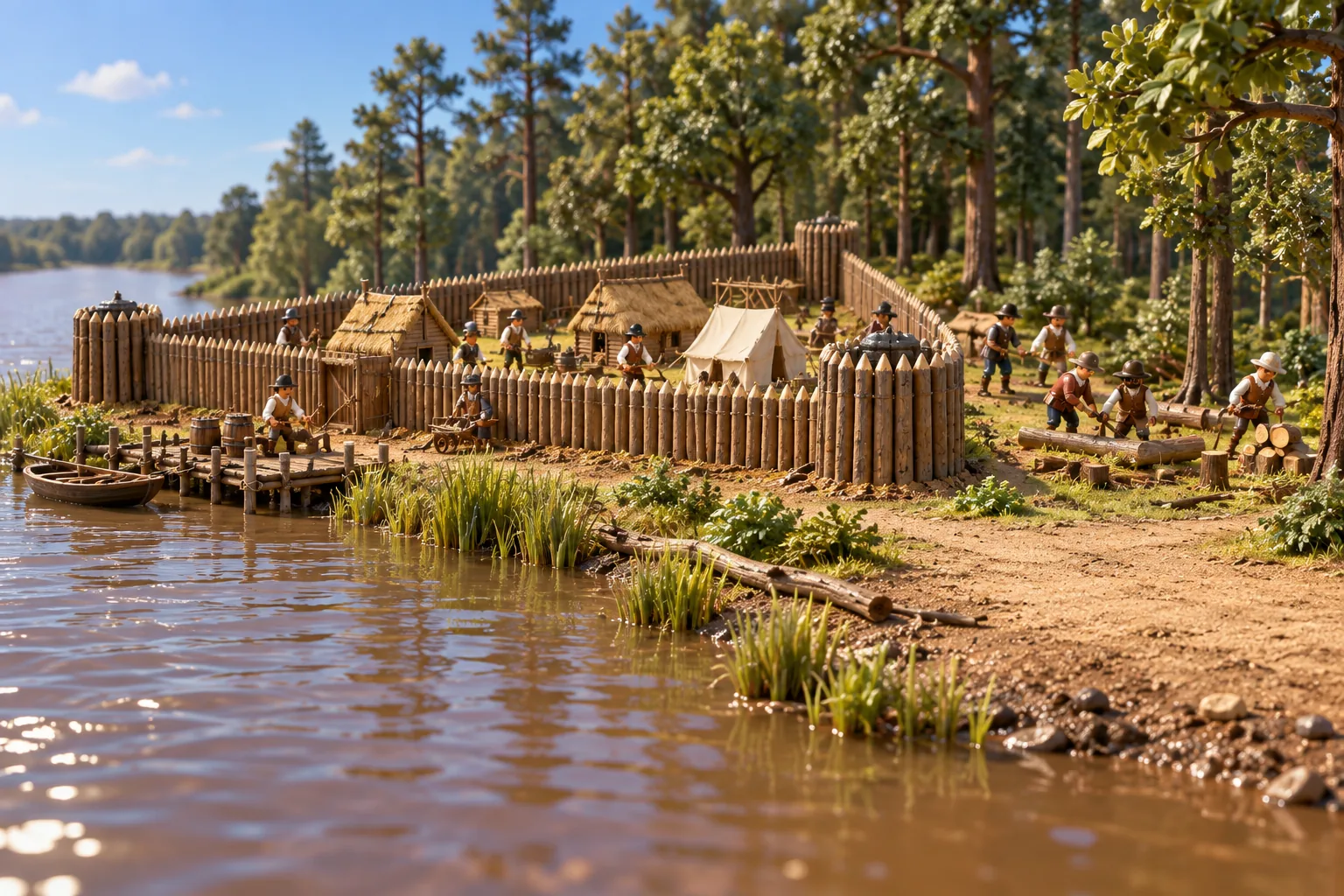
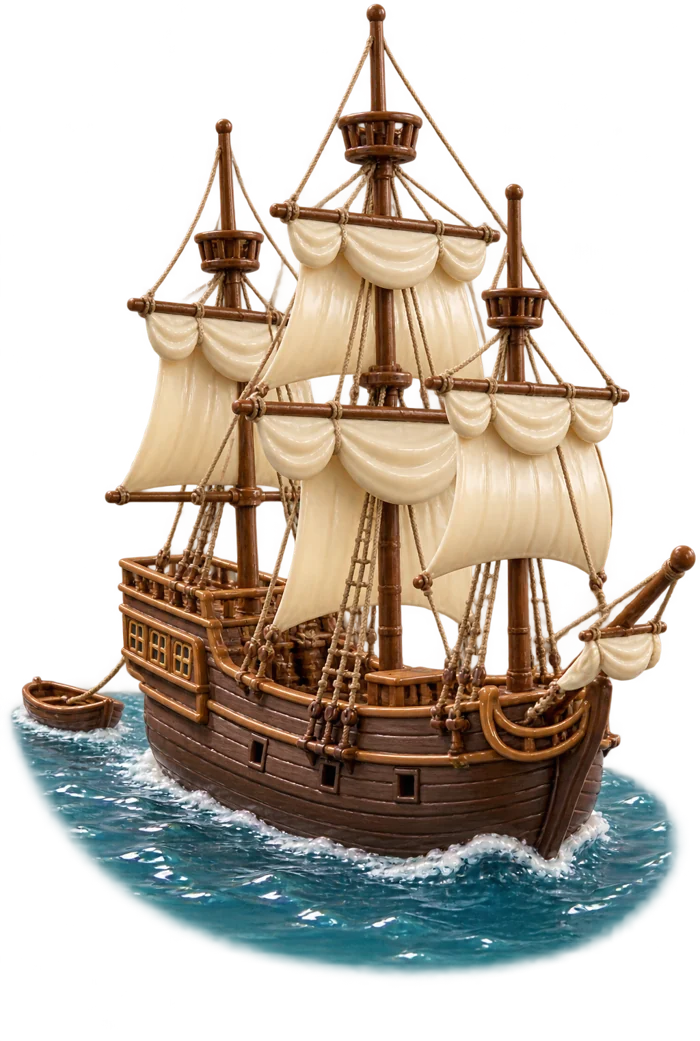
On 20 December 1606 Captain Christopher Newport sailed from England for the Virginia Company of London with three ships, the Susan Constant, the Godspeed and the Discovery, carrying 105 men and boys. After 144 days at sea they entered Chesapeake Bay, sailed up a river they named the James, after their king, and built a fort on Jamestown Island. The land belonged to the Powhatan Confederacy, led by Wahunsenacawh, whom the English called Chief Powhatan.
The site had poor water and little farmland, and disease and fighting killed many settlers. In 1609 the supply fleet was scattered by a hurricane, and its flagship, the Sea Venture, was wrecked on Bermuda. In the Starving Time that followed, over 80 percent of the colonists died. In 1610 the survivors had already abandoned Jamestown when Lord De La Warr's ships arrived with food and turned them back. The colonist John Rolfe then grew a sweeter tobacco, and by 1612 it was being exported, giving Virginia its cash crop. His marriage to Pocahontas, Powhatan's daughter, in 1614 brought a few years of peace.
In 1619 the burgesses met in Jamestown church as the first elected legislature in English America, and the first Africans arrived the same year. Tobacco plantations spread along the rivers, worked more and more by enslaved Africans, while wars pushed the Powhatan peoples off their land. In 1624 Virginia became a royal colony. Its capital moved to Williamsburg in 1699, and in 1776 the colony became the Commonwealth of Virginia, one of the first thirteen states.
Read more on Wikipedia