Prehistory · people
Clovis culture
A 19-year-old who had been reading about digs in the newspaper found the site that gave the first great culture of Ice Age America its name.
In 1929 a 19-year-old, Ridgely Whiteman, who had followed newspaper reports of the excavations at nearby Folsom, found an ancient site at Blackwater Draw in eastern New Mexico, near the town of Clovis. In the 1930s archaeologists led by Edgar Billings Howard and later John L. Cotter dug there and found large stone spear points lying with the bones of Columbian mammoths. The points gave their name to the Clovis culture, the earliest widely recognised archaeological culture in North America, which lasted only a few centuries, about 13,050 to 12,750 years ago.
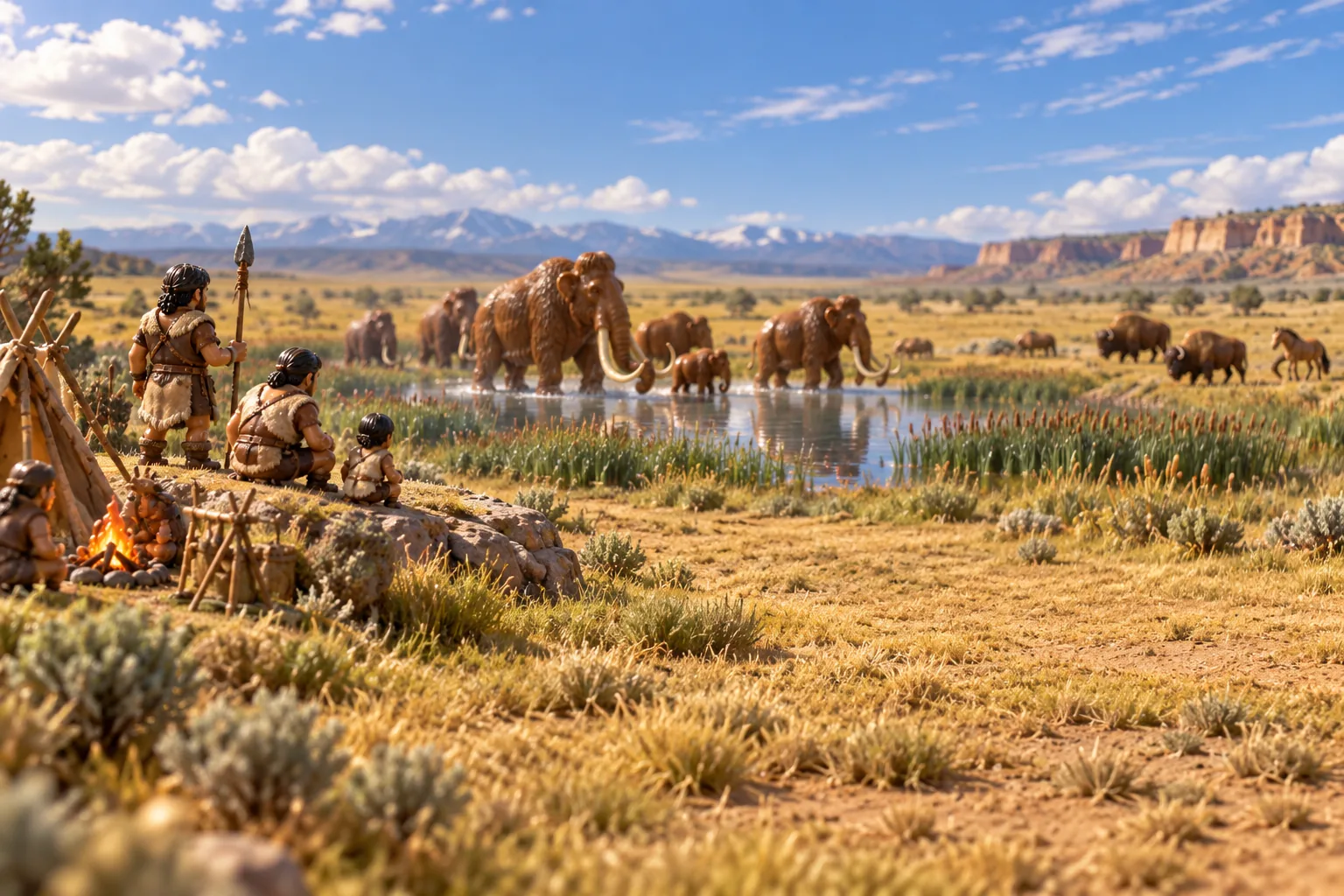
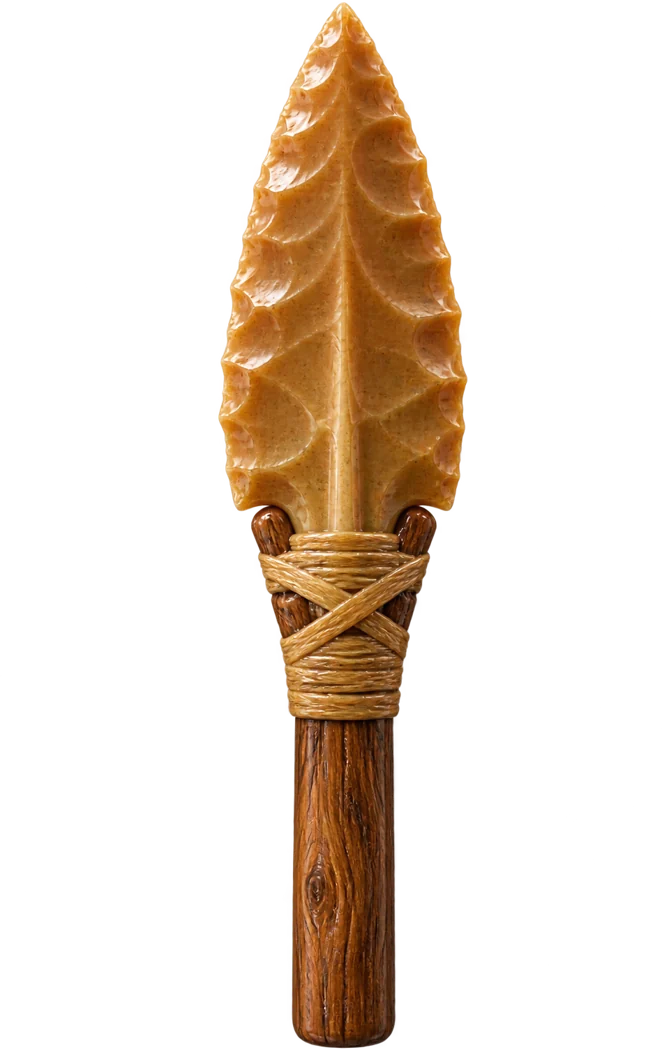
A Clovis point is a long, leaf-shaped blade of flaked stone, sometimes more than 10 centimetres long, with a shallow groove, the flute, struck up from its base. It also served as a knife. Clovis people were highly mobile hunter-gatherers who relied on big game, above all mammoths, but also mastodons, bison and horses. They stored tools in caches for later use, sometimes covered with red ochre, and more than 20 such caches are known. The only known Clovis burial, a young boy from Montana called Anzick-1, is closely related to many Native peoples of Central and South America.
For much of the 20th century scholars held to "Clovis First", the idea that these were the first people in the Americas. Today that is generally rejected: sites such as Monte Verde in Chile, Paisley Caves in Oregon and Buttermilk Creek in Texas are at least a thousand years older. After Clovis, regional styles such as Folsom points took its place.
Read more on Wikipedia
Sources: en.wikipedia.org/wiki/Clovis culture


