Middle Ages · state
Classic Veracruz culture
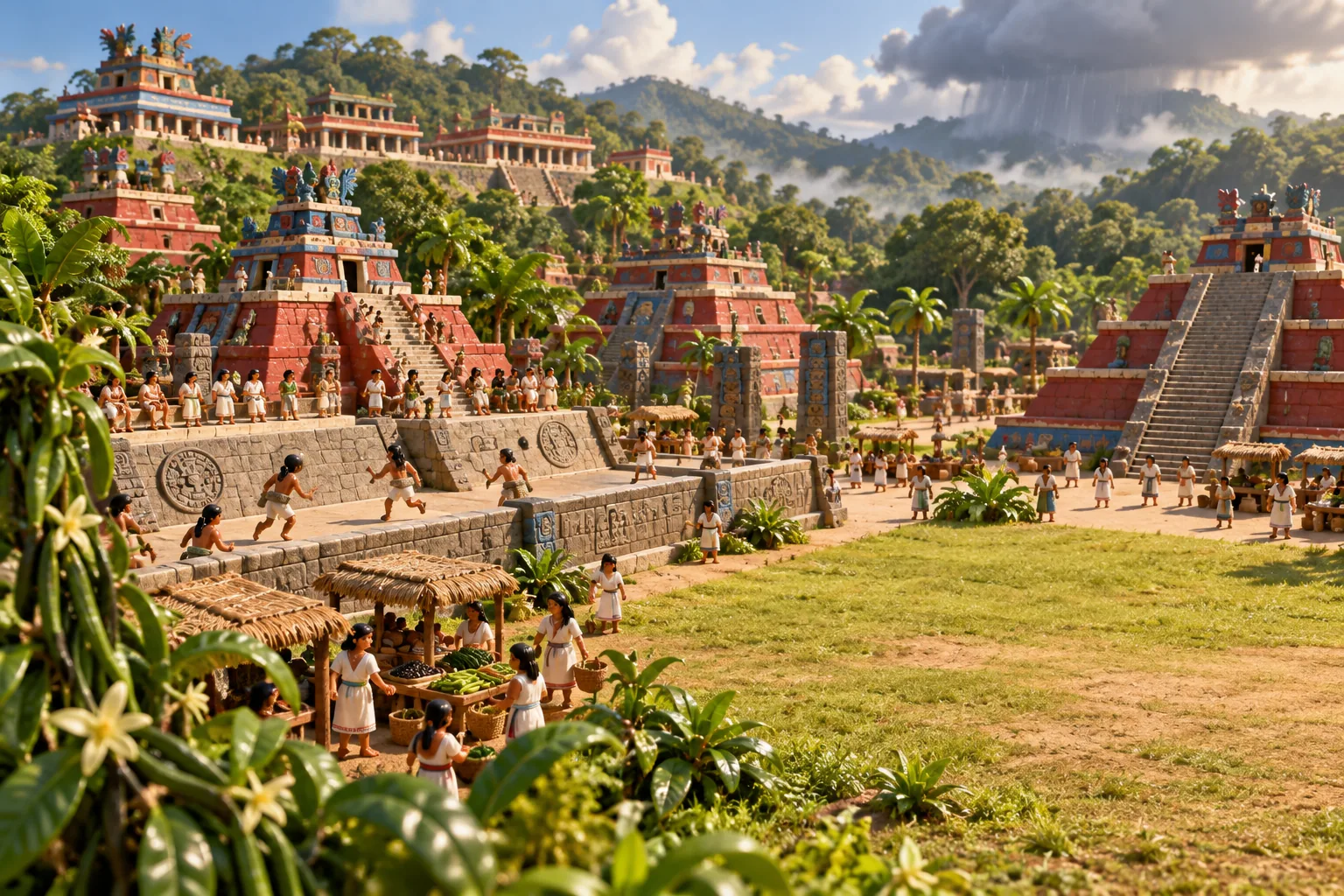
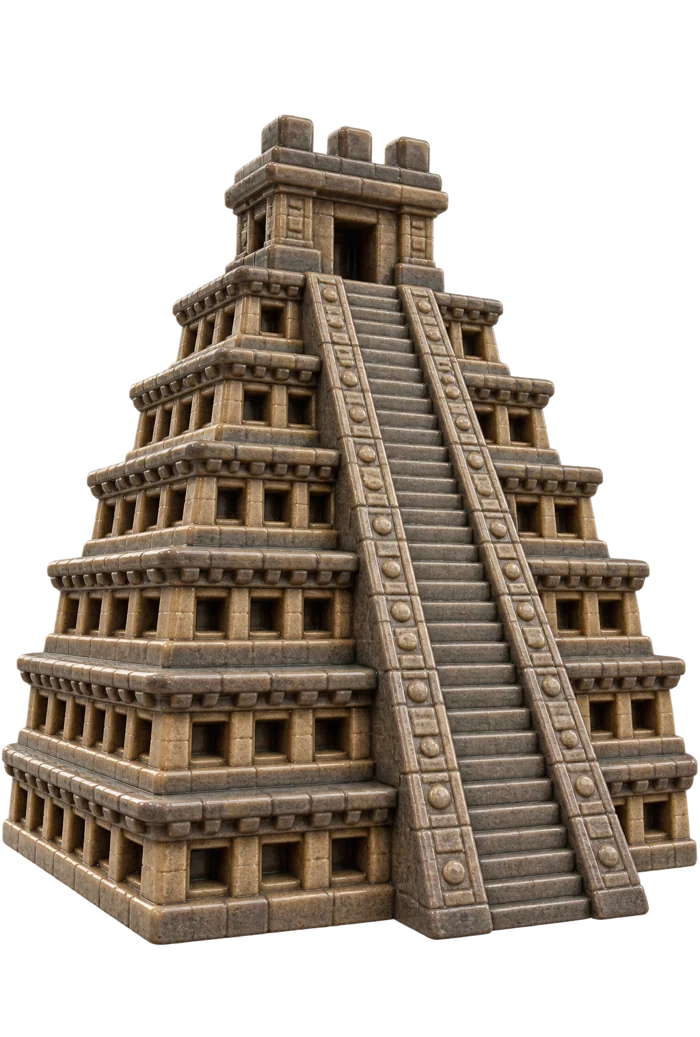
Its city El Tajín packed twenty ballcourts around a pyramid of stone niches, and its people were all but obsessed with the ballgame.
Classic Veracruz culture flourished on the Gulf Coast of Mexico, between the Pánuco and Papaloapan rivers, from roughly 100 to 1000. Its people farmed maize and cotton in slash-and-burn fields and also ate dog, deer, fish and shellfish. Hereditary rulers held small regional centres, none larger than 2,000 square kilometres, through control of trade and through rites such as bloodletting and human sacrifice. Who they were is unclear: the Totonacs, who lived there when the Spaniards came, and the Huastecs have both been proposed.
Their greatest city was El Tajín, which flourished from about 600 to 1200. Its builders used decorative niches and cement in ways unknown elsewhere in Mesoamerica, and its best-known monument is the Pyramid of the Niches. Twenty ballcourts have been found there, and the walls of the largest are carved with scenes of human sacrifice tied to the game. The ballgame reached its height here in the Late Classic, and players' stone gear, U-shaped yokes worn at the waist with hachas and palmas set on them, is a hallmark of the culture.
El Tajín prospered until the early 13th century, when it was destroyed by fire, presumably set by invaders believed to be Chichimecs. The jungle swallowed it, and in 1785 an official hunting for illegal tobacco fields stumbled on the Pyramid of the Niches.
Read more on Wikipedia
Sources: en.wikipedia.org/wiki/Classic Veracruz culture, en.wikipedia.org/wiki/El Tajín
