Our time · politics
Civil rights movement
The Montgomery bus boycott lasted 381 days, and it ended only when the city gave up its segregated buses.
After the Civil War, amendments to the Constitution abolished slavery and made African Americans citizens. But after 1877 the Southern states took away their rights again under Jim Crow laws, which segregated schools, banned interracial marriage and used literacy tests to keep black citizens from voting. In 1954, in Brown v. Board of Education, the Supreme Court struck down state laws segregating public schools. In 1957 nine black students, the Little Rock Nine, enrolled at a white high school in Arkansas, and President Eisenhower intervened to protect them.
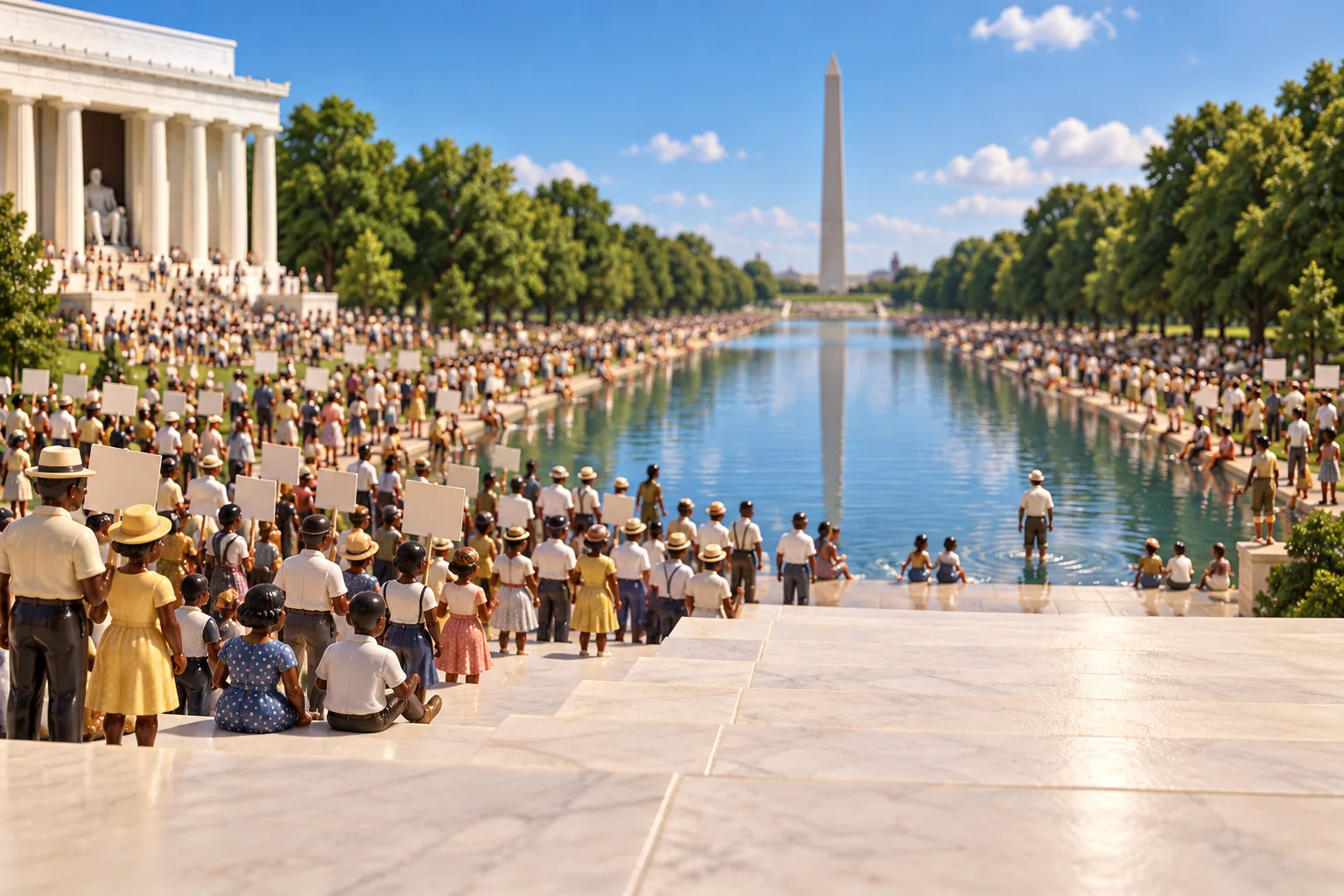
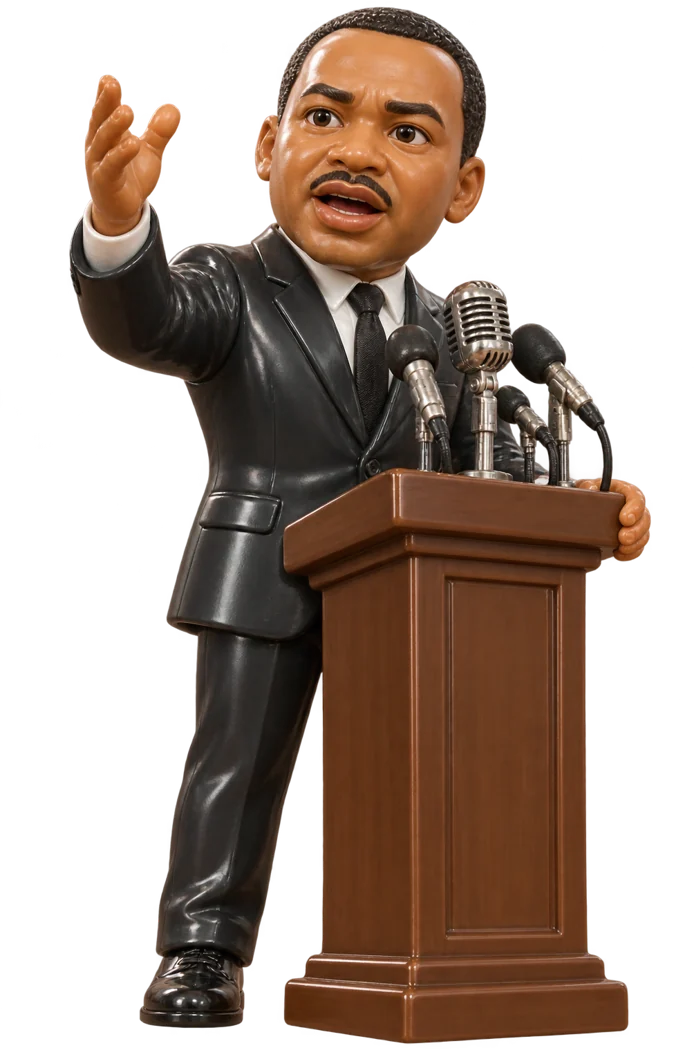
The movement turned to nonviolent direct action. On 1 December 1955 Rosa Parks refused to give up her bus seat to a white passenger in Montgomery, Alabama, nine months after a 15-year-old student, Claudette Colvin, had done the same. With the support of most of the city's 50,000 African Americans, the bus boycott that followed lasted 381 days. Students staged sit-ins at lunch counters in Greensboro and Nashville in 1960, and Freedom Riders rode buses across the South. On 28 August 1963, 200,000 to 300,000 people marched on Washington, where Martin Luther King Jr. gave his "I Have a Dream" speech in front of the Lincoln Memorial.
The movement won the Civil Rights Act of 1964, the Voting Rights Act of 1965 and the Civil Rights Act of 1968. On 4 April 1968 King was assassinated at the Lorraine Motel in Memphis.
Read more on Wikipedia


