Middle Ages · person
Christopher Columbus
At two in the morning a lookout on the Pinta saw land, and the man who believed Japan lay 2,400 nautical miles west of the Canaries thought he had reached the Indies.
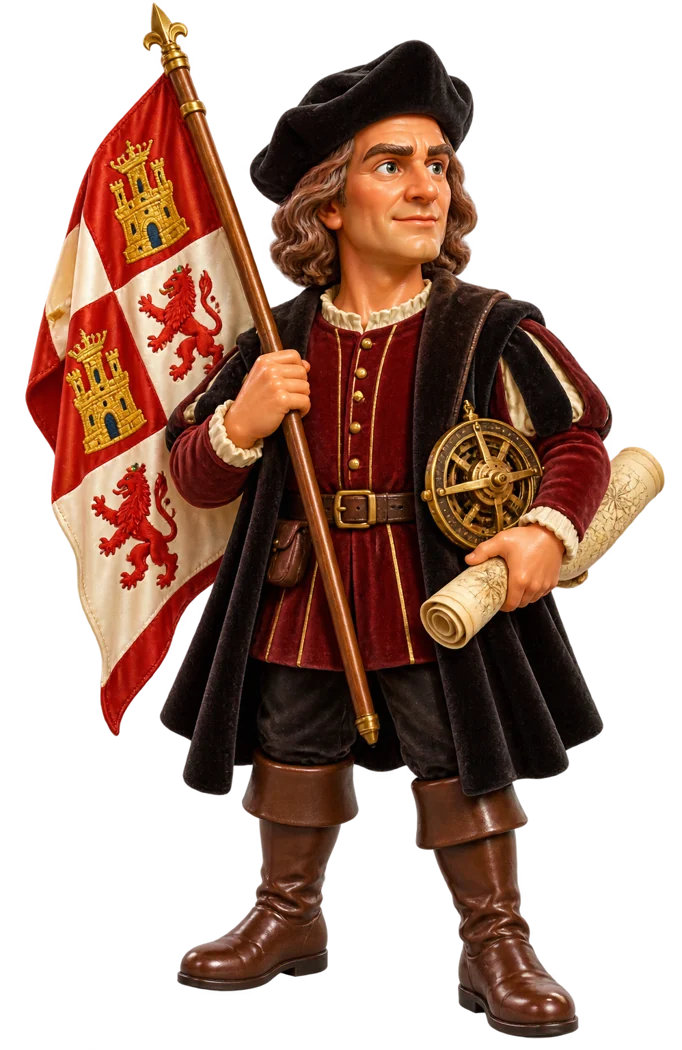
Christopher Columbus was born in the Republic of Genoa between late August and October 1451, the son of a wool weaver, and as a boy worked at his father's cheese stand. He went to sea for Genoese merchant families, survived a shipwreck off Portugal in 1476 and settled in Lisbon, where he married Filipa Moniz Perestrelo. Using low estimates of the size of the Earth, he worked out that Japan lay only about 2,400 nautical miles west of the Canary Islands, and proposed reaching Asia by sailing west. King John II of Portugal turned him down, and so at first did Spain's experts, who said he had badly underestimated the distance.
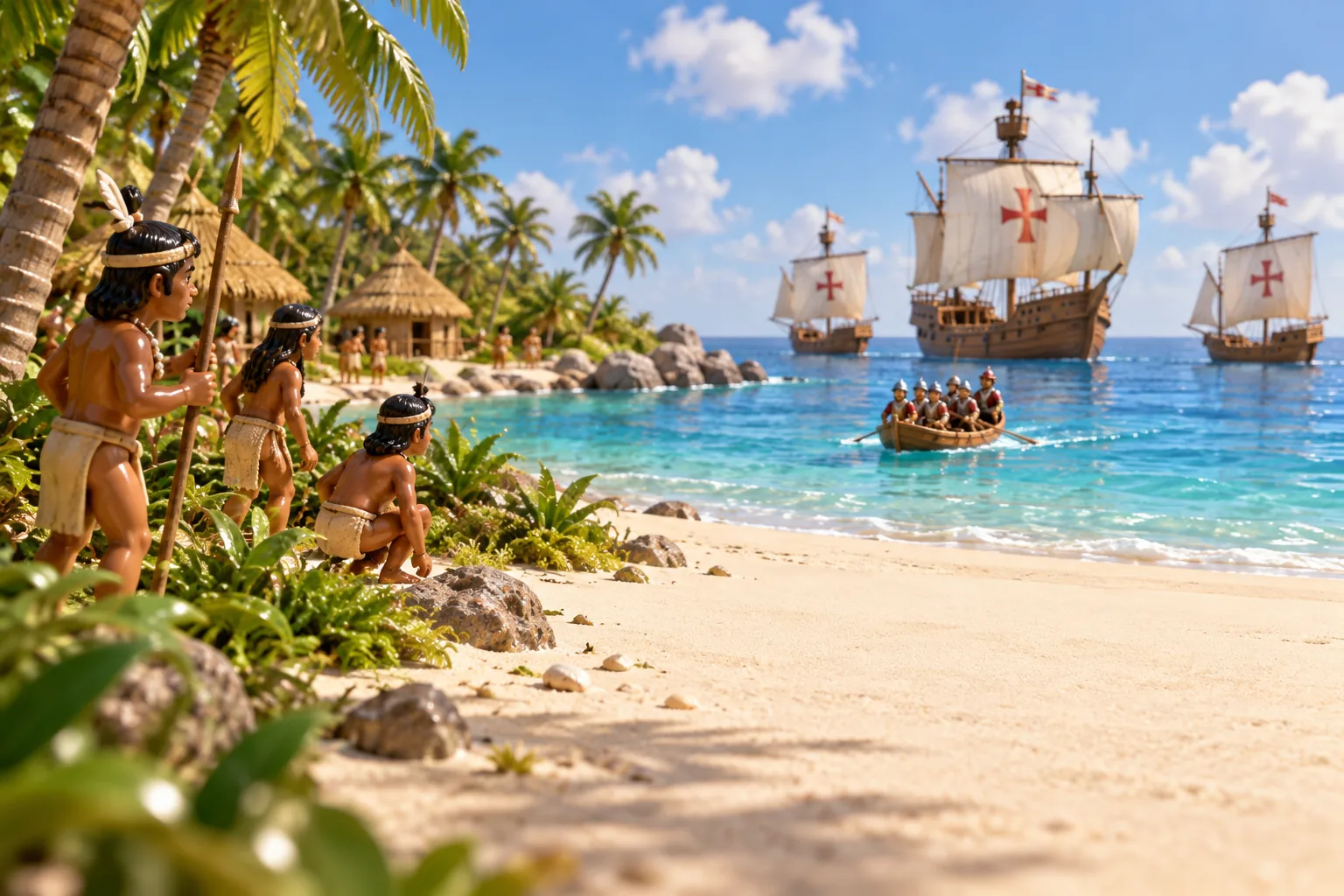
After the fall of Granada, Queen Isabella I and King Ferdinand II agreed to sponsor him. He left Palos in August 1492 with the carrack Santa María and the caravels Pinta and Niña. In the early hours of 12 October the lookout Rodrigo de Triana sighted land, an island in the Bahamas its Taíno people called Guanahani. Columbus went on to Cuba and Hispaniola, and when the Santa María ran aground on Christmas Day he left 39 men in a settlement called La Navidad.
He made four voyages in all. As governor of Hispaniola he was harsh, its Indigenous people were enslaved and died in huge numbers from disease and war, and in 1500 he was arrested and sent back to Spain. He died on 20 May 1506, still claiming privileges from the Crown.
Read more on Wikipedia
Sources: en.wikipedia.org/wiki/Christopher Columbus, en.wikipedia.org/wiki/Voyages of Christopher Columbus

