Middle Ages · state
Chimor
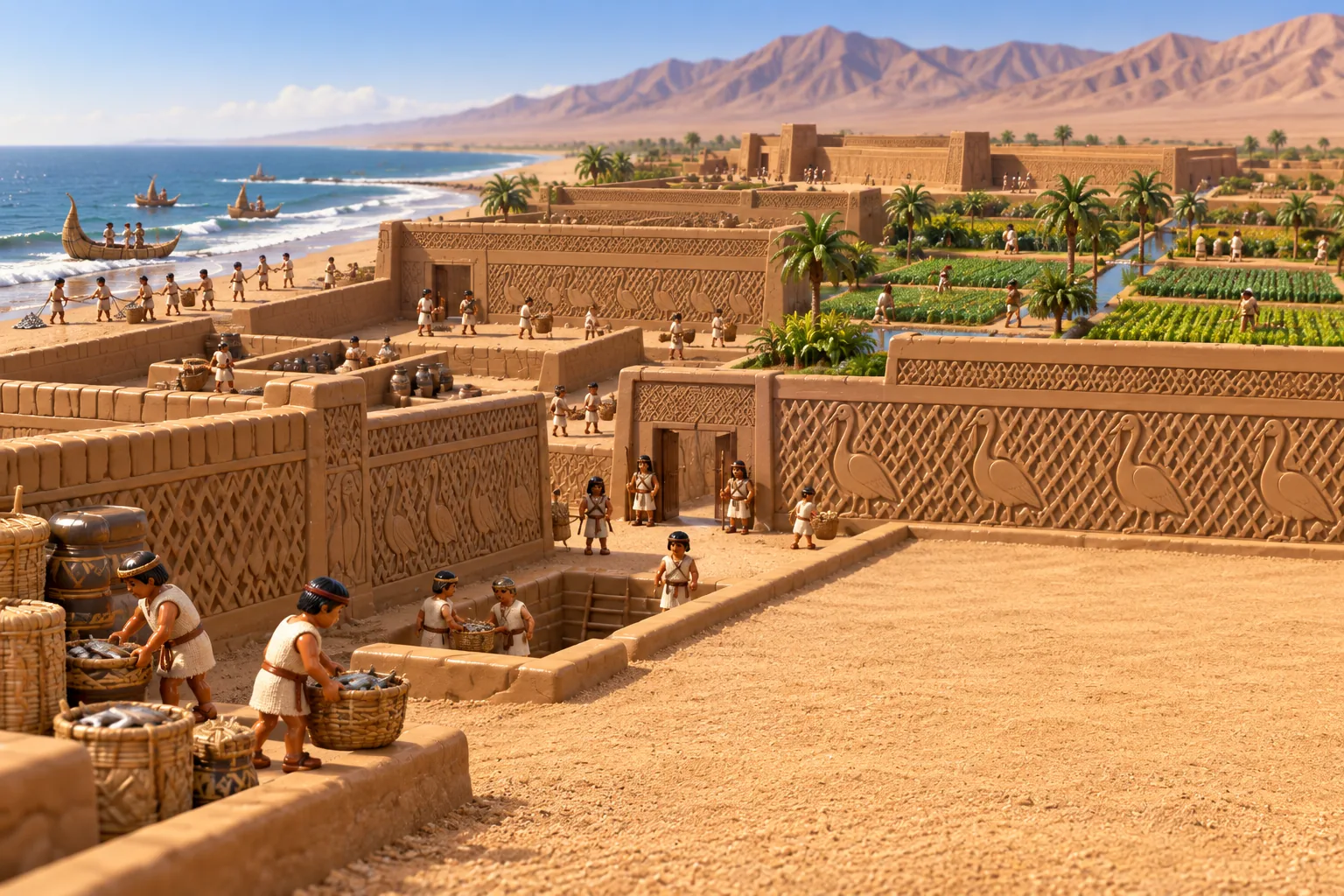
Its capital Chan Chan was the largest adobe city in the Americas, until the Incas conquered the Chimú around 1470.
The Chimú culture arose around 900 on the desert coast of northern Peru, after the Moche. Their own oral history said it began when Taycanamo arrived in the Moche Valley from the sea on a balsa raft and founded the capital, Chan Chan. His son Guacricur took the lower valley, and his grandson Ñancenpinco pushed the kingdom north and south along the coast. Some valleys joined willingly; the Sican culture was conquered.
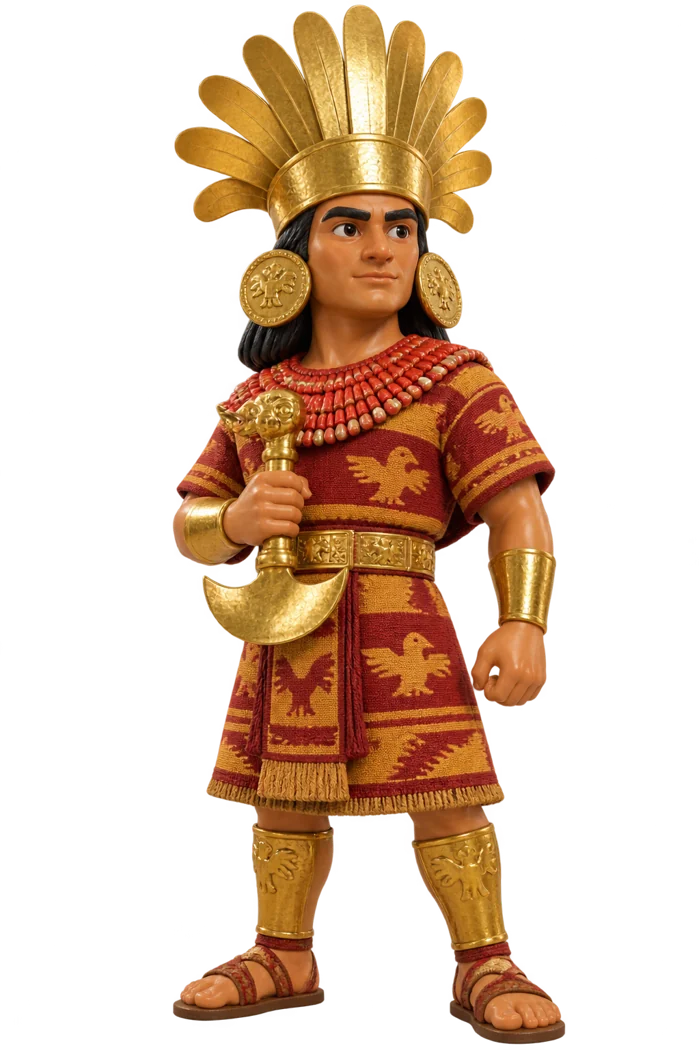
Chimor became the largest kingdom of the Andes in its age, stretching along 1,000 kilometres of coastline. Rivers cut flat valleys through the desert, and the rulers organised armies of workers to build canals and irrigated fields for beans, sweet potatoes, papaya and cotton. The Chimú were famous for black pottery and fine metalwork in copper, gold, silver, bronze and tumbaga, an alloy of copper and gold, and they prized red Spondylus shells traded from the warm waters off Ecuador. They worshipped the Moon, which, unlike the Incas, they held to be more powerful than the Sun.
Chimor was the last kingdom with any chance of stopping the Incas. In the 1470s Topa Inca Yupanqui defeated its ruler Minchançaman, took him to Cusco and carried Chimú gold and silver to adorn the Coricancha temple.
Read more on Wikipedia
Sources: en.wikipedia.org/wiki/Chimor, en.wikipedia.org/wiki/Chan Chan


