Middle Ages · person
Charles Martel
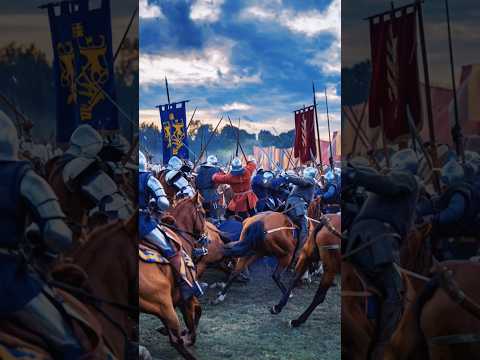
In October 732 the Frankish infantry of Charles, later called the Hammer, stood firm between Tours and Poitiers against the mostly mounted army of the Umayyad governor Abd al-Rahman.
Charles was born around 688, a son of the Frankish statesman Pepin of Herstal and Alpaida, a mistress or possibly second wife, and a great-grandson of Arnulf of Metz. The Merovingian kings by then were figureheads, and real power lay with the mayors of the palace. When Pepin died in December 714, his widow Plectrude wanted his eight-year-old grandson Theudoald to inherit and had Charles imprisoned in Cologne.
Before the end of 715 Charles escaped and was acclaimed mayor of the palace in Austrasia. After losing his first battle near Cologne in 716, he won the civil war against the Neustrians, and from 718 he ruled the Franks. He appointed the kings he supposedly served and in his last years named none at all. He fought the Frisians, Saxons and Burgundians, and in 732, when the Umayyad army of Abd al-Rahman al-Ghafiqi marched on the rich city of Tours, he met it between Tours and Poitiers. According to the historian Bernard Bachrach, the mostly mounted Arab army could not break the Frankish infantry. Historians still argue how much the battle mattered.
A year before his death he divided his lands between his sons Carloman and Pepin. He died at Quierzy-sur-Oise on 22 October 741 and was buried in the Basilica of Saint-Denis near Paris. Pepin became the first Carolingian king in 751, and Pepin's son Charlemagne was crowned emperor in 800.
Read more on Wikipedia
Sources: en.wikipedia.org/wiki/Charles Martel, en.wikipedia.org/wiki/Battle of Tours