Early modern · person
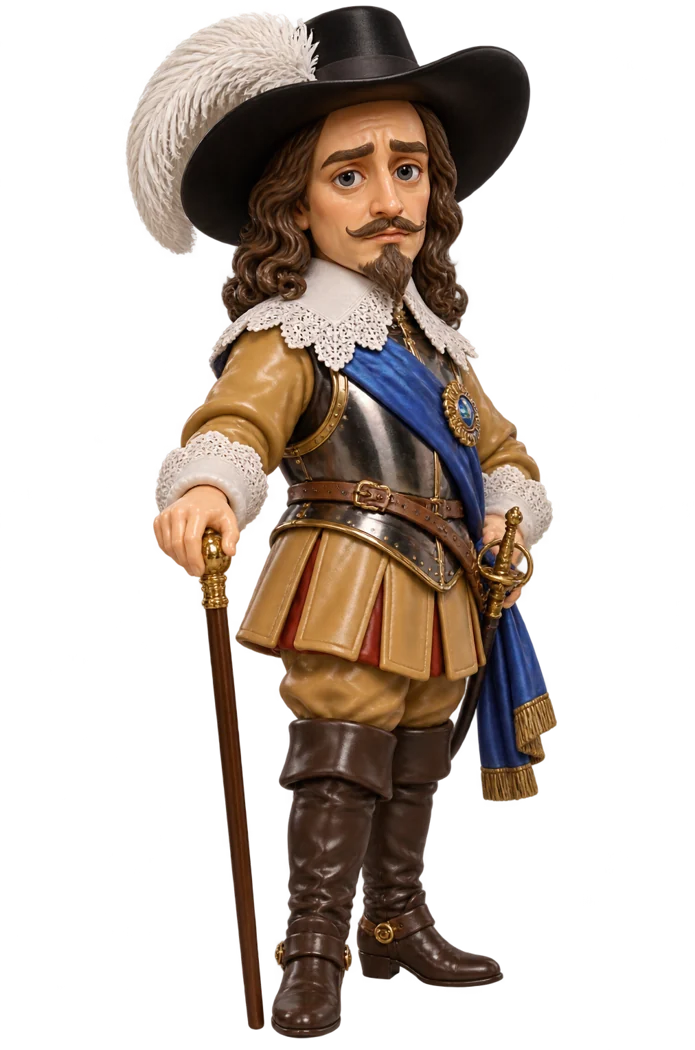
Charles I
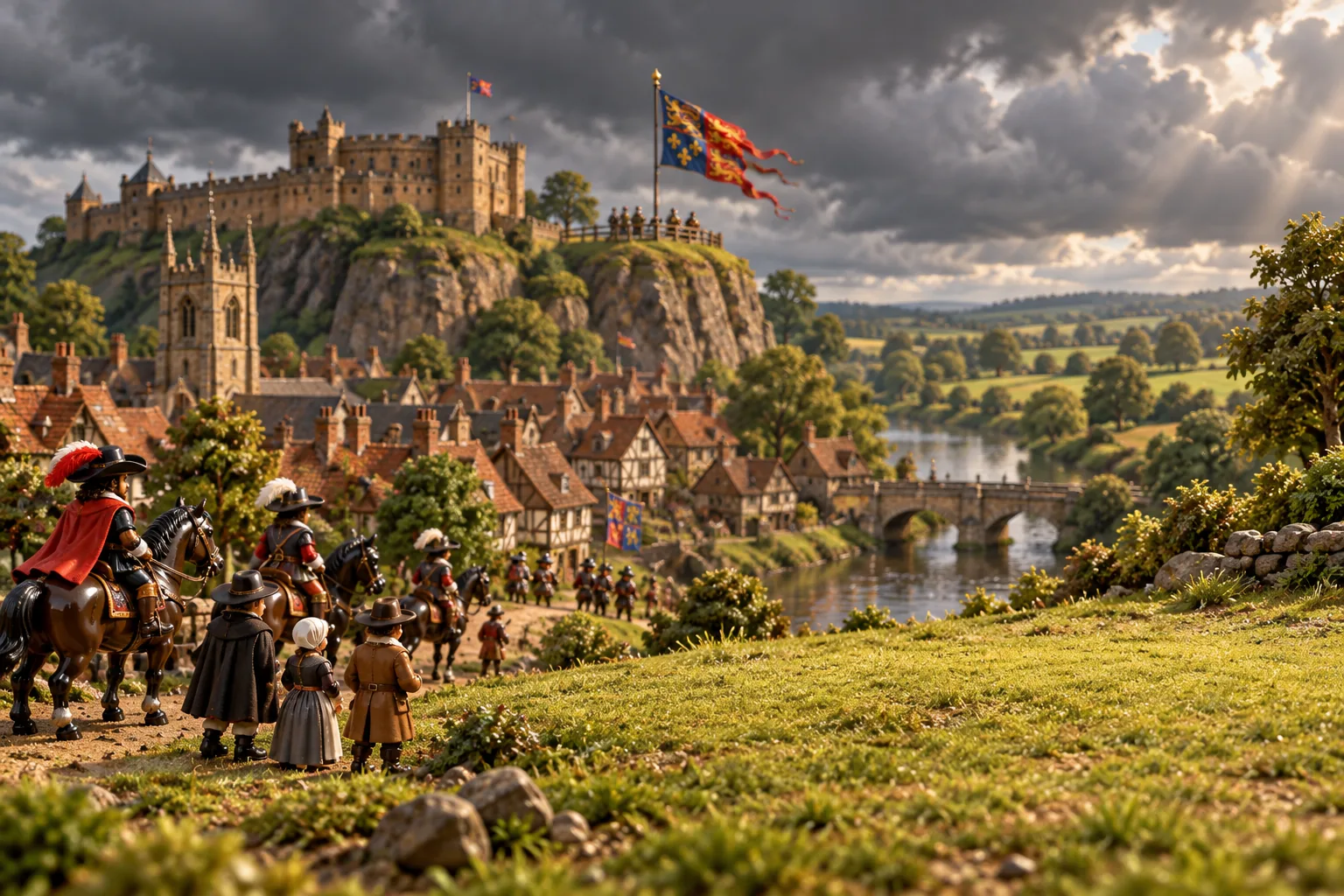
In August 1642 the king raised his royal standard at Nottingham, calling his subjects to arms against their own Parliament.
Charles was born at Dunfermline Palace in Fife on 19 November 1600, the second son of James VI of Scotland and Anne of Denmark. He was so weak as a child, perhaps from rickets, that he could only walk the length of the palace's great hall at three and a half. He became heir when his adored elder brother Henry died in 1612. In 1623 he and his father's favourite, the Duke of Buckingham, went to Spain in disguise to court the Infanta, and failed.
He became king on 27 March 1625 and married the French Catholic princess Henrietta Maria. Believing in the divine right of kings, he clashed with Parliament over money and religion, and from 1629 ruled without it for eleven years, raising funds through ship money. A new prayer book imposed on Scotland in 1637 led to the Bishops' Wars, and he was forced to recall Parliament. In January 1642 he marched into the House of Commons with armed guards to arrest five members, who had already slipped away. On 22 August 1642 he raised the royal standard at Nottingham, and the Civil War began.
Defeated at Naseby in 1645 by the New Model Army, he surrendered to the Scots, kept plotting from captivity and was tried for high treason. He refused to plead, and on 30 January 1649 he was beheaded outside the Banqueting House in Whitehall. England became a republic until his son Charles II was restored in 1660.
Read more on Wikipedia


