Middle Ages · politics
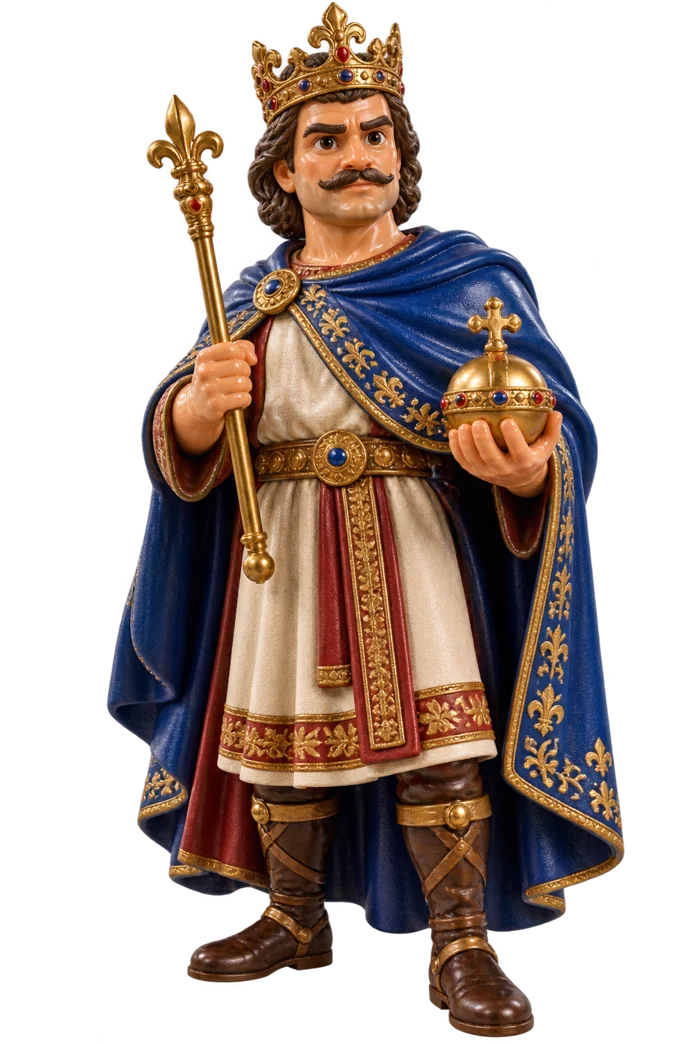
Charlemagne
More than three hundred years after the last Roman emperor in the West lost his throne, a Frankish king went to Christmas Mass in St Peter's and came out an emperor.
Charlemagne was born on 2 April 748, the son of Pepin the Short, king of the Franks. He became king with his brother Carloman in 768 and sole ruler three years later. He spent most of his reign at war. In 774 he conquered the Lombard kingdom of northern Italy, and in decades of brutal campaigns he forced the pagan Saxons to submit and become Christians. By 800 his realm covered most of Western and Central Europe.
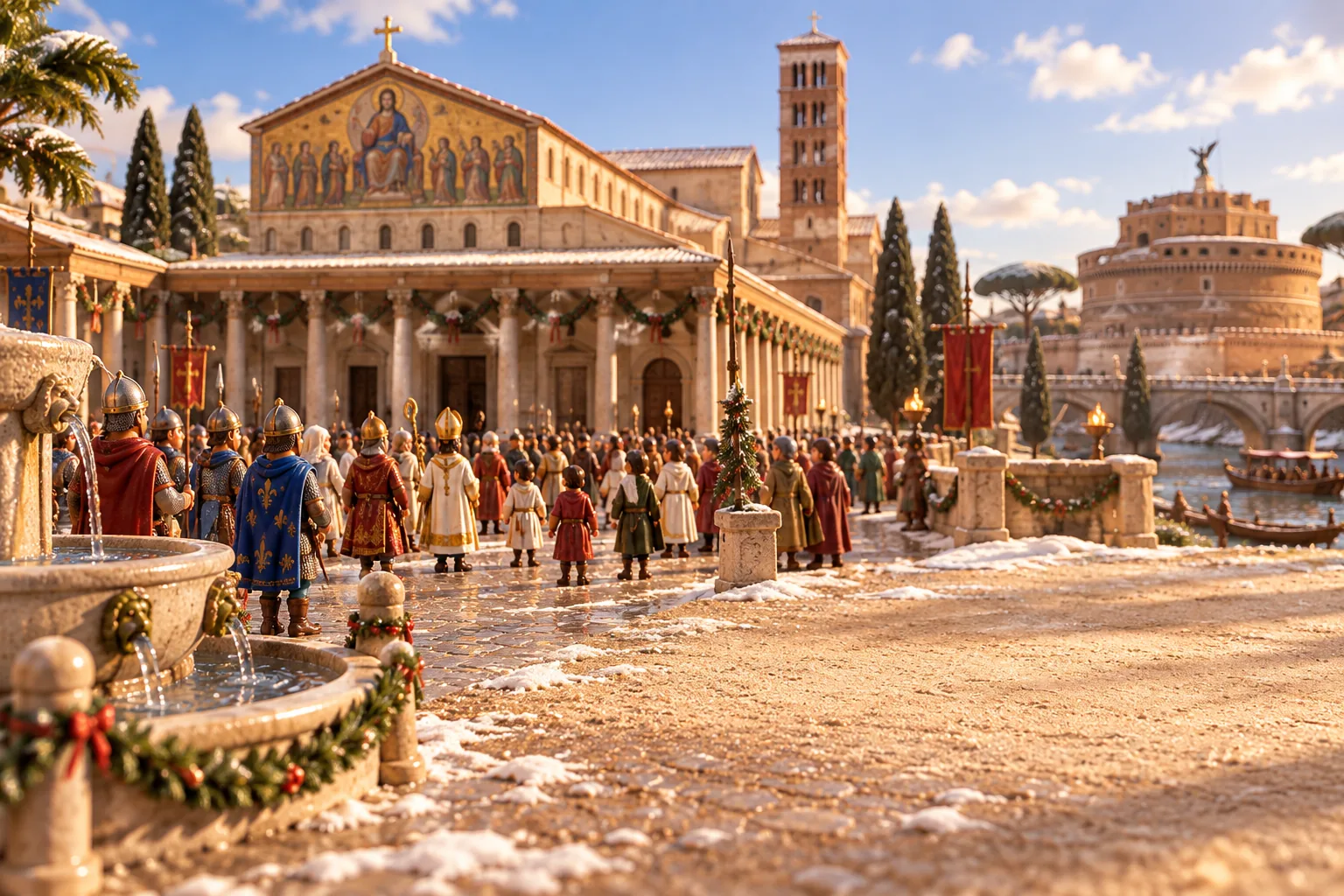
In April 799 enemies of Pope Leo III attacked him in Rome and tried to cut out his eyes and tongue. Leo escaped and fled north to Charlemagne, who met him at Paderborn and sent him home under royal protection. In late 800 Charlemagne came to Rome himself and presided over an assembly to hear the charges against the pope. On 23 December Leo swore an oath that he was innocent. Two days later, at Christmas Mass in St Peter's Basilica, Leo proclaimed Charlemagne "emperor of the Romans" and crowned him.
No one had ruled as emperor in the West since Romulus Augustulus was deposed in 476. The new title brought him into conflict with the Eastern Roman Empire in Constantinople, which still claimed Rome's inheritance. Charlemagne reformed administration, law, education and the church, and the scholars at his court started a cultural revival called the Carolingian Renaissance. He died at Aachen on 28 January 814. Historians often call him the father of Europe.
Read more on Wikipedia
Sources: en.wikipedia.org/wiki/Charlemagne


