Antiquity · person
Chanakya
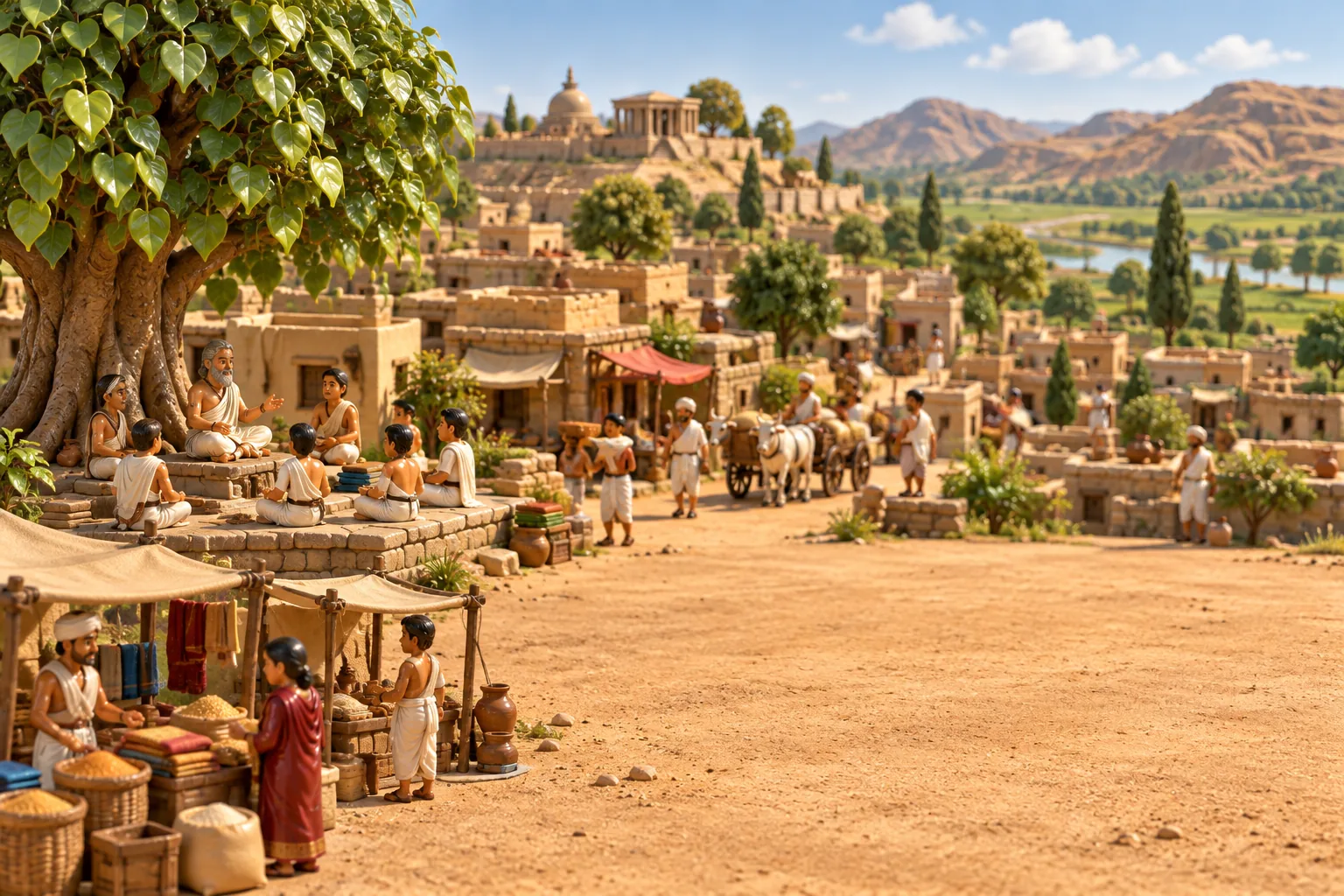
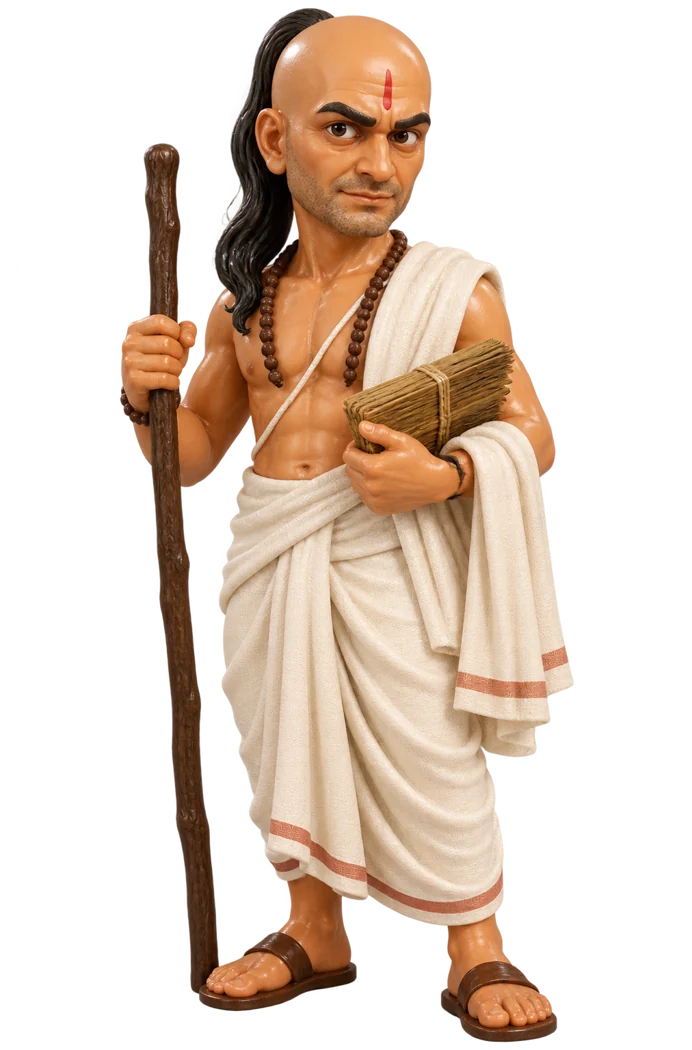
Thrown out of the Nanda king's court for his looks, he untied his topknot and swore not to tie it again until the king was destroyed, then found a boy playing at being emperor.
No documented history of Chanakya survives; everything about him comes from legends written centuries later: the Buddhist Mahavamsa of the 5th–6th century AD, the Jain Parishishtaparvan of Hemachandra, the Kashmiri Kathasaritsagara and Vishakhadatta's play Mudrarakshasa. The Buddhist version makes him a Brahmin of Takshashila, today's Taxila, learned in the three Vedas and in politics. Born with canine teeth, a sign of future royalty, he broke them so that his mother would not fear being neglected.
In every version the Nanda king insults him. In the Buddhist story Dhana Nanda, disgusted by his looks, has him thrown out of an alms-giving for Brahmins; in other versions he unties his topknot and vows not to tie it again until the king is destroyed. Escaping, he sees a group of boys at play, with the young Chandragupta acting as emperor, buys the boy from his foster-father for 1,000 gold coins and trains him for seven years. Together they overthrow the Nandas, Chandragupta becomes the first Maurya emperor, and Chanakya serves as chief adviser to him and to his son Bindusara.
The Jain legend says that, grown very old and fallen out with Bindusara, he starved himself to death. Tradition identified him with Kautilya, author of the Arthashastra, a treatise on statecraft, money, diplomacy and war, but scholars now think it was written by several authors in the early centuries AD.
Read more on Wikipedia
Sources: en.wikipedia.org/wiki/Chanakya, en.wikipedia.org/wiki/Arthashastra

