Middle Ages · state
Champa
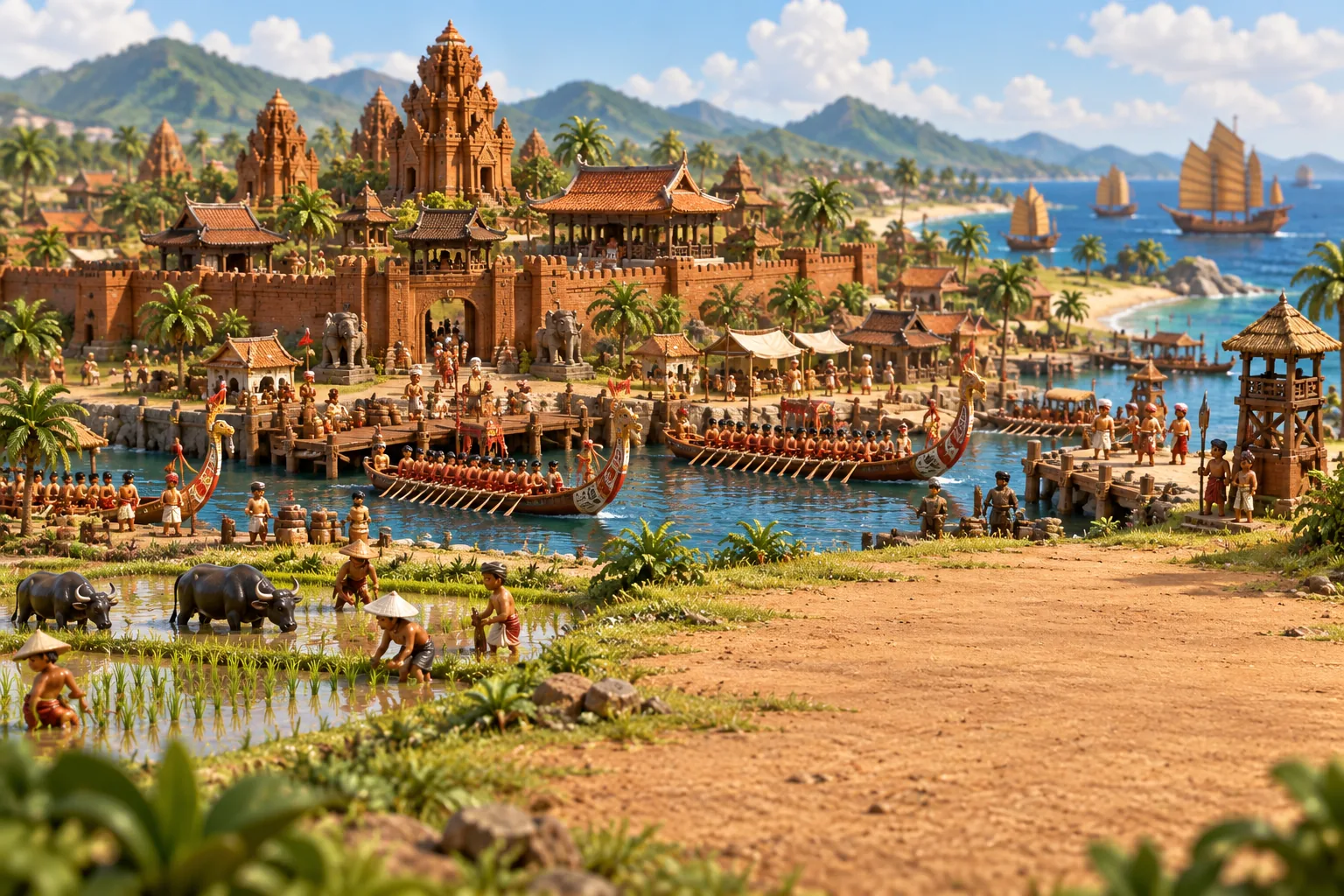
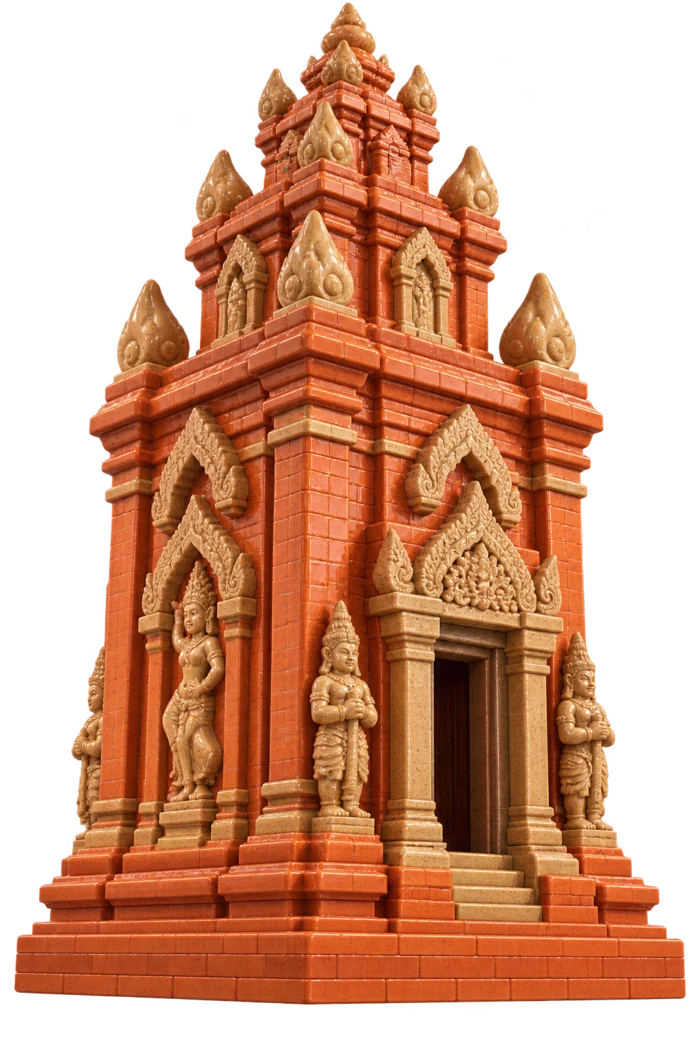
Cham kings built red-brick tower temples along Vietnam's coast, and in 1177 their fleet made a surprise attack on the Khmer capital Angkor and sacked it.
The Cham were seafarers who spoke an Austronesian language, heirs of the Sa Huỳnh culture of the central Vietnamese coast. Chinese sources call their first state Linyi, founded in AD 192 by Khu Liên, a local official who rebelled against the Han. From about the 4th century Indian influence spread: kings wrote inscriptions in Sanskrit and built red-brick Hindu temples, and the name Champa comes from the Sanskrit name of a fragrant flowering tree. Between the 7th and 10th centuries Cham fleets controlled much of the trade in spices and silk across the South China Sea.
Champa was usually a group of principalities along the coast rather than one state. Its centre moved to Indrapura near Da Nang in 875 and to Vijaya in today's Bình Định around the 1150s. It fought constantly with the Khmer and the Vietnamese. In June 1177 King Jaya Indravarman IV launched a surprise naval attack on Angkor, plundered it and killed the Khmer king, though Jayavarman VII later made Champa a Khmer dependency for 30 years.
In the war of 1471 the Vietnamese took Vijaya, and 120,000 people were killed or captured. Champa shrank to the southern principalities. The last, Panduranga, lost its final king to the Vietnamese emperor Minh Mạng in 1832.
Read more on Wikipedia
Sources: en.wikipedia.org/wiki/Champa