Middle Ages · state
Chagatai Khanate
Named after Genghis Khan's second son, it ruled Central Asia for generations until Timur rose from among its own nobles.
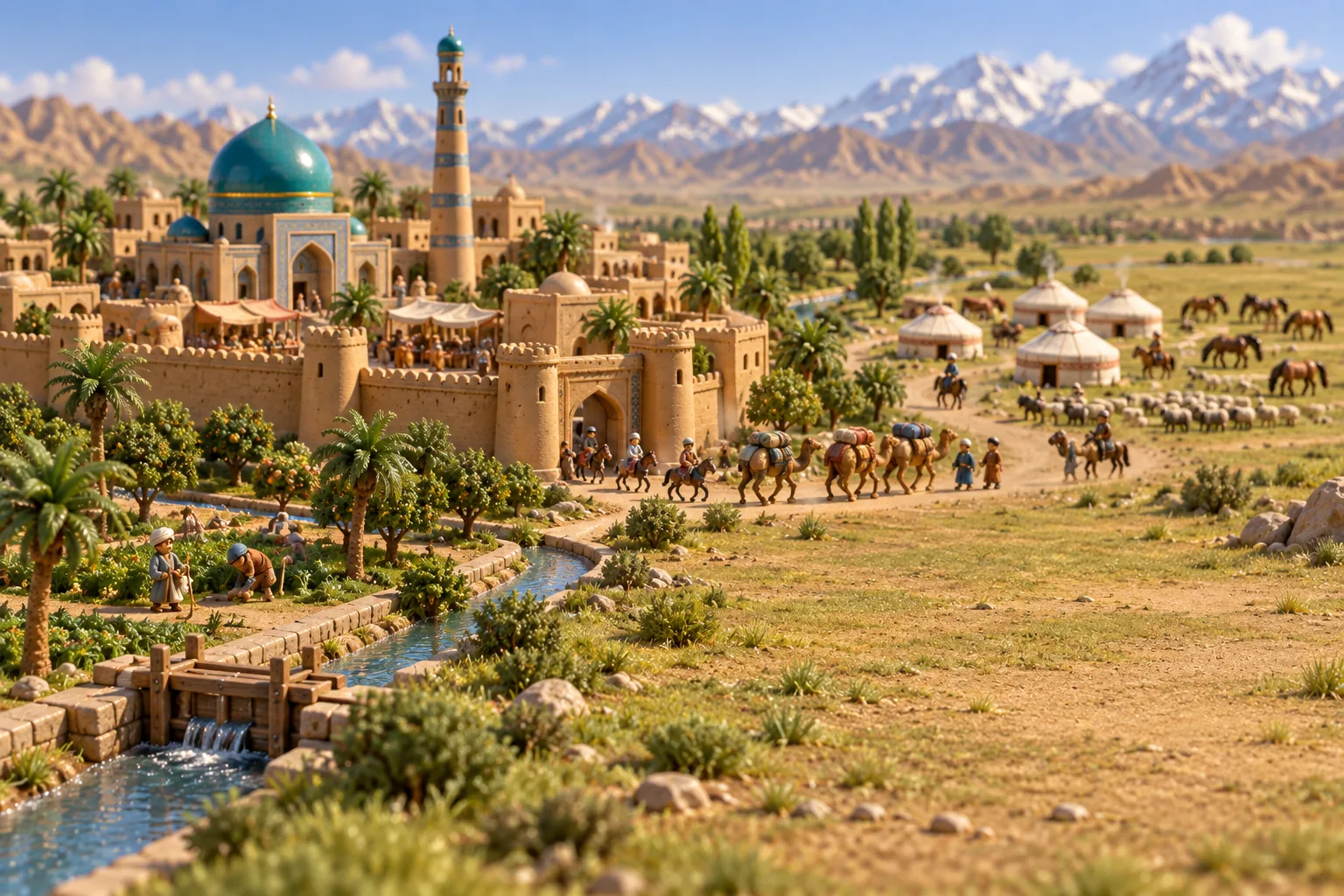
The khanate covered the lands given to Chagatai, the second son of Genghis Khan, and ruled by his descendants. After the Mongol Empire split up from 1259 it became a separate state. At its height in the late 13th century it stretched from the Amu Darya, south of the Aral Sea, to the Altai Mountains, with its capital at Almaliq. Its khans fought their cousins on all sides: Baraq drove out Kublai Khan's governor of the Tarim Basin, was forced by Kaidu to invade the Ilkhanate, and was beaten near Herat in 1270.
Baraq's son Duwa, Kaidu's ally, raided the Punjab and the Delhi Sultanate, and in 1303 recognised the Yuan emperor as overlord. Over time the Mongol ruling clans became Turkic in speech and Muslim in faith. Mubarak Shah was the first khan to convert to Islam, and Tarmashirin, who reigned from 1326 to 1334, embraced Islam and raided India as far as Delhi before an anti-Muslim revolt of the eastern tribes brought him down.
The khanate then split. In the west, the tribal chief Amir Qazaghan killed the khan in 1346 and ruled through puppets, while in the east the Dughlat clan made Tughlugh Timur khan of Moghulistan in 1347. After Tughlugh died in 1363, a young noble named Timur took over Transoxiana and founded his own empire.
Read more on Wikipedia


