Middle Ages · state
Celtic Britons
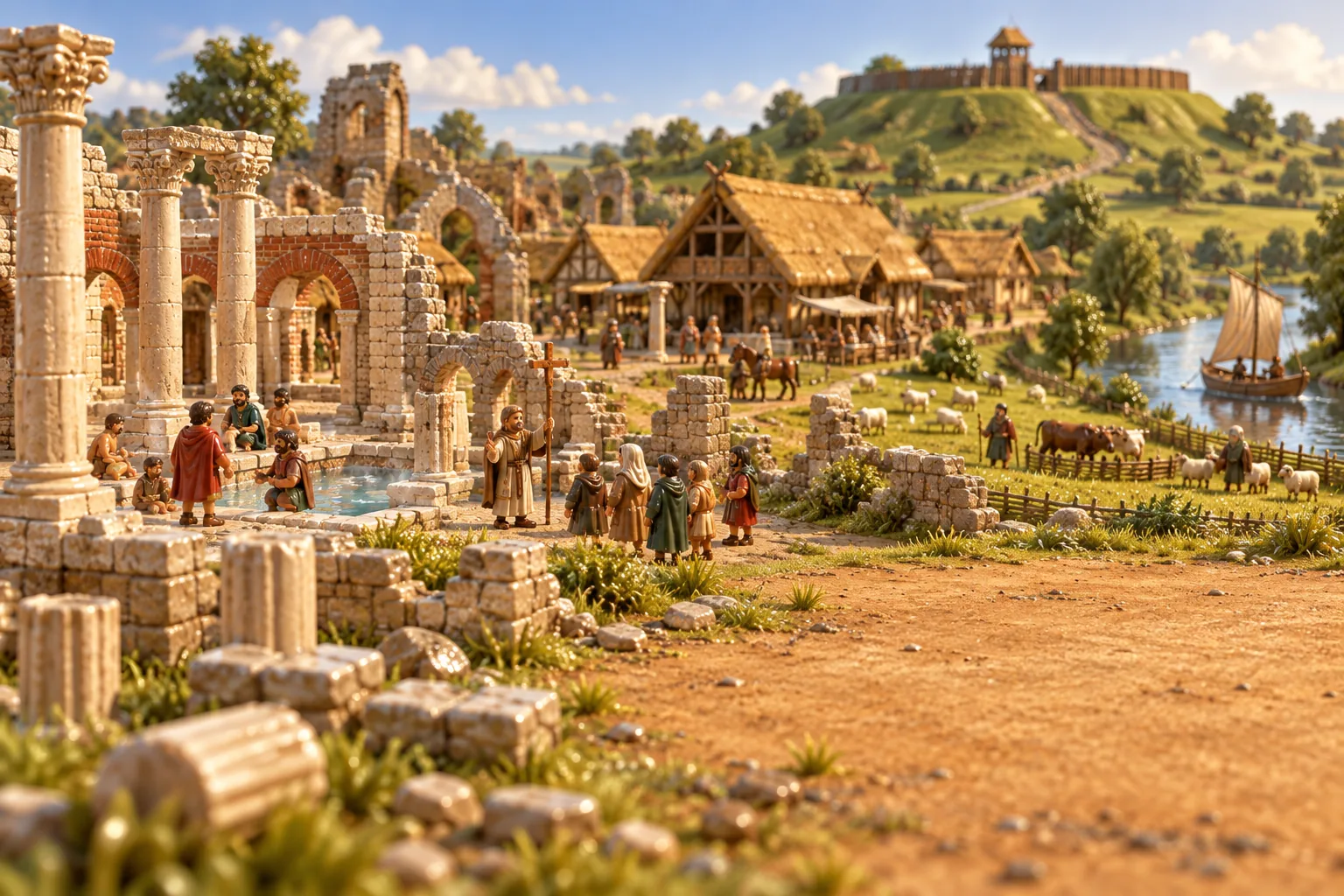
Pushed west by the Anglo-Saxons, the Britons held on in Wales, Cornwall and Brittany, where Welsh and Breton are still spoken.
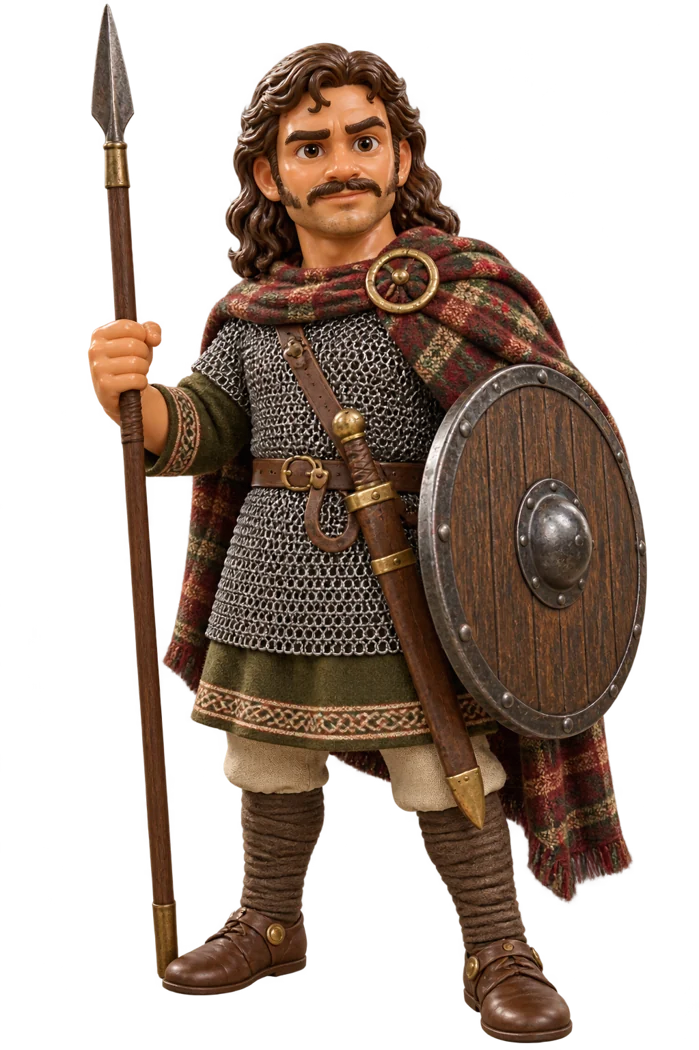
The Britons were the Celtic people of Great Britain from at least the Iron Age. They spoke Common Brittonic, the ancestor of Welsh, Cornish and Breton. Under Rome a Romano-British culture grew up, mainly in the south-east, and British Latin was spoken alongside Brittonic. Rome kept control of Britannia until it left around 410, though parts of the island had shaken off Roman rule decades earlier.
Over the next two centuries Anglo-Saxon settlers took the east and the lowlands kingdom by kingdom: Gloucester fell in 577, the London region by 600, and Elmet, around today's Leeds, in 627. Britons also crossed the sea and founded colonies in Brittany, the Channel Islands and Britonia in Galicia. In the north the Old North held out longer: Rheged survived well into the 8th century, and Gododdin, with its court at Din Eidyn, today's Edinburgh, lasted until about 775.
Wales stayed free of Anglo-Saxon, Gaelic and Viking rule and was divided among Brittonic kingdoms, the foremost being Gwynedd, Powys and Deheubarth, while Cornwall survived as Kernow. By the 11th century the Britons had become separate peoples, the Welsh, Cornish, Bretons and Cumbrians. Gwynedd, the last independent Welsh kingdom, fell to Edward I of England in 1282–1283. Welsh and Breton survive today.
Read more on Wikipedia
Sources: en.wikipedia.org/wiki/Celtic Britons