
Prehistory · culture
Çatalhöyük
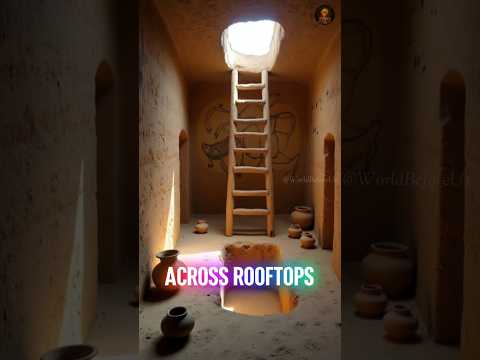
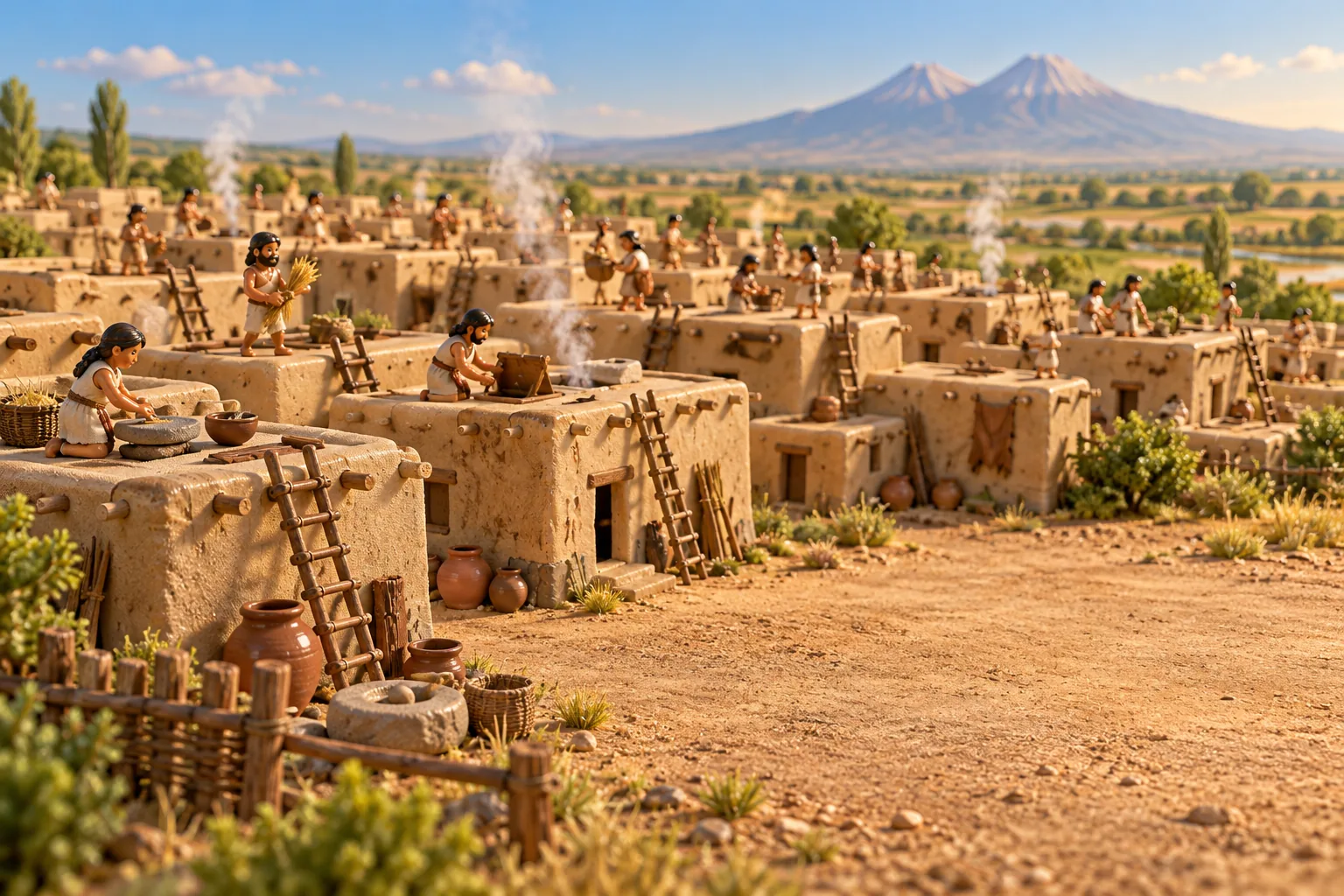
In one of the world's earliest towns there were no streets at all: people walked across the rooftops and climbed down ladders into their homes.
On the Konya Plain in southern Anatolia, people lived on the same spot for nearly two thousand years, from around 7500 BC to 5600 BC. Their houses, built of mudbrick, were packed wall to wall in a honeycomb with no lanes between them. You entered through a hole in the roof and came down a wooden ladder; the same opening let out the smoke from the hearth. The rooftops served as streets, and in good weather much of daily life probably happened up there.
Inside, walls and platforms were plastered smooth, and the rooms were kept scrupulously clean, with rubbish dumped outside. The dead were buried under the floors, beneath the hearths, platforms and beds where the living worked and slept. Cattle heads were mounted on the walls. When a house grew old it was partly knocked down and a new one built on the rubble; over the centuries this raised a mound with eighteen levels of settlement.
James Mellaart found the site in 1958 and dug nearly two hundred buildings in four seasons. Ian Hodder's team, which worked from 1993 to 2018, sometimes spent a whole season on a single house. They found few signs of rulers: no house stands out as a palace or temple, and men and women seem to have had similar status. Early estimates put the population at 5,000–7,000, but newer work suggests 600 to 800 people in an average year of the middle phase.
Read more on Wikipedia
Sources: en.wikipedia.org/wiki/Çatalhöyük