Industrial age · politics
Canadian Confederation
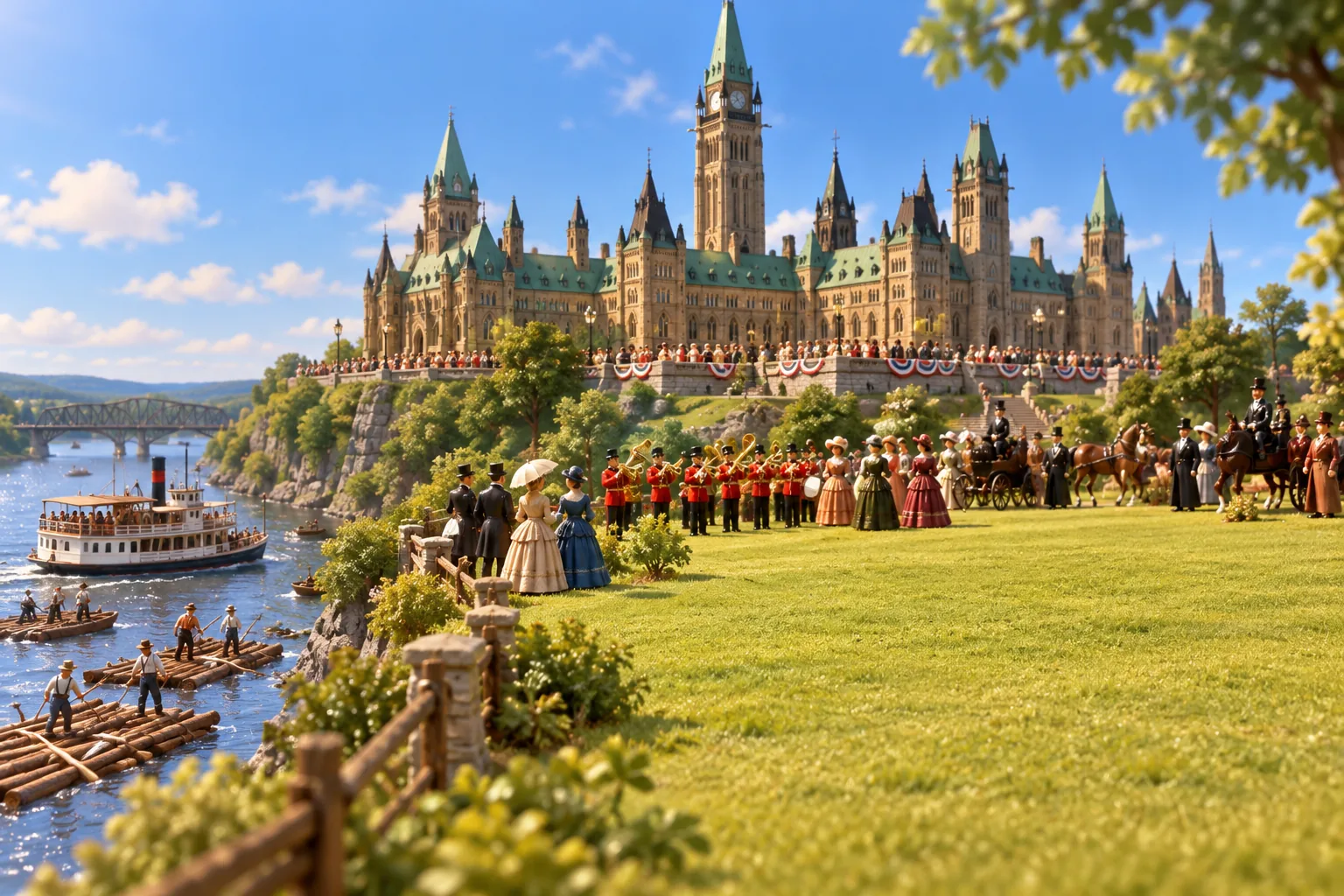
A meeting called to unite three small Maritime colonies was gatecrashed by politicians from Canada, and they left with a plan for a new country.
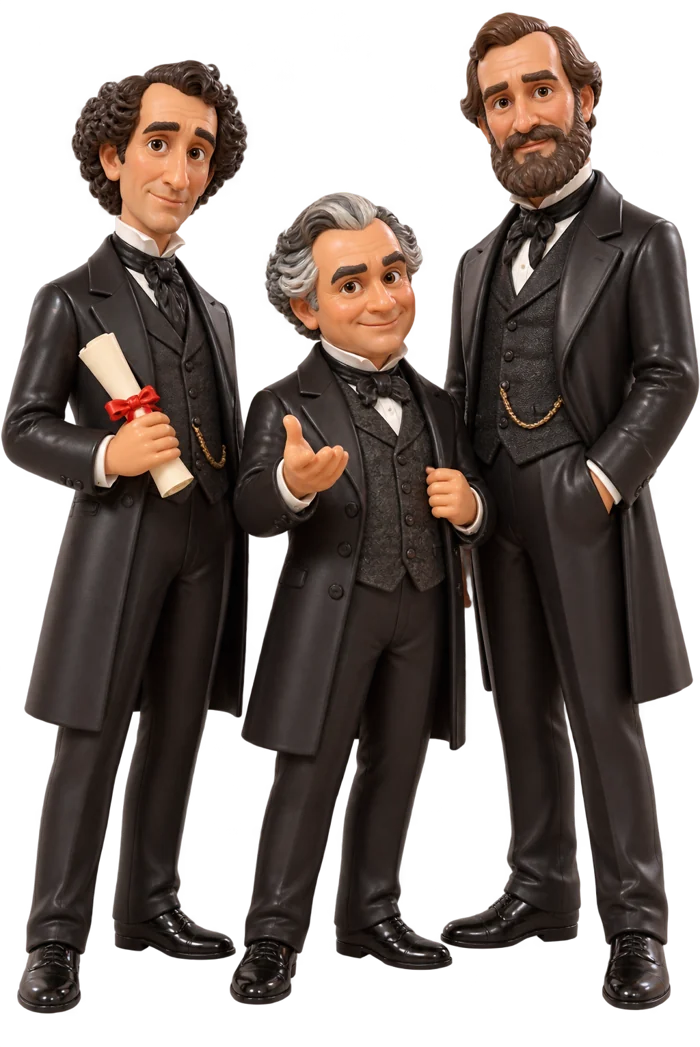
In the 1860s the Province of Canada, today's Ontario and Quebec, was stuck: every law needed a majority from both halves, and governments kept falling. In 1864 John A. Macdonald, George-Étienne Cartier and George Brown put aside their rivalry in a Great Coalition. The United States had ended free trade with the colonies, memories of the Fenian raids were fresh, and many feared American expansion. A union of all British North America seemed the answer.
On 1 September 1864 the premiers of Nova Scotia, New Brunswick and Prince Edward Island met at Charlottetown to discuss a Maritime union, and the Canadians came to argue for something bigger. A month later 33 delegates met at Quebec City and drew up 72 resolutions for a federation. In December 1866 sixteen delegates from Canada, New Brunswick and Nova Scotia sailed to London, where they finalised the plan at the Westminster Palace Hotel and were received by Queen Victoria.
The British North America Act received royal assent on 29 March 1867 and set 1 July 1867 as the day of union. The new Dominion of Canada had four provinces: Ontario, Quebec, Nova Scotia and New Brunswick. More joined later: Manitoba in 1870, British Columbia in 1871, Prince Edward Island in 1873 and Newfoundland only in 1949.
Read more on Wikipedia
