Our time · state
Canada
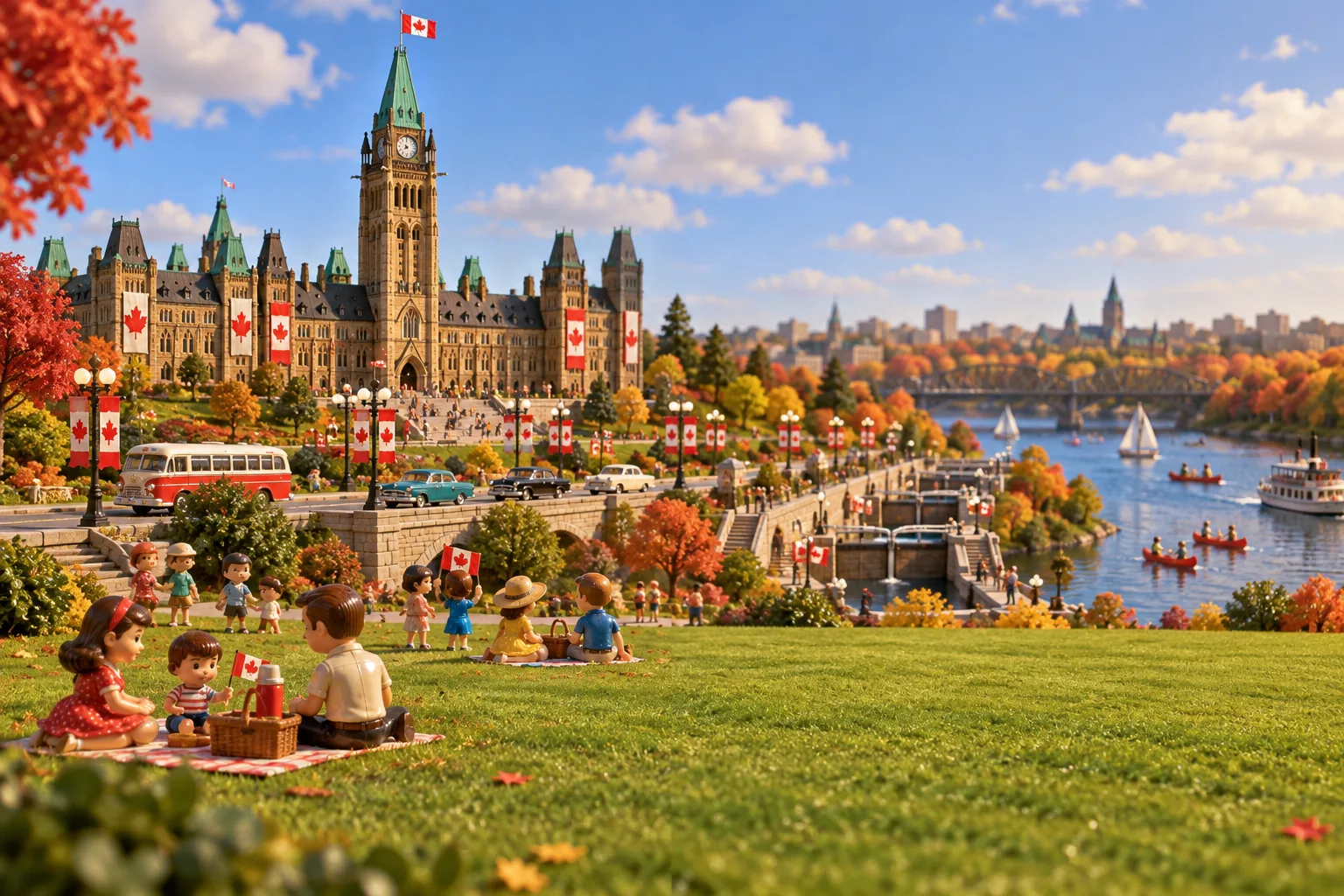
The second-largest country on Earth, it won full independence from Britain step by step, without a revolution.
On 1 July 1867 the British North America Act united Ontario, Quebec, Nova Scotia and New Brunswick into the Dominion of Canada. Britain still ran its foreign affairs, so Britain's declaration of war in 1914 brought Canada into the First World War, where its corps fought at Vimy Ridge. The Balfour Declaration of 1926 and the Statute of Westminster of 1931 set Canada on a legal path to sovereignty equal to Britain's.
After two referendums, Newfoundland joined as a province in 1949. Post-war growth brought a new Canadian identity, marked by the maple leaf flag in 1965, and Canada became officially bilingual in English and French at the federal level. Quebec went through the Quiet Revolution of the 1960s, which gave birth to a secular nationalist movement. The radical FLQ set off the October Crisis with bombings and kidnappings in 1970, and the Parti Québécois, elected in 1976, held an unsuccessful vote on sovereignty in 1980.
The Canada Act 1982 brought the constitution fully home from Britain, together with the Canadian Charter of Rights and Freedoms. A second Quebec referendum in 1995 rejected sovereignty by just 50.6 to 49.4 per cent. Canada became known for peacekeeping and foreign aid as a middle power.
Read more on Wikipedia
Sources: en.wikipedia.org/wiki/Canada, en.wikipedia.org/wiki/History of Canada

