Antiquity · war
Caesar crosses the Rubicon
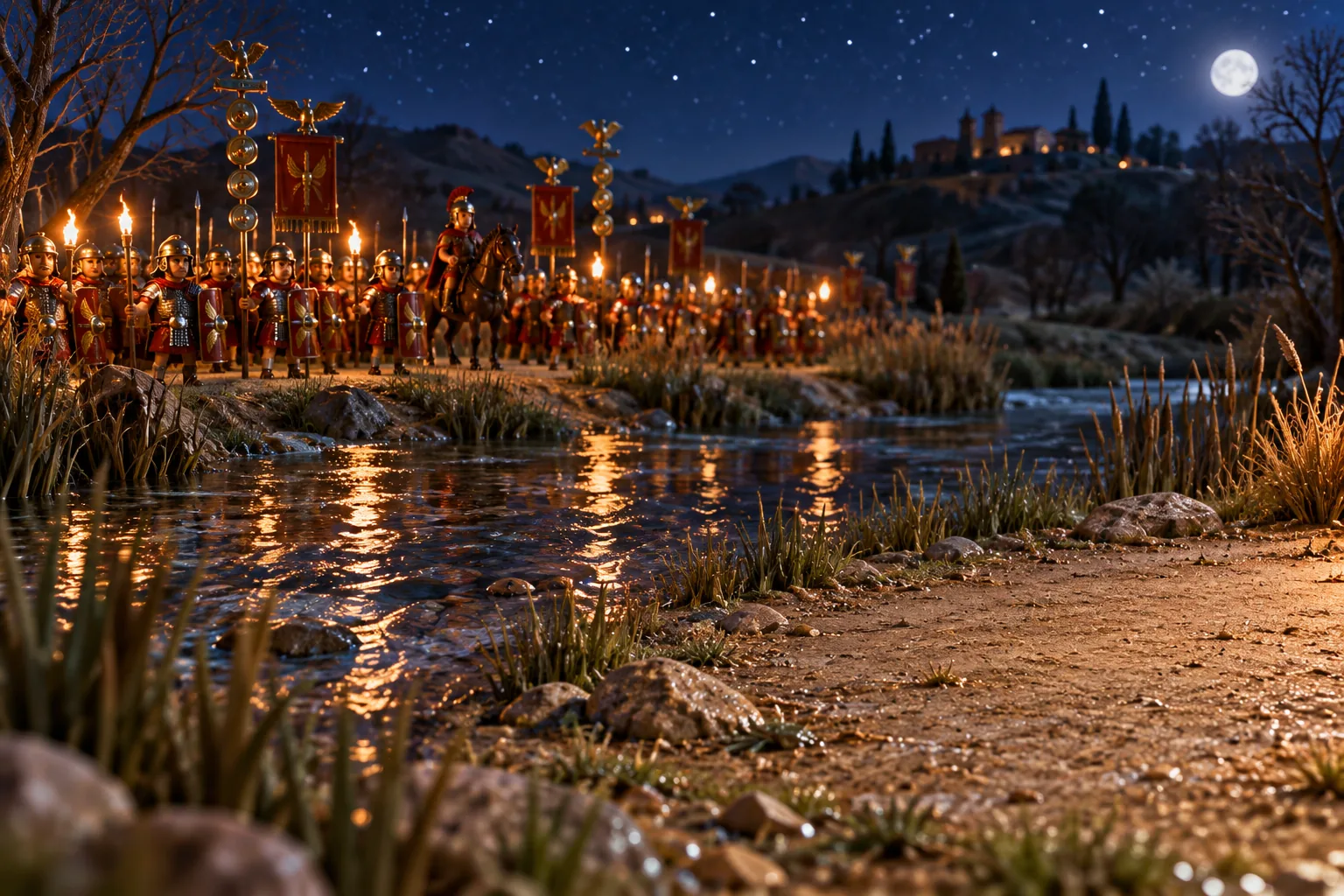
The Rubicon was a small stream, but by Roman law any general who led his army across it became an outlaw, and so did every soldier who followed him.
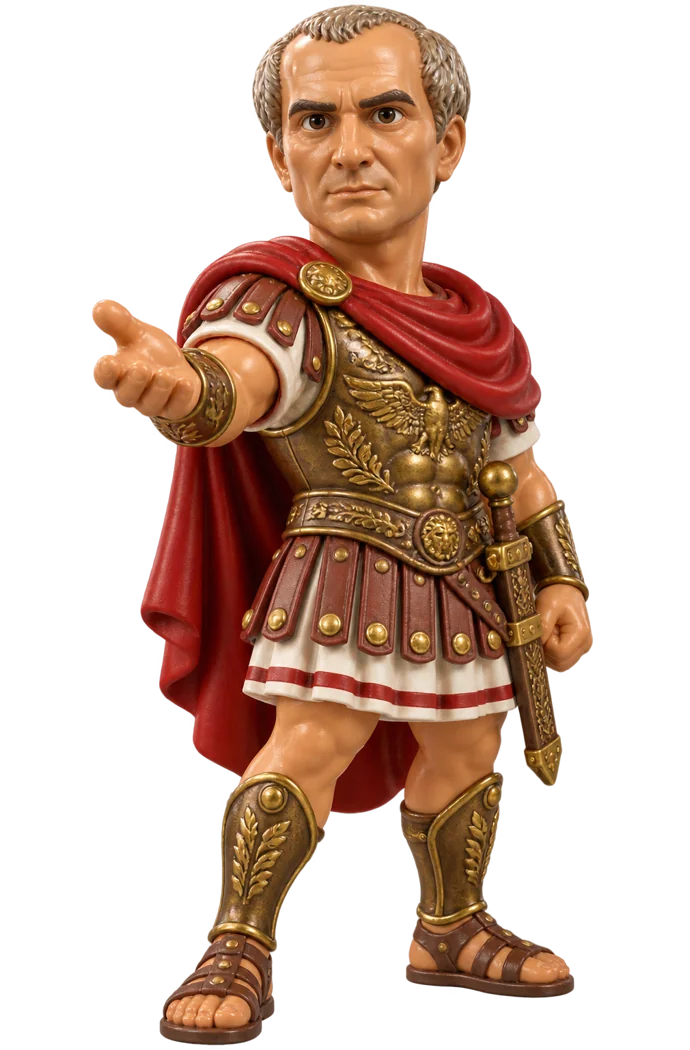
Gaius Julius Caesar was born in July 100 BC into the patrician family of the Julii. He climbed through Roman politics on borrowed money and bold alliances, and from 58 BC he governed a vast province stretching from southern Gaul to Illyricum. By 51 BC he had conquered Gaul, and his legions were devoted to him.
His enemies in the Senate had turned his former ally Pompey against him, and without his army Caesar risked prosecution and exile. As his term ran out, the Senate ordered him to disband his army. Roman law allowed only elected magistrates to command troops inside Italy, and the northern border of Italy on the Adriatic side was the Rubicon. Caesar refused. Around 10 or 11 January 49 BC he led his Thirteenth Legion south over the river. According to the historian Suetonius he said "alea iacta est", the die is cast.
Pompey and much of the Senate fled Rome. Caesar beat Pompey at Pharsalus in Greece on 9 August 48 BC, and Pompey was killed in Egypt. Caesar won the rest of the civil war in Africa and Spain and in early 44 BC was named dictator for life. A few weeks later, on the Ides of March, 15 March 44 BC, a group of senators led by Brutus and Cassius stabbed him to death. Crossing the Rubicon has meant passing the point of no return ever since.
Read more on Wikipedia
Sources: en.wikipedia.org/wiki/Julius Caesar, en.wikipedia.org/wiki/Crossing the Rubicon