Middle Ages · state
Byzantine Empire
Its people never called themselves Byzantines: for over a thousand years they were simply Romans, ruling from the greatest city of the Christian world.
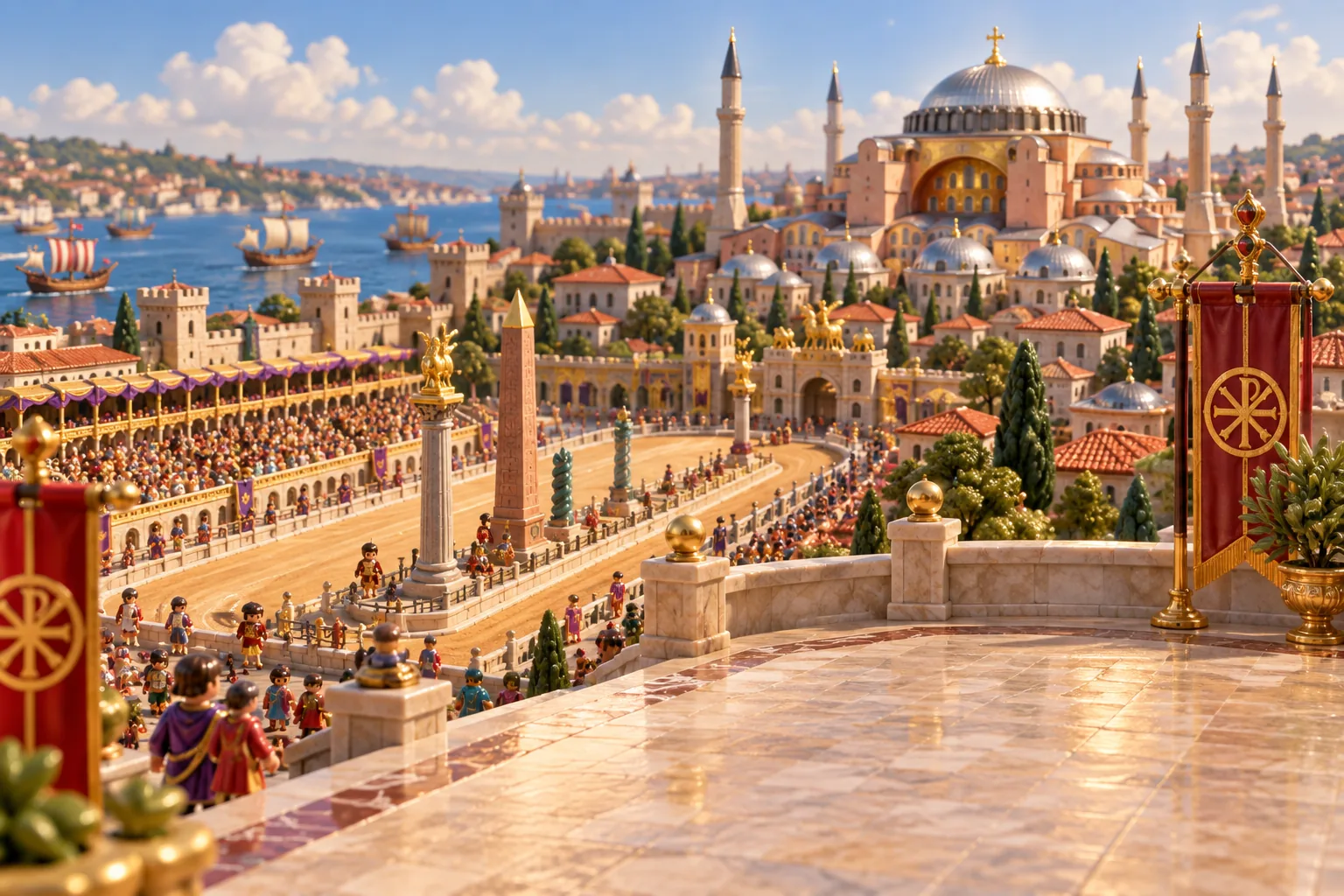
In 330 Constantine the Great made the old Greek town of Byzantium his new capital, Constantinople. After 395 the eastern half of the Roman Empire was ruled on its own, and it survived when the west fell in 476. Its people spoke Greek but called themselves Romans; the name Byzantine was invented by Western scholars long after it was gone.
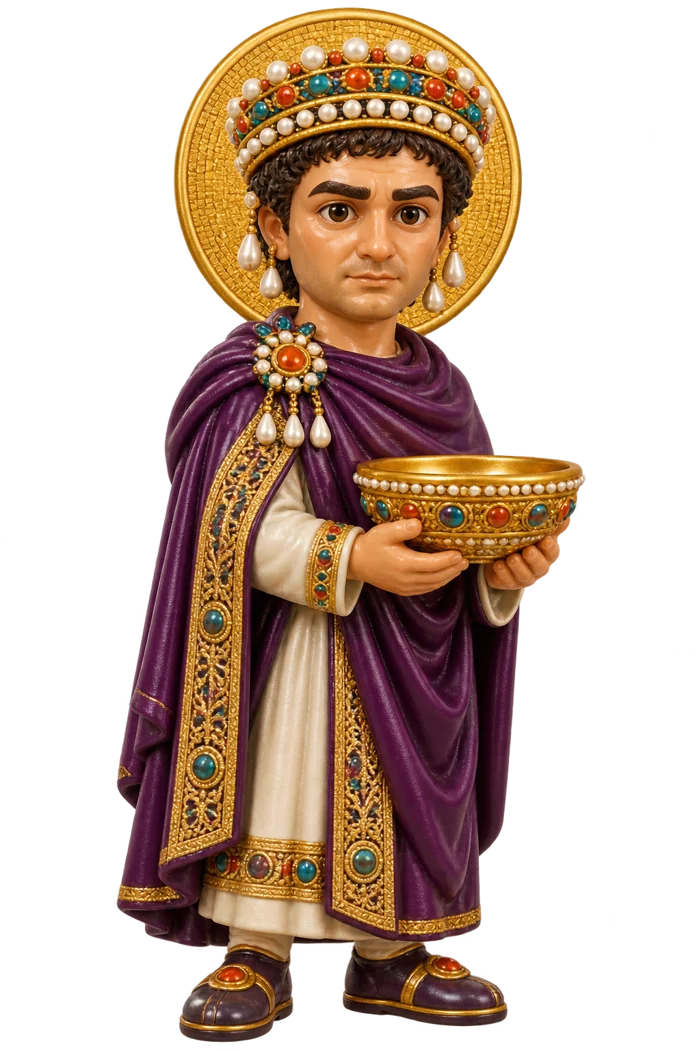
Justinian I, who reigned from 527 to 565, wanted the old empire back. His general Belisarius retook North Africa and Italy, his lawyers collected Roman law into one code that still shapes law in Europe, and he rebuilt Hagia Sophia, consecrated in 537, with a dome that seemed to float. A plague that struck in 541 killed a large part of the empire's people.
In the seventh century Arab armies took Syria and Egypt, but Constantinople held behind its walls and its secret weapon, Greek fire. The empire recovered under emperors like Basil II, lost most of Anatolia to the Seljuk Turks after Manzikert in 1071, and was looted by the knights of the Fourth Crusade in 1204. It never regained its strength. On 29 May 1453 the Ottomans took the city, and the last emperor, Constantine XI, died in the fighting.
Read more on Wikipedia
Sources: en.wikipedia.org/wiki/Byzantine Empire, en.wikipedia.org/wiki/Justinian I, en.wikipedia.org/wiki/Greek fire


