Ancient world · war
Bronze Age collapse
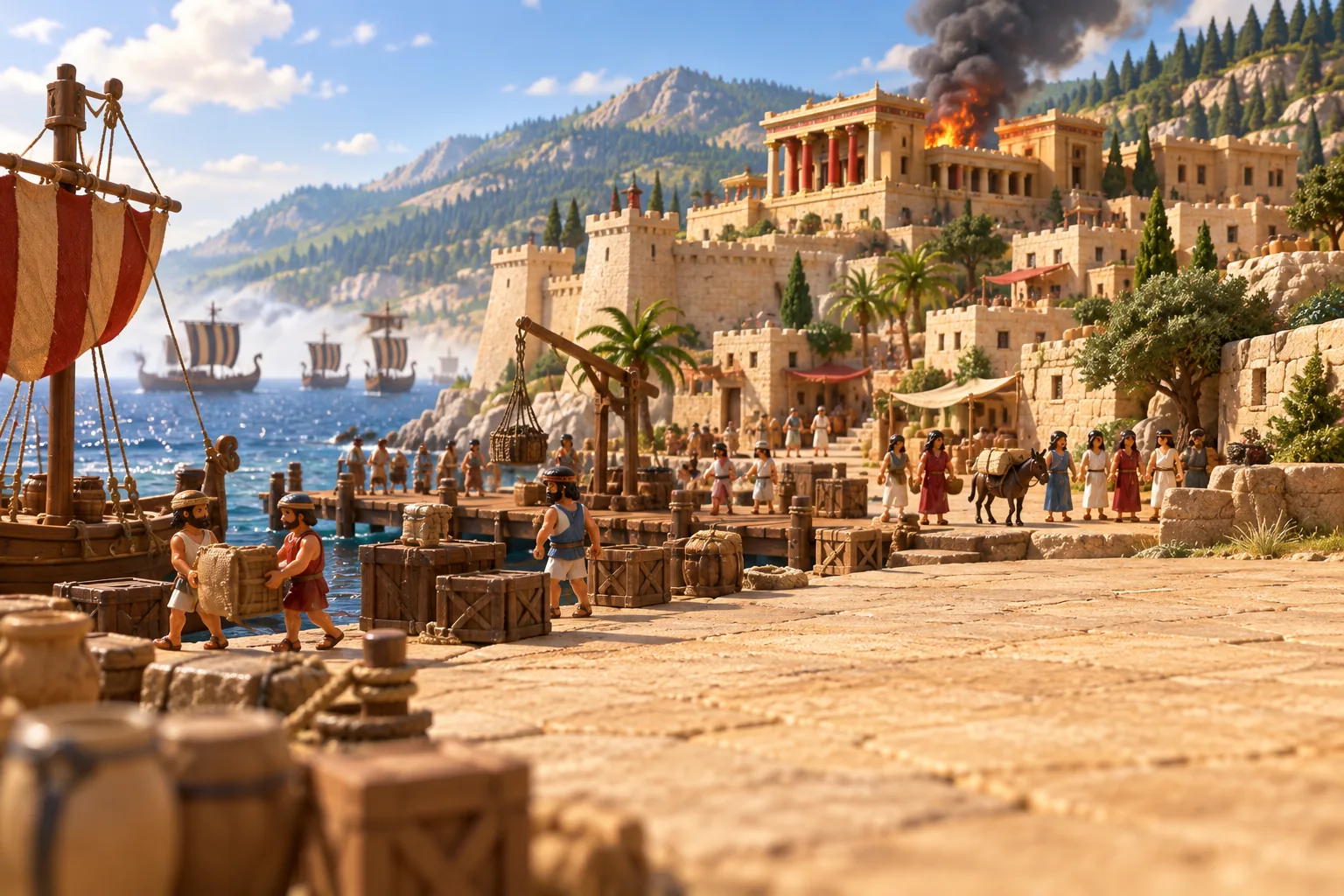
Within a few generations the palaces of Greece burned, the Hittite Empire disappeared, and a king of Ugarit wrote a desperate letter that survived only because the fire destroying his city baked it hard.
In the Late Bronze Age the eastern Mediterranean was one connected world. Egyptians, Hittites, Mesopotamians and Mycenaean Greeks built palaces and monuments, kept written records, and traded copper, timber, pottery and farm goods across the sea, bound together by diplomacy and mutual need.
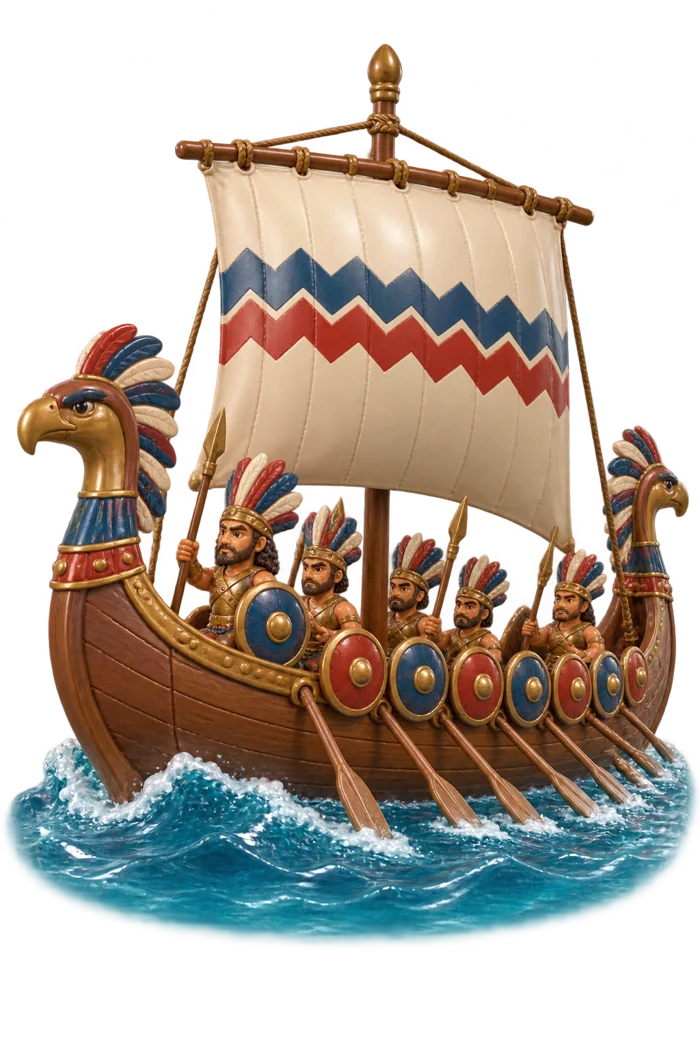
Then, in the late 13th and early 12th centuries BC, much of that world came apart. The Hittite Empire, already strained by famine, plague and civil war, collapsed, and its capital Hattusa burned. None of the Mycenaean palaces survived, and up to 90 percent of small sites in the Peloponnese were abandoned. Ugarit, a rich port on the Syrian coast, was stormed: excavators found arrowheads, javelin heads and daggers scattered through its houses and streets. Egypt survived, but Ramesses III had to fight off invaders known as the Sea Peoples, and the cost nearly emptied the treasury.
The causes are still argued over. Anatolian tree rings record a severe drought around 1198 to 1196 BC, and earthquakes, migrations, disease, new ways of fighting and the spread of ironworking may all have played a part. Recent research also warns that the disaster was exaggerated: many cities on the old maps of destruction were never destroyed. Still, Greece entered a dark age of some 400 years, literacy fell across much of the region, and the Phoenicians grew stronger as Egypt and Assyria pulled back.
Read more on Wikipedia


