Industrial age · state
British Raj
Ruled by the British Crown from 1858, it ended in 1947 in independence and a partition that split the subcontinent in two.
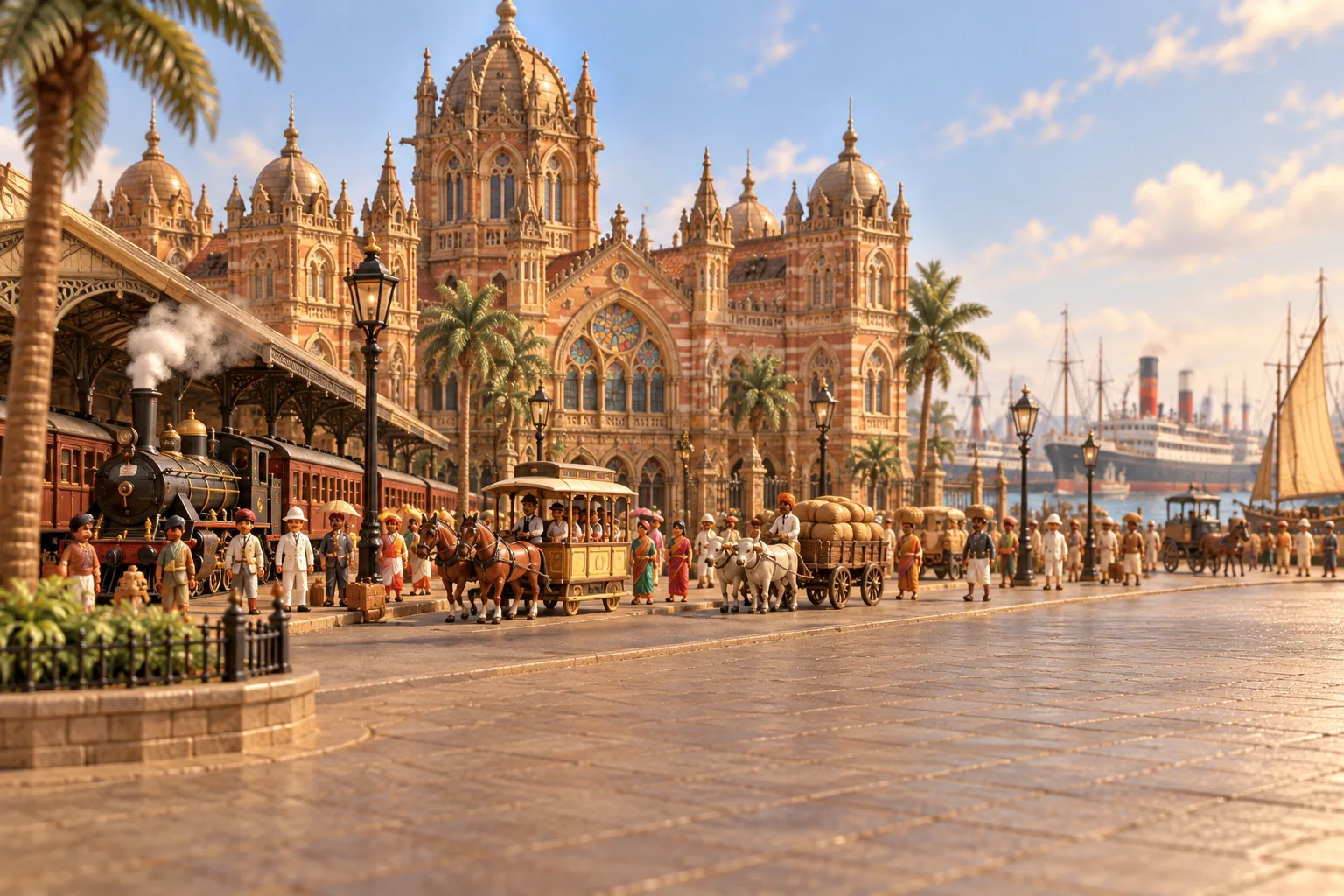
After the Indian Rebellion of 1857, rule over India passed from the East India Company to the British Crown on 28 June 1858, and in 1876 Queen Victoria was proclaimed Empress of India. The Raj combined British India, governed directly, with hundreds of princely states under British overlordship, and at times it also ran Aden, Burma and the Straits Settlements. Railways spread until India had the fourth-largest network in the world by 1920. Terrible famines killed tens of millions in the later 19th century, and after the Great Famine of 1876–1878 the first famine codes were drawn up.
On 28 December 1885 educated Indians founded the Indian National Congress. Viceroy Lord Curzon split Bengal in 1905, provoking mass protest and the Swadeshi boycott of British goods; the partition was reversed in 1911 at the Delhi Durbar, where King George V announced that the capital would move from Calcutta to Delhi.
On 13 April 1919 troops under General Dyer opened fire on an unarmed crowd at Jallianwala Bagh in Amritsar. Gandhi led a growing campaign of civil disobedience, including the Salt Satyagraha of 1930, and Congress launched the Quit India movement in 1942. In 1947 the Raj ended, and the subcontinent was partitioned into India and Pakistan.
Read more on Wikipedia
Sources: en.wikipedia.org/wiki/British Raj, en.wikipedia.org/wiki/Jallianwala Bagh massacre


