Our time · war
Bosnian War
Half a century after the Second World War, a European capital lived under siege for years and a UN safe area fell to genocide.
When Yugoslavia began to break apart in 1991, Bosnia and Herzegovina was its most mixed republic: 44% Muslim Bosniaks, 32.5% Orthodox Serbs and 17% Catholic Croats. On 29 February 1992 it voted for independence in a referendum that the Bosnian Serb leaders boycotted. The war is usually dated from 6 April 1992, when the new state was recognised abroad. Bosnian Serb forces led by Radovan Karadžić, backed by Slobodan Milošević's Serbia and armed by the Yugoslav army, seized about 70% of the country in a campaign of ethnic cleansing.
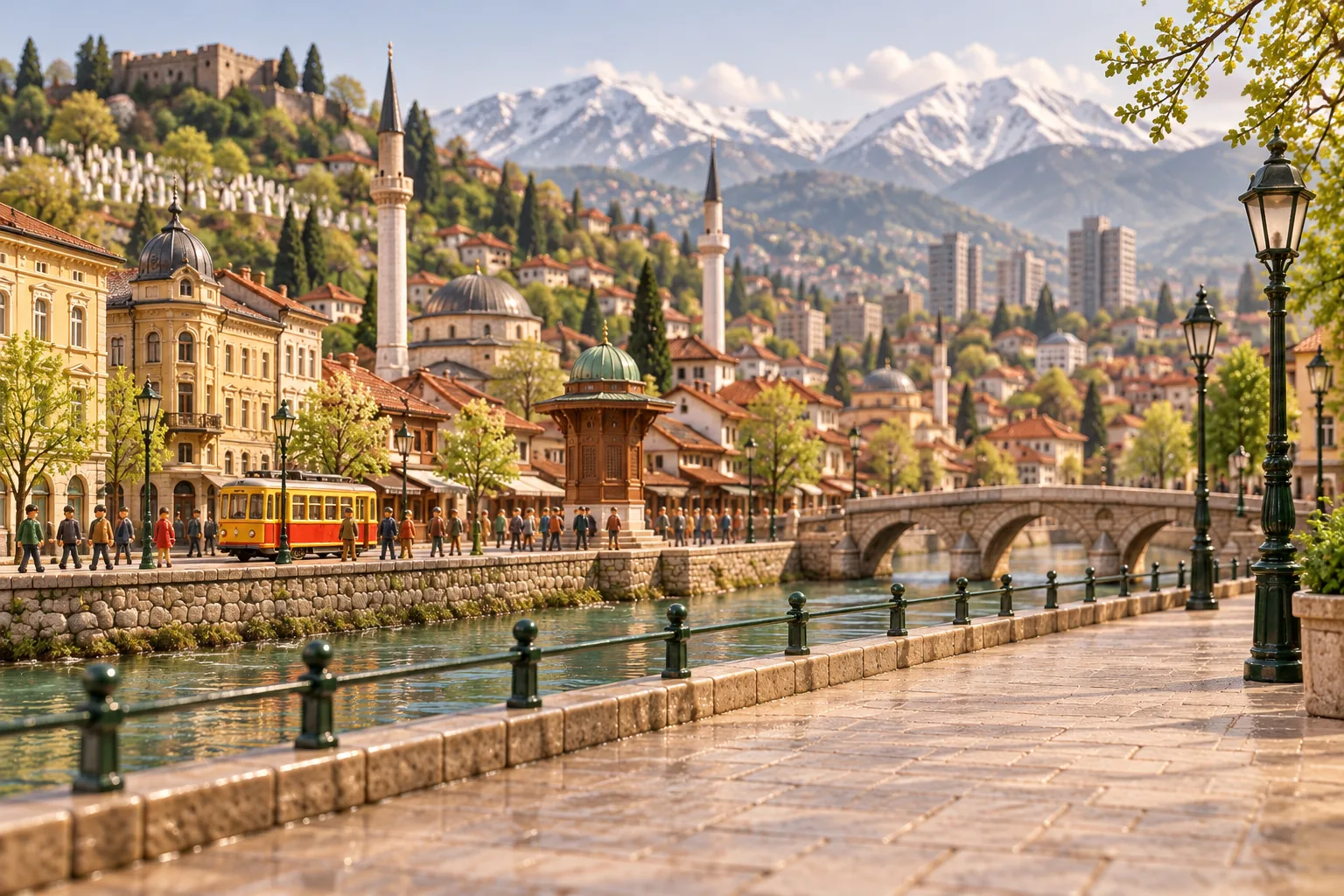
The capital, Sarajevo, was besieged. On 5 February 1994 a single shell killed 68 people in the crowded Markale marketplace. Bosniaks and Croats, who had fought each other since 1993, made peace with the Washington Agreement of 1994. On 11 July 1995 the army of General Ratko Mladić took the UN "safe area" of Srebrenica, guarded by 400 Dutch peacekeepers, and killed more than 8,000 Bosniak men and boys. It is the only event in Europe since the Second World War recognised as genocide.
After Srebrenica and a second massacre at Markale, NATO bombed Bosnian Serb positions in Operation Deliberate Force. Peace talks at an air base in Dayton, Ohio, produced an agreement initialled on 21 November 1995 and signed in Paris on 14 December. The Bosnian Book of the Dead lists at least 97,207 people killed or missing, and over 2.2 million were driven from their homes.
Read more on Wikipedia
Sources: en.wikipedia.org/wiki/Bosnian War