Industrial age · war
Boshin War
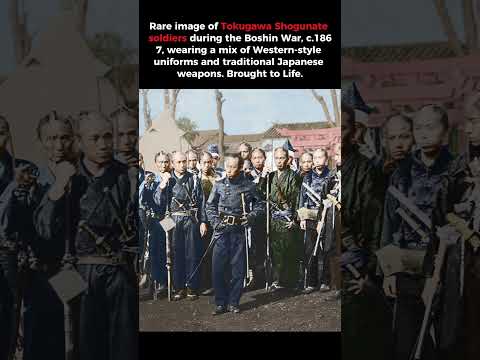
Samurai with Western rifles fought samurai with Western rifles, and when it was over, the shogun's last loyalists had founded a republic on a northern island.
After Commodore Perry forced Japan open in 1854, many young samurai blamed the Tokugawa shogunate for its weakness before the foreigners. An alliance of the western domains of Satsuma, Chōshū and Tosa and court nobles won control of the Imperial Court and of the young Emperor Meiji. The shōgun, Tokugawa Yoshinobu, handed political power back to the emperor, hoping his house could keep a place in the new government. But an imperial decree pushed by Satsuma and Chōshū abolished the House of Tokugawa, and after arsons in Edo were blamed on Satsuma men, Yoshinobu decided to march on Kyoto.
On 27 January 1868 his 15,000-strong army, parts of it trained by French advisers, attacked Satsuma and Chōshū troops at Toba and Fushimi, at the southern entrance to Kyoto, and was beaten by the smaller but better-armed imperial side. Saigō Takamori led the imperial army east and surrounded Edo in May; the shōgun's army minister, Katsu Kaishū, negotiated its surrender. In October Edo was renamed Tokyo. In the north the domain of Aizu held out under siege for a month and gave in on 6 November.
The shogunate's naval chief, Enomoto Takeaki, escaped to Hokkaido with eight steam warships and French officers led by Jules Brunet, and founded the Republic of Ezo around the star-shaped fortress of Goryōkaku at Hakodate. He surrendered on 27 June 1869. About 8,200 men were killed in the war, and Japan was united under the emperor.
Read more on Wikipedia
Sources: en.wikipedia.org/wiki/Boshin War