
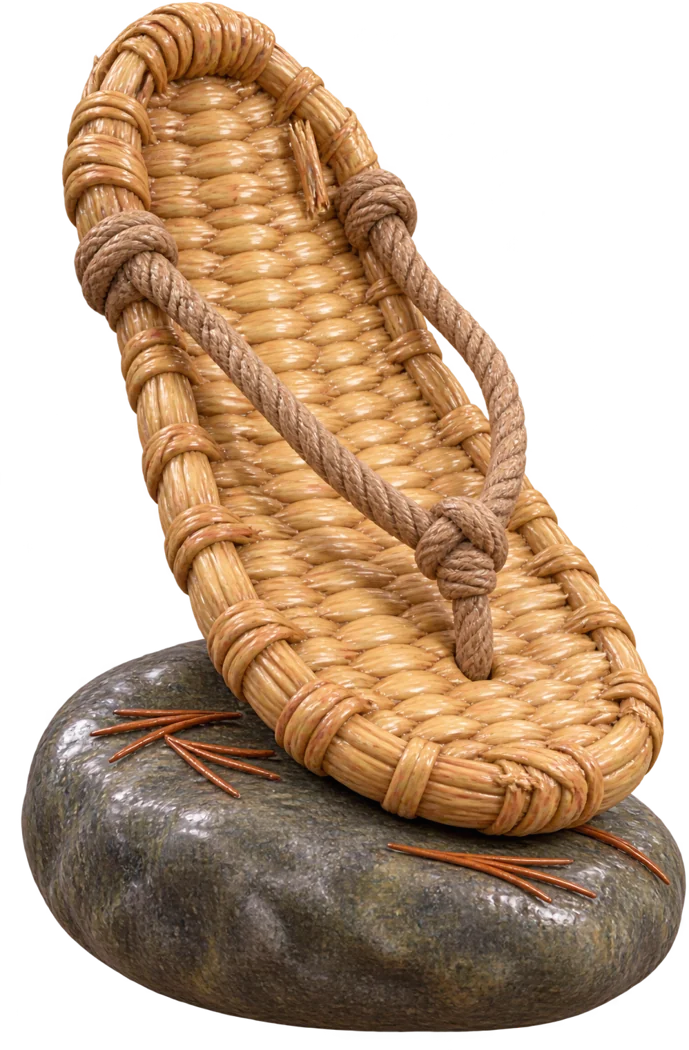
Middle Ages · person
Bodhidharma
Legend says he sat facing the wall of a cave above the Shaolin Monastery for nine years without speaking, and so became the "wall-gazing Brahmin".
Little is known for certain about Bodhidharma, and later accounts are thick with legend. The earliest text to mention him, Yang Xuanzhi's record of the monasteries of Luoyang compiled in 547, calls him a "Persian Central Asian" monk who praised the golden stupa of the Yongning temple and claimed to be 150 years old. Another early source makes him the third son of a great king of South India. He came from the Western Regions and taught mainly in the lands of the Northern Wei, and the sources disagree on when he arrived.
His teaching centred on meditation and the Laṅkāvatāra Sūtra, and early accounts name two disciples, Daoyu and Dazu Huike. Later tradition, set down in the Anthology of the Patriarchal Hall of 952, made him the 28th patriarch in a line going back to the Buddha and the first patriarch of Chan in China. It says he reached China in 527, met Emperor Wu of Liang, left his court and went to Mount Song near Luoyang and the Shaolin Monastery, where he faced a wall for nine years. In another legend Huike stood in the snow for weeks before he was accepted.
The monk Daoxuan wrote that he died on the banks of the Luo River and was buried by Huike. The idea that he founded Shaolin kung fu was popularised only in the 20th century.
Read more on Wikipedia
Sources: en.wikipedia.org/wiki/Bodhidharma, en.wikipedia.org/wiki/Shaolin Monastery