Industrial age · politics
Bleeding Kansas
For a few years Kansas had two capitals, two constitutions and two legislatures, one for slavery and one against.
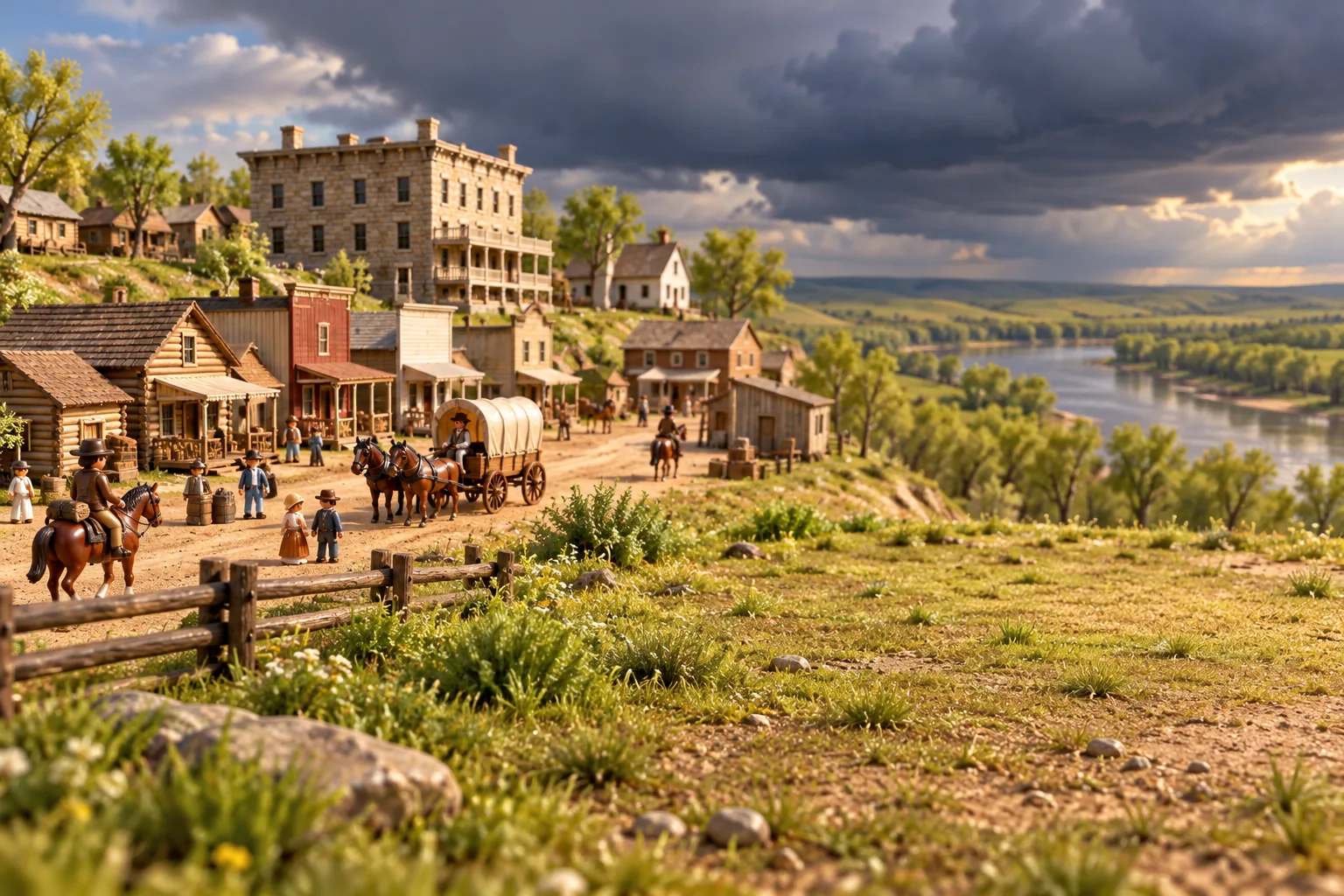
In May 1854 the Kansas–Nebraska Act left it to the settlers of the new Kansas Territory to vote on whether slavery would be allowed there. The answer mattered to the whole country, because Kansas's future senators would tip the balance in a Senate split over slavery. Both sides rushed in settlers. The New England Emigrant Aid Company sent anti-slavery families, who founded towns such as Lawrence and Topeka, while pro-slavery "Border Ruffians" crossed over from neighbouring Missouri to vote in Kansas elections. In March 1855 they helped elect a pro-slavery legislature, which free-staters called the "bogus legislature".
Words turned to violence. On 21 May 1856 a pro-slavery force sacked Lawrence, burning the Free State Hotel and wrecking two anti-slavery newspapers. In the Senate, after Charles Sumner of Massachusetts gave his "Crimes Against Kansas" speech, Congressman Preston Brooks of South Carolina nearly beat him to death with a cane. On the night of 24 May the abolitionist John Brown and his followers dragged five pro-slavery men from their homes at Pottawatomie Creek and killed them with broadswords.
A new governor, John W. Geary, brought an uneasy peace in late 1856, though raids went on, among them the Marais des Cygnes massacre of 1858. About 56 political killings were recorded, and the total may be as high as 200. It became clear that most Kansans wanted a free state, but Southern senators blocked it until they left Congress; Kansas joined the Union as a free state on 29 January 1861, on the eve of the Civil War.
Read more on Wikipedia


