
Middle Ages · nature
The Black Death
In a few years a bacterium carried by fleas killed between a third and more than half of everyone in Europe.
The disease was plague, caused by the bacterium Yersinia pestis and spread mostly by the bites of fleas that lived on rats, though in its pneumonic form it could pass from person to person through the air. In the mid-1340s it was moving west across the steppe. During the siege of the Genoese trading port of Caffa in Crimea, the army of the Golden Horde, itself stricken by the disease, is said to have catapulted infected corpses over the walls; infected rats crossing the siege lines may have done the rest.
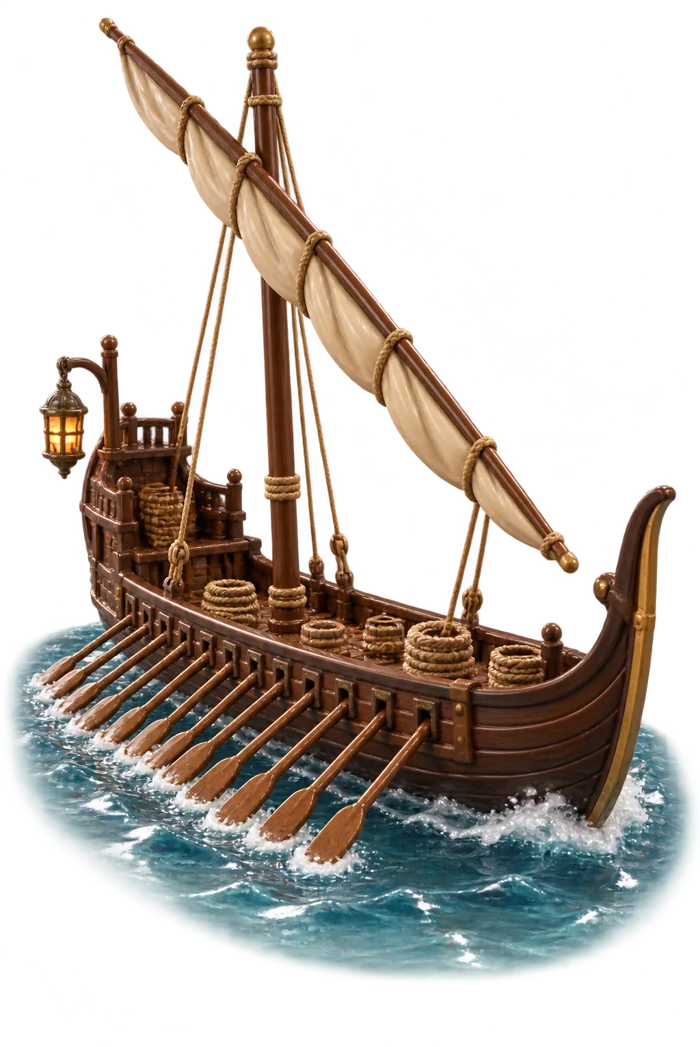
Genoese traders fleeing by sea carried it on. It reached Constantinople in the summer of 1347, and in October twelve Genoese galleys brought it to Sicily. Within months it was in Pisa, Genoa and Venice, and from there it spread across France, England, Germany and Scandinavia, as well as North Africa and the Middle East. By 1353 it had killed up to 50 million people, about 30 to 60 percent of Europe's population and about a third of the Middle East's.
Nobody understood what was happening. People blamed the stars, earthquakes and poisoned wells. Jews were accused of poisoning the water, and in Strasbourg in February 1349 about 2,000 Jews were murdered; many others fled to Poland, where King Casimir the Great welcomed them. With so many dead, workers were scarce and wages soared. Europe's population did not climb back to its 14th-century level until the 16th century, and plague kept returning for centuries.
Read more on Wikipedia
Sources: en.wikipedia.org/wiki/Black Death


