Our time · nature
1970 Bhola cyclone
A storm that struck at high tide on the low islands of the Ganges Delta killed more people than any other tropical cyclone ever recorded, and helped give birth to a new nation.
The storm formed over the central Bay of Bengal on 8 November 1970 and moved slowly north, growing stronger. On 11 November it developed a clear eye, with three-minute winds of 185 km/h. Cyclones had no names in the region then. Warnings were broadcast on Radio Pakistan, but many people on the coast did not understand the signal used, and a large part of the population was taken by surprise.
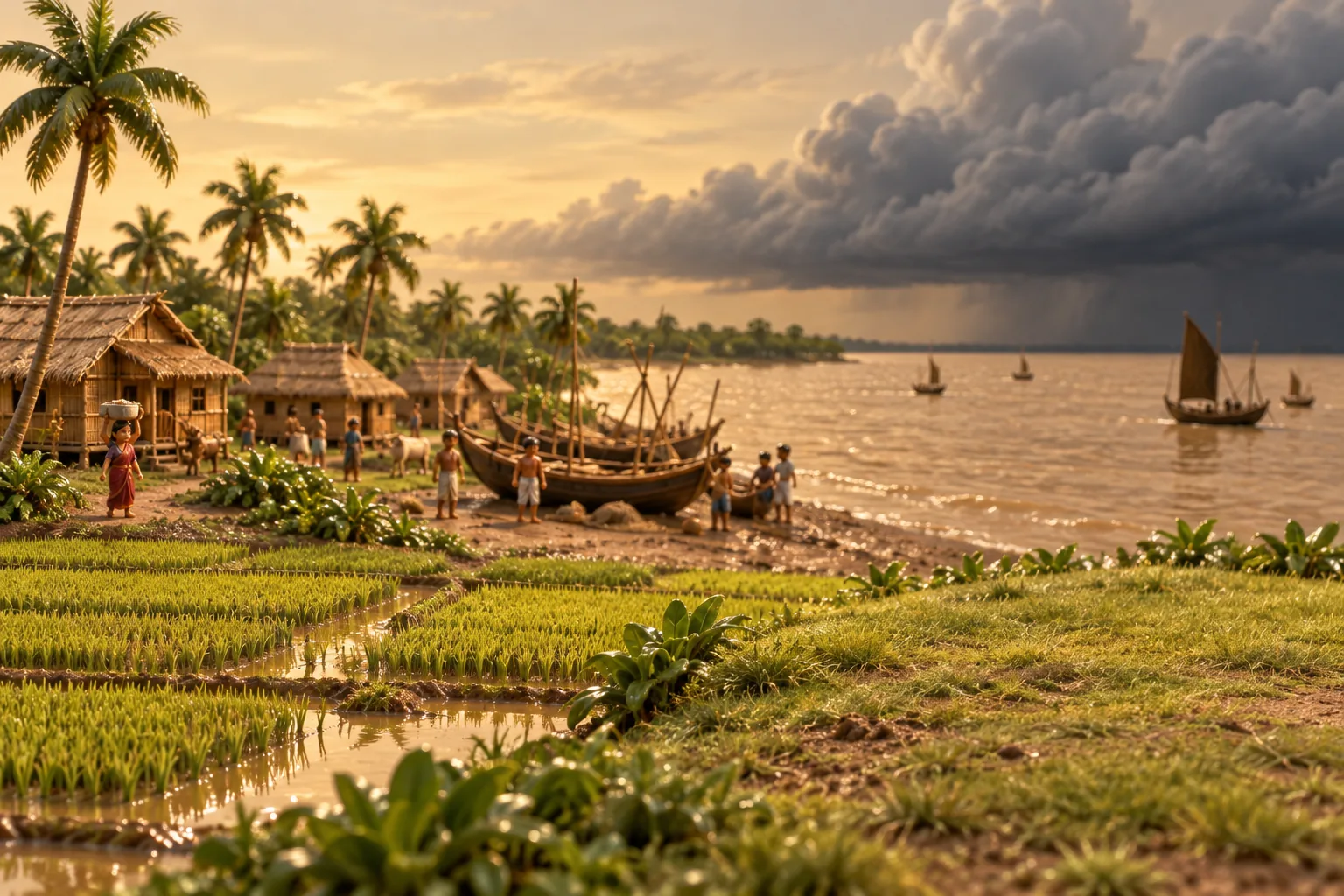
The cyclone came ashore on the evening of 12 November, around high tide. It pushed a storm surge up to 10 metres high across the flat islands of the delta. At least 300,000 people died, possibly as many as 500,000. In Tazumuddin, the worst-hit area, more than 45% of its 167,000 people were killed. About 85% of homes in the area were destroyed or badly damaged, rice crops were wiped out, and 46,000 of the 77,000 fishermen living on shore were lost.
The military government of President Yahya Khan in faraway West Pakistan was slow to send help, and East Pakistan's leaders accused it of gross neglect. India, the United States, Britain and many others sent food, boats and helicopters. Anger over the response helped Sheikh Mujibur Rahman's Awami League win a landslide in East Pakistan in the December election, and within months the Bangladesh Liberation War began.
Read more on Wikipedia


