Industrial age · politics
Beer Hall Putsch
The coup began with a pistol shot into the ceiling of a crowded beer hall and ended the next day in a volley of gunfire in front of a monument to Bavaria's generals.
In 1923 the Weimar Republic was in deep crisis, and in Munich the leader of the small Nazi Party, Adolf Hitler, hoped to copy Benito Mussolini's March on Rome of the year before: seize Bavaria first, then march on Berlin. On the evening of 8 November about 600 of his stormtroopers surrounded the Bürgerbräukeller, a large beer hall where the Bavarian leader Gustav von Kahr was speaking to some 3,000 people. Hitler pushed through the crowd, fired a shot into the ceiling and announced that the national revolution had begun.
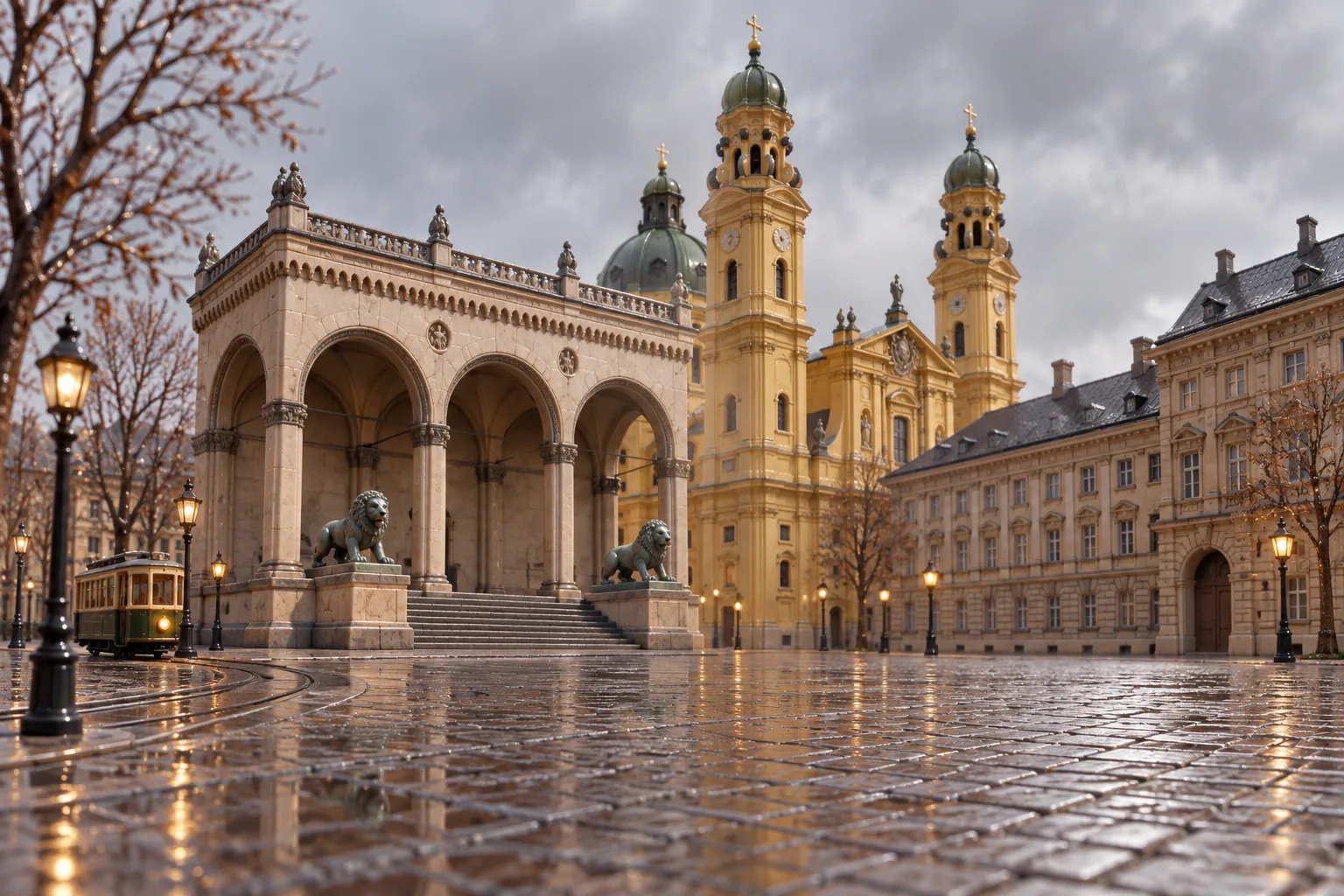
The plotters had the support of the famous wartime general Erich Ludendorff, but that night Ludendorff let Kahr and his colleagues go, and they turned against the plot. Next day about 2,000 Nazis marched into the city centre. At the Odeonsplatz, in front of the Feldherrnhalle, they met a cordon of state police. Shots were exchanged, and four police officers, a bystander and fifteen or sixteen of the marchers were killed. Hitler fled and was arrested two days later.
His 24-day trial for treason made him known across Germany. He was sentenced to five years in Landsberg Prison, where he wrote Mein Kampf with Rudolf Hess, but he was released on 20 December 1924 after only nine months. From then on he sought power by legal means.
Read more on Wikipedia