Industrial age · war
Battle of Waterloo
Wellington called it "the nearest-run thing you ever saw in your life", and it was decided by a Prussian army marching in from the side.
In March 1815 Napoleon came back from exile and took power in France again, the start of his Hundred Days. His old enemies formed the Seventh Coalition. Two of its armies were waiting in what is now Belgium: a British-led force under the Duke of Wellington and the Prussians under Gebhard Leberecht von Blücher. Napoleon meant to beat them one at a time. On 16 June he defeated the Prussians at Ligny, but they pulled back in good order, and Wellington fell back in step with them to a low ridge near the village of Waterloo.
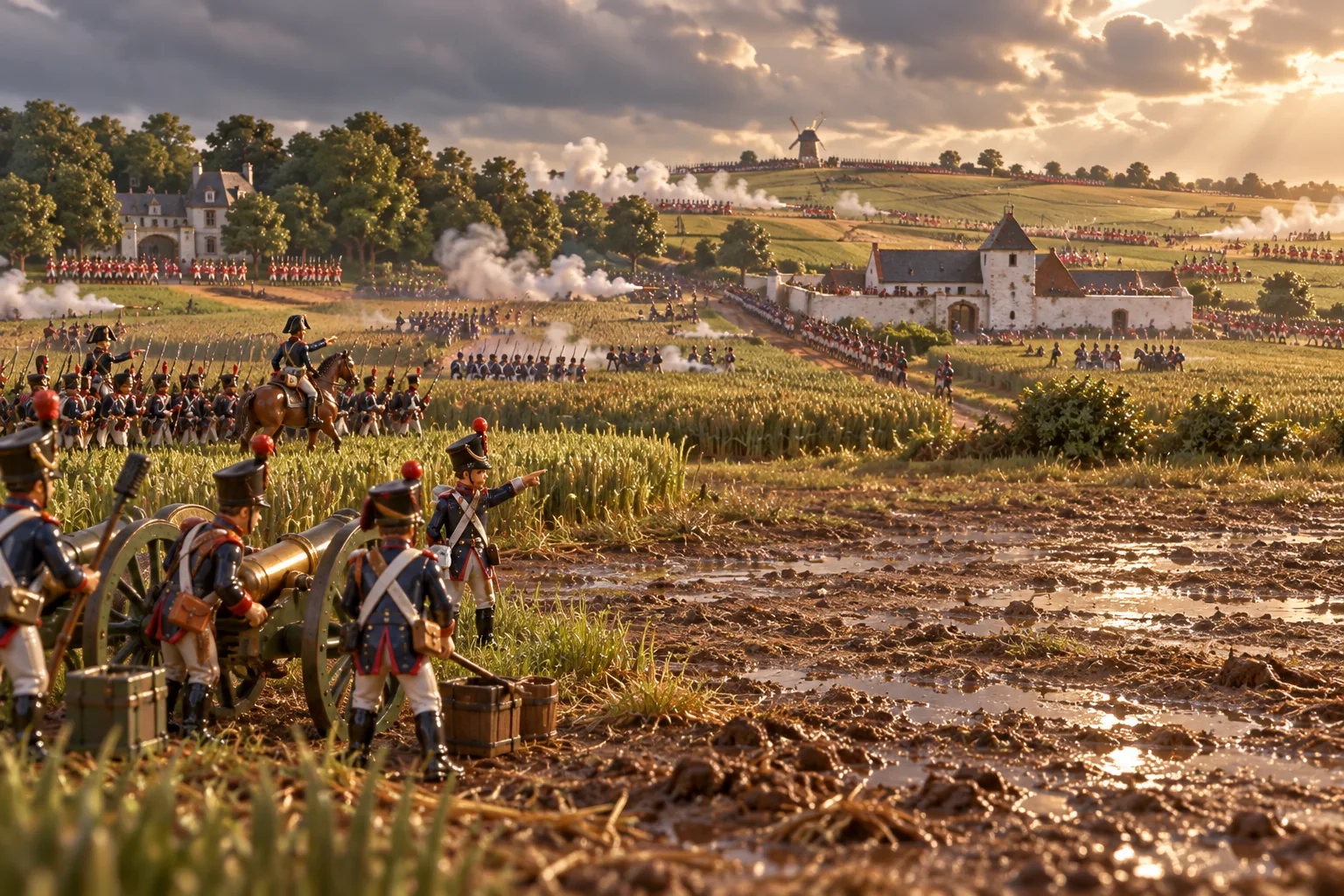
On Sunday 18 June Wellington drew up his army on the ridge of Mont-Saint-Jean across the road to Brussels, with the farms of Hougoumont and La Haye Sainte held as strongpoints in front. The ground was soaked by rain, so Napoleon delayed his first attack until late morning. All afternoon the French infantry and cavalry attacked the ridge. Meanwhile the Prussians, eventually some 50,000 men, were marching in, and from about 16:30 they struck the French flank at the village of Plancenoit.
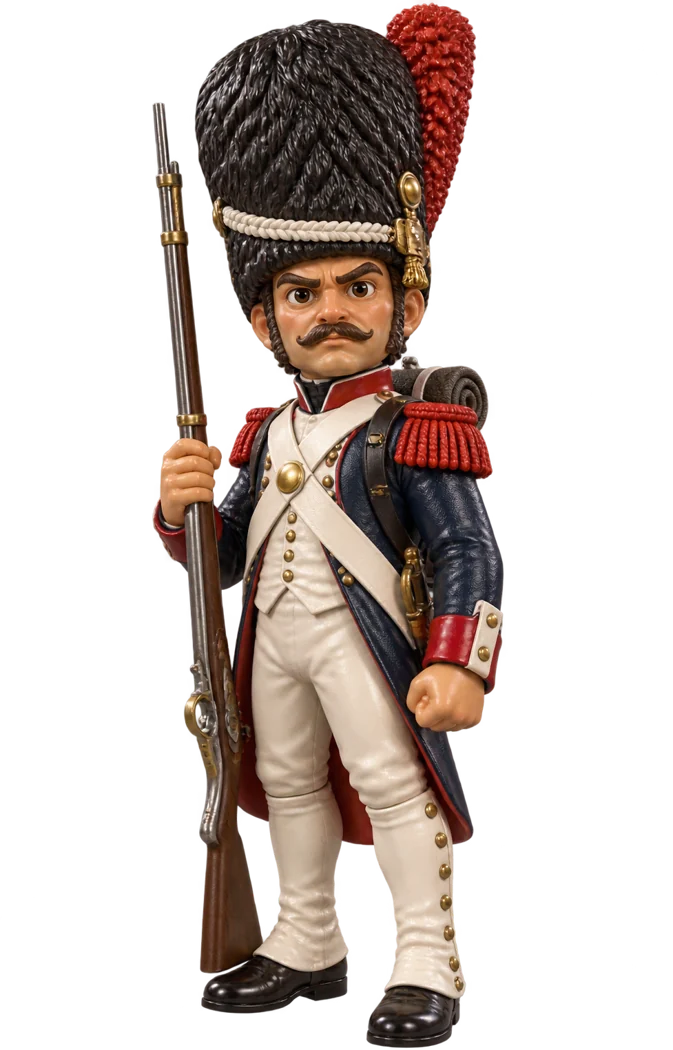
In the evening Napoleon sent in his last reserve, the veteran infantry of the Imperial Guard. The allied line threw it back, the Prussians broke through on the right, and the French army fled. It was the second-bloodiest single day of the Napoleonic Wars, after Borodino. Napoleon abdicated four days later and was exiled to Saint Helena, where he died in 1821.
Read more on Wikipedia


