Early modern · war
Battle of Vienna
At the end of the day, 18,000 horsemen charged down the hills at once: the largest cavalry charge in history.
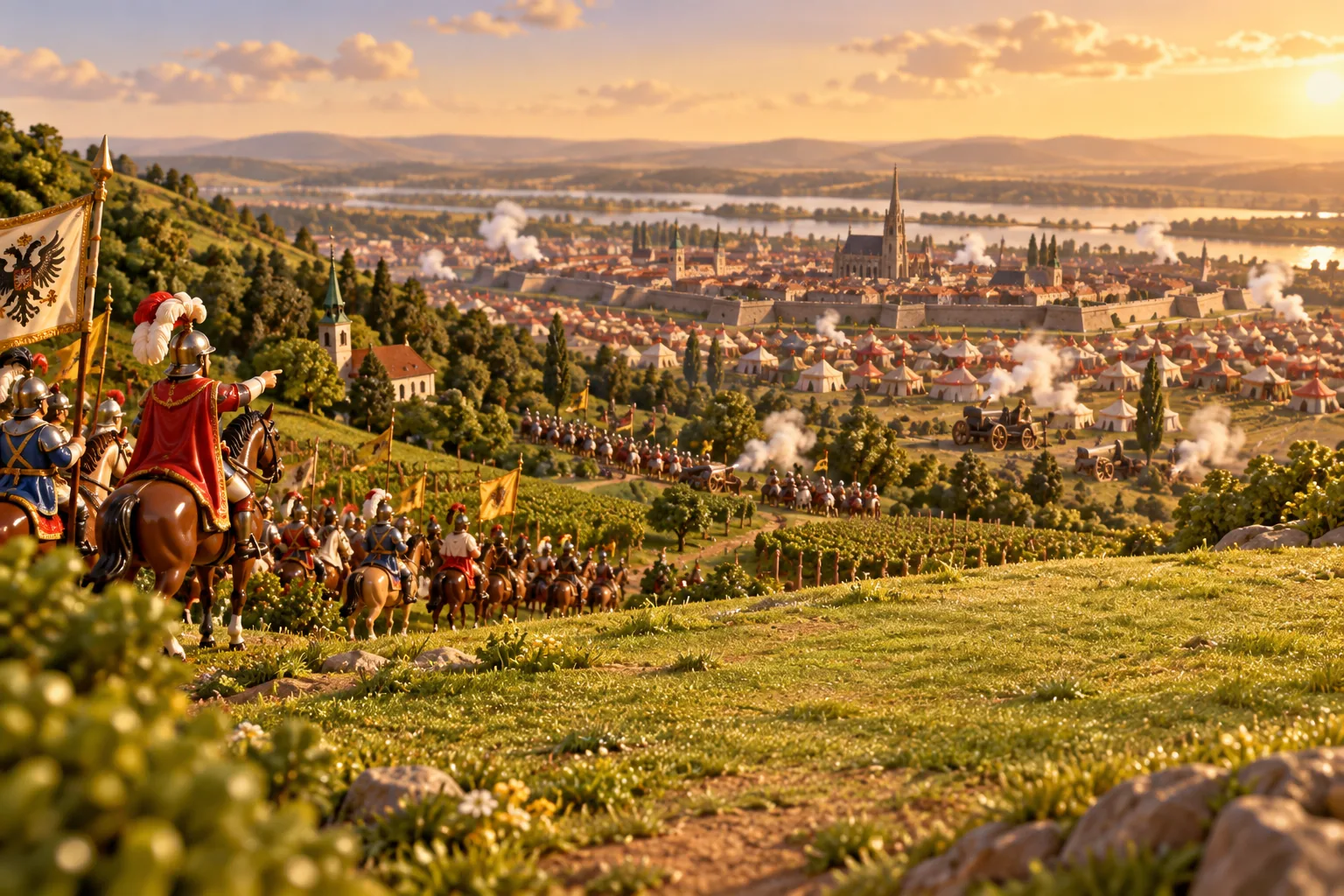
In 1683 the Ottoman Grand Vizier Kara Mustafa Pasha marched on Vienna, the capital of the Habsburg emperor Leopold I. The Ottomans had failed to take the city once before, in 1529. Leopold fled to Passau with his court and 60,000 of the city's people, and on 14 July the siege began. The garrison under Ernst Rüdiger von Starhemberg held out for two months while about 5,000 skilled Ottoman sappers dug under the walls and blew gaps in them around the Burg bastion. By September the city was close to falling.
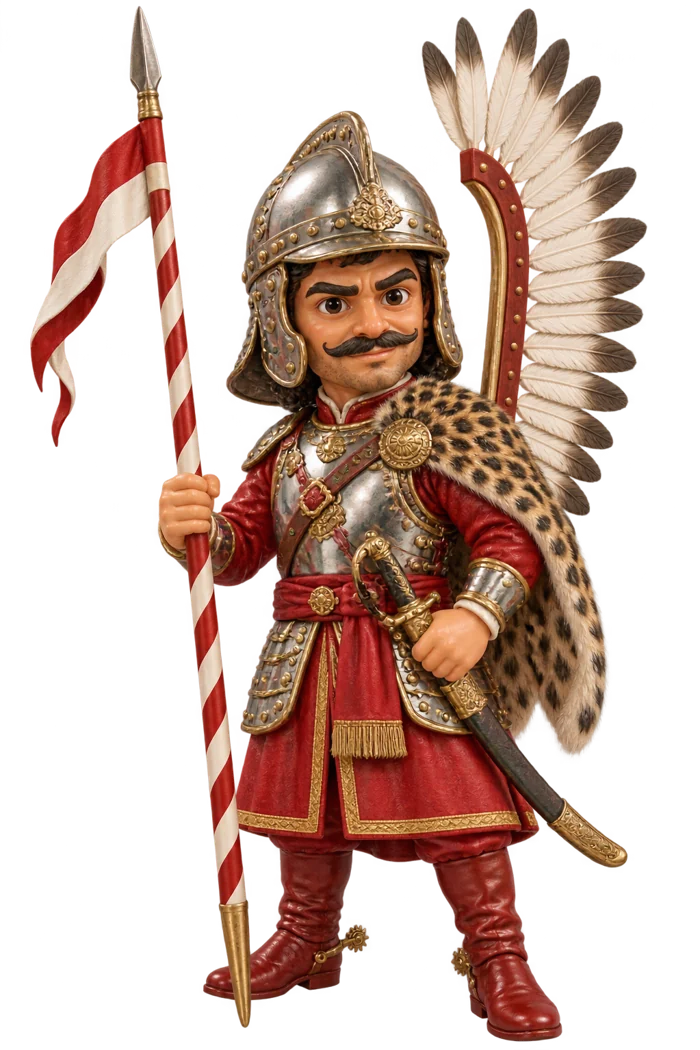
A relief army gathered in great haste: imperial troops under Charles V, Duke of Lorraine, German contingents and the army of the Polish–Lithuanian Commonwealth, whose king, John III Sobieski, took overall command. On 12 September 1683 they came down from the wooded heights of the Kahlenberg. The battle raged all day, and at around 6 p.m. Sobieski ordered his cavalry forward: 18,000 horsemen, with the king himself at the head of 3,000 Polish winged hussars, charged down the slopes, broke the Ottoman army and lifted the siege.
The defeat began a long retreat. In the war that followed, which lasted until 1699, most of Ottoman Hungary passed to Leopold I. Kara Mustafa paid with his life: on 25 December 1683 he was executed in Belgrade, strangled with a silk rope.
Read more on Wikipedia


