Industrial age · war
Battle of Tsushima
A Russian fleet sailed for seven months halfway around the world, only to be destroyed in a single day and night.
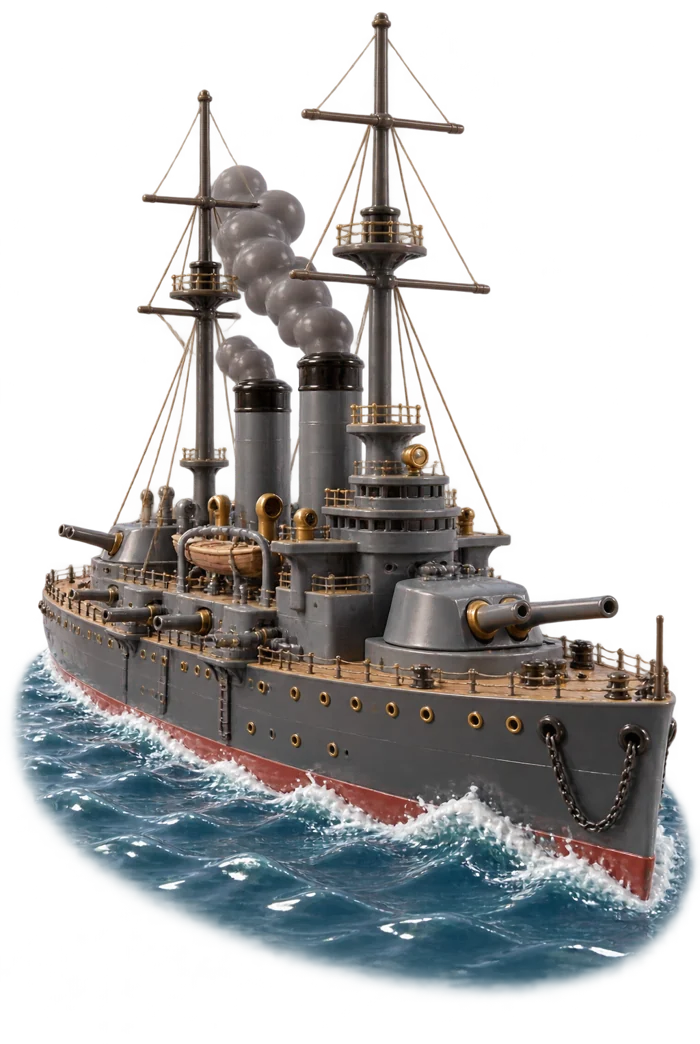
Russia's war with Japan was going badly, so in 1904 it sent a fleet from the Baltic Sea to the Far East. The Second Pacific Squadron under Admiral Zinovy Rozhestvensky spent seven months covering about 18,000 nautical miles (33,000 km), its newest battleships going all the way around the Cape of Good Hope. The plan was to reach Vladivostok and win back the sea. The Russians had more battleships than Japan, but their ships were older, slower and worn down by the voyage.
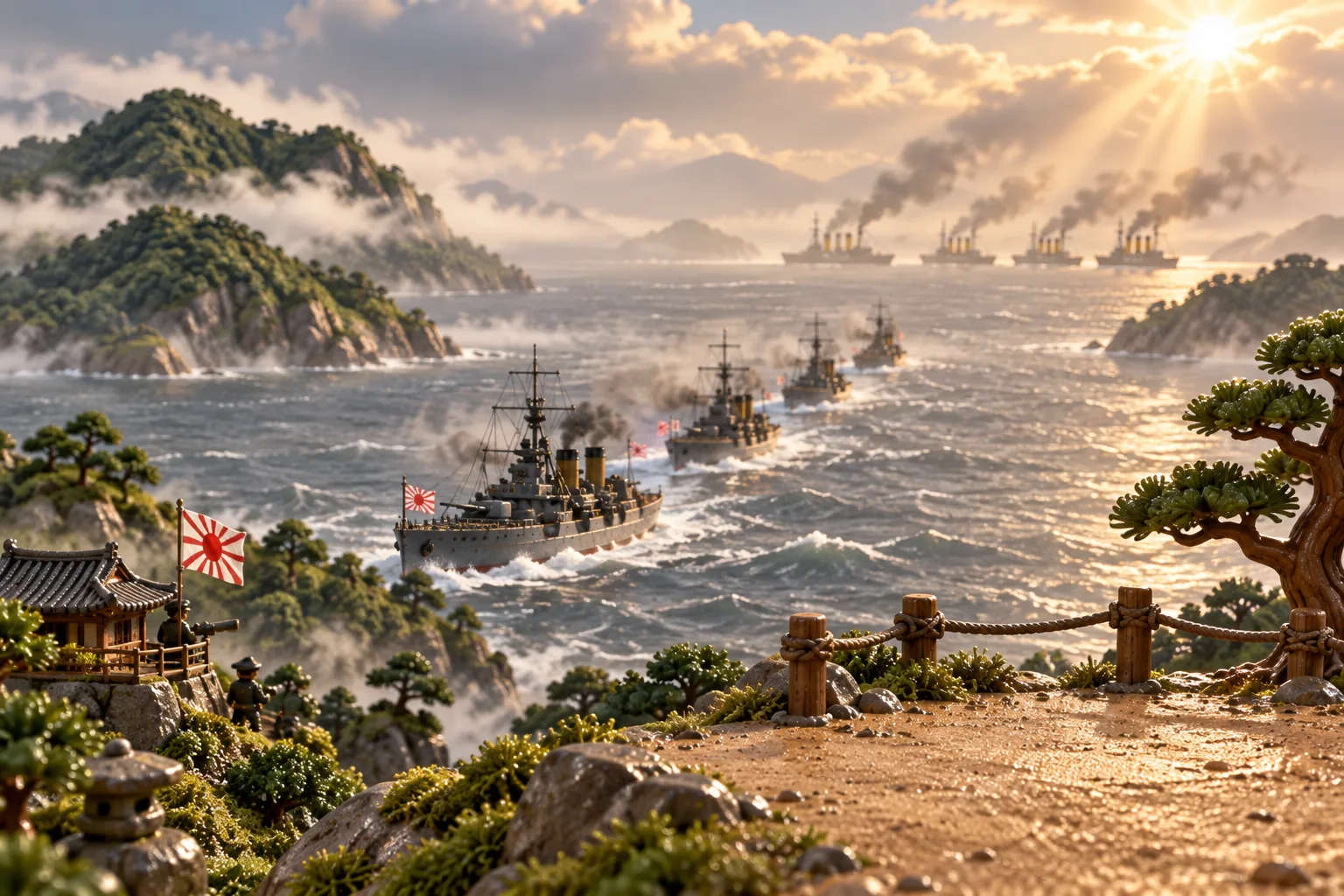
On 27 May 1905 they tried to slip through the Tsushima Strait between Korea and Japan in radio silence. Before dawn the Japanese scout ship Shinano Maru spotted them and sent a wireless message, and cruisers shadowing the Russians kept reporting their course, so Admiral Tōgō Heihachirō knew exactly where they were despite the fog. At about 13:55 he hoisted the Z flag: 'The Empire's fate depends on the result of this battle, let every man do his utmost duty.' Ninety minutes later the battleship Oslyabya became the first modern armoured warship sunk by gunfire alone. Rozhestvensky was wounded in the head, and by sunset four Russian battleships were gone. Japanese destroyers and torpedo boats attacked all night, and the next morning Admiral Nikolai Nebogatov surrendered.
All 11 Russian battleships were lost, seven sunk and four captured. More than 5,000 Russians died and 6,000 were taken prisoner; Japan lost no heavy ships and 117 men. Russia sued for peace, and the Treaty of Portsmouth was signed that September.
Read more on Wikipedia


