Industrial age · war
Battle of Trafalgar
Nelson attacked head-on in two columns, wrecked the French and Spanish fleet without losing a ship, and died shortly before the battle ended.
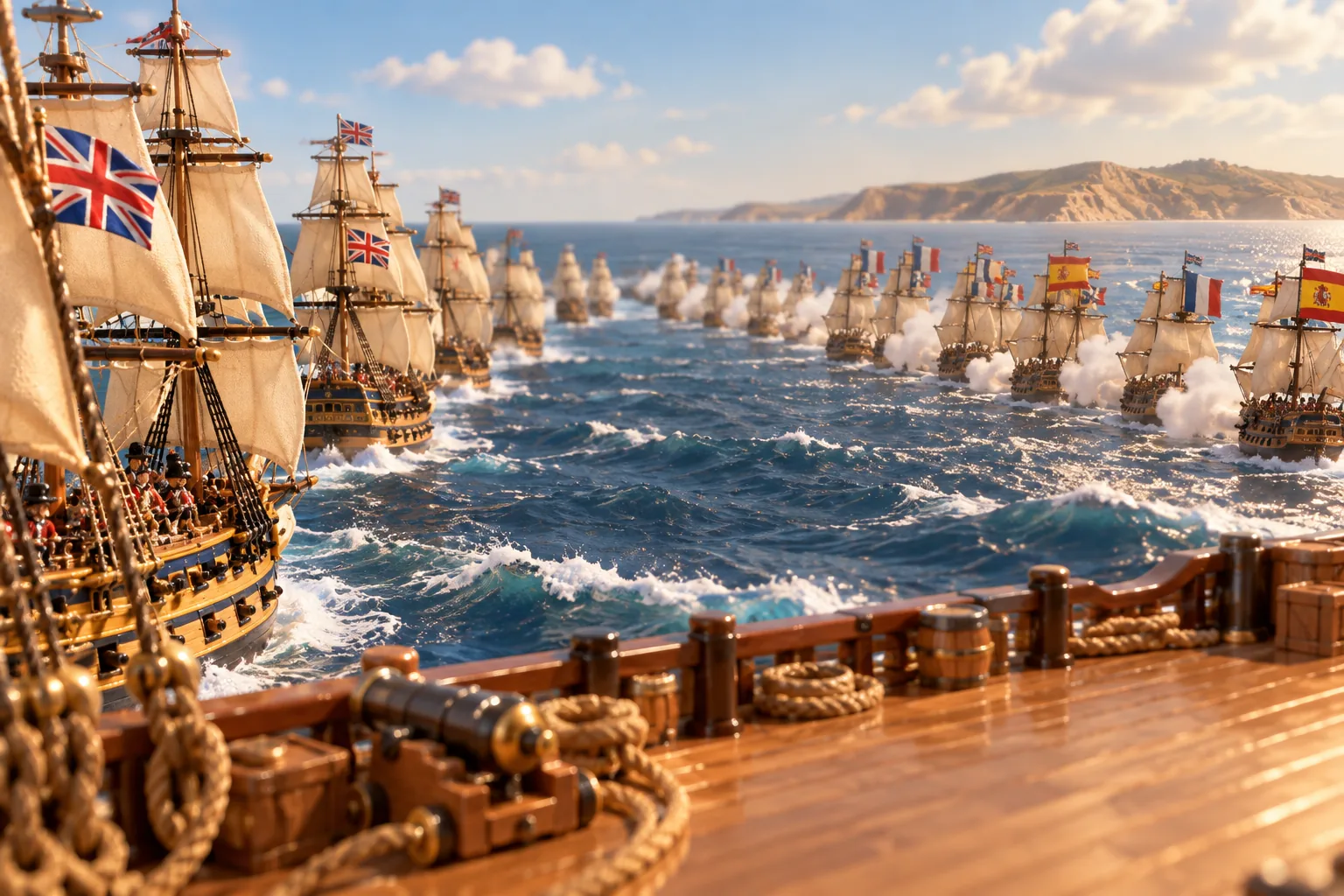
In 1805 Napoleon wanted the Royal Navy out of the English Channel so his army could cross to England. A combined French and Spanish fleet of 33 ships of the line under Vice-Admiral Pierre-Charles Villeneuve sat in Cádiz. On 18 October Villeneuve learned that a replacement was on his way to take over his command, and he put to sea. Three days later, off Cape Trafalgar, he met Horatio Nelson with 27 ships.
Nelson ignored the usual tactics of the day. Instead of forming a parallel line, he drove straight at the enemy in two columns, leading one himself in HMS Victory while Cuthbert Collingwood led the other in Royal Sovereign. In very light winds the leading British ships crept forward under fire; for 40 minutes Victory was hit by four ships before she could answer. At 11:45 Nelson signalled 'England expects that every man will do his duty'. Once the columns broke through, ships fought locked side by side. A musket ball fired from the rigging of the French Redoutable struck Nelson in the shoulder and lodged in his spine. He died about three hours later.
Eighteen French and Spanish ships were captured or destroyed; the British lost none. A storm that followed sank or wrecked many of the battered prizes. Britain's command of the sea would not be seriously tested again until Jutland in 1916. Nelson's body went home preserved in a barrel of brandy, and London later named Trafalgar Square after the battle.
Read more on Wikipedia


