Antiquity · war
Battle of the Teutoburg Forest
The man who led three Roman legions to their doom was a Roman citizen trained by Rome's own army.
By AD 9 Rome under Augustus was turning the lands beyond the Rhine into a province, and the governor there was Publius Quinctilius Varus. One of his trusted officers was Arminius, a chieftain of the Cherusci who had Roman citizenship and a Roman military education. In late summer, as Varus marched his army from its summer camp near the Weser back towards winter quarters on the Rhine, he heard of a local revolt. The reports were invented by Arminius, who suggested a shorter route home through the territory of the Angrivarii.
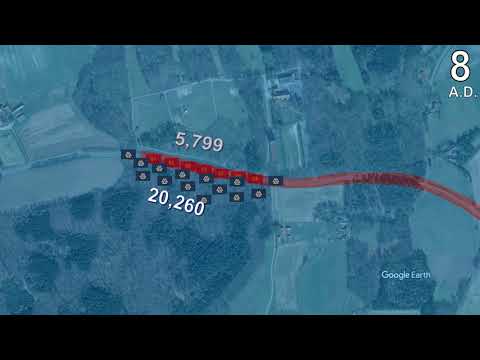
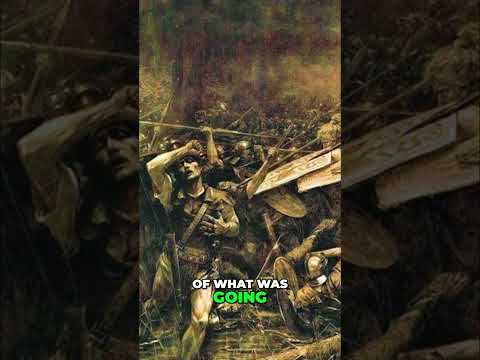
On 8 September the army, three legions with auxiliaries and baggage, was strung out for 15 to 20 km through thick forest when Germanic warriors began to attack along its length. Torrential rain fell. After a night march the Romans walked into a trap at the foot of Kalkriese Hill, where a sandy strip only about 100 metres wide ran between the woods and a great bog, behind a long earthen wall built for the ambush. The Romans failed to storm it, the cavalry fled, and the legions were destroyed. Varus took his own life. Roman losses are estimated at 15,000 to 20,000 dead.
Roman raids of revenge across the Rhine won back two of the three lost legionary eagles, but Rome gave up its plan to conquer Germania, and the Rhine stayed the border of the empire. For centuries no one knew where the battle had been. In 1987 a British amateur, Major Tony Clunn, found Roman coins and sling bolts at Kalkriese with a metal detector.
Read more on Wikipedia
Sources: en.wikipedia.org/wiki/Battle of the Teutoburg Forest