Industrial age · war
Battle of the Little Bighorn
A cavalry officer expecting a village of a few hundred warriors rode into the largest gathering of Plains peoples his scouts had ever seen.
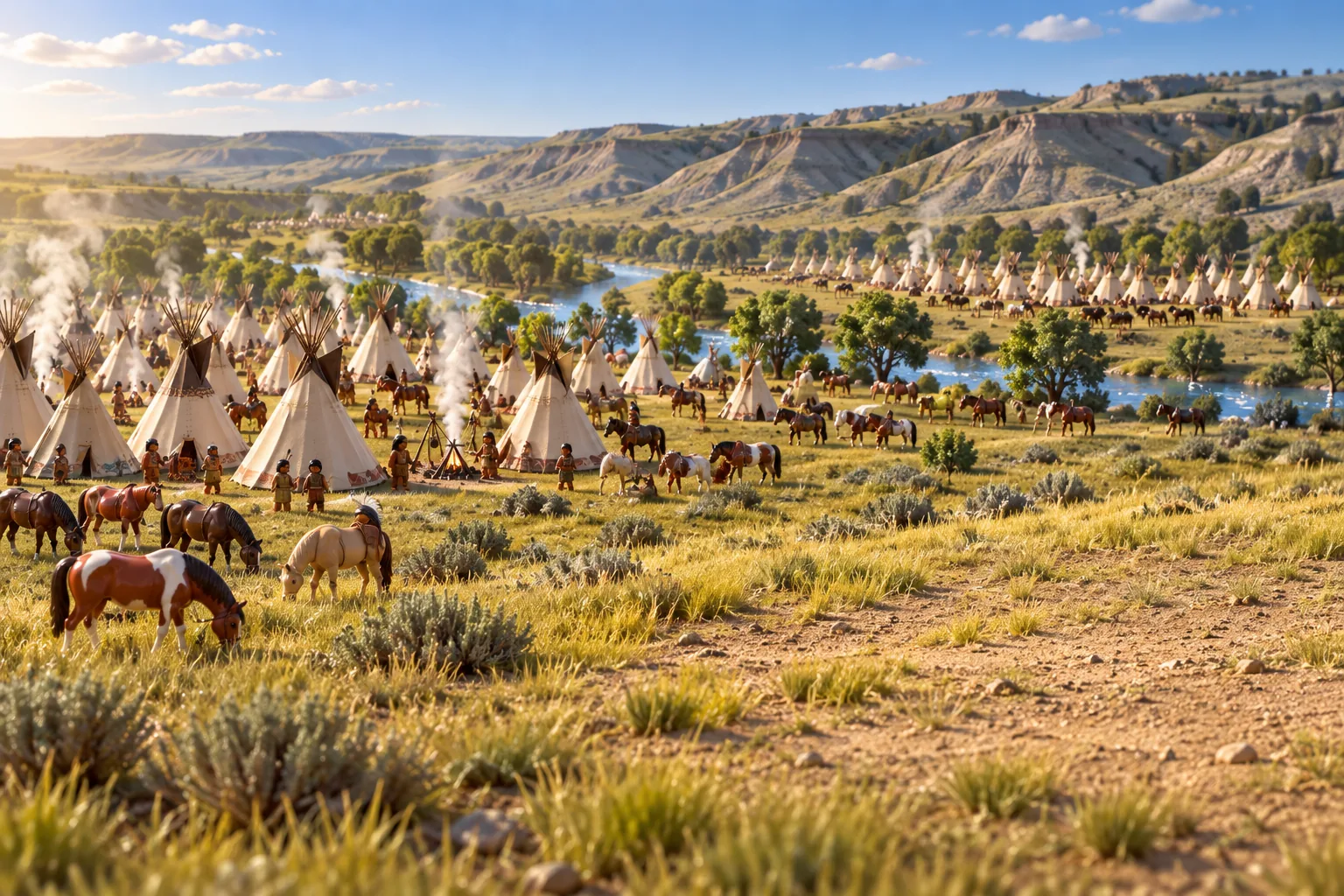
As white settlers pushed into the Black Hills, sacred to the Lakota, the United States moved to force the bands that refused reservations back onto them. In early June 1876, at a Sun Dance on Rosebud Creek, the Hunkpapa spiritual leader Sitting Bull reportedly had a vision of soldiers falling into the camp. By late June thousands of Lakota, Northern Cheyenne and Arapaho had gathered in one huge village beside the Little Bighorn River, far more than the 800 or so warriors the army expected.
On 25 June Lieutenant Colonel George Armstrong Custer of the 7th Cavalry, with about 700 men, decided to attack at once, fearing the village would scatter. He split his regiment into three groups. Major Marcus Reno's charge on the south end of the camp was driven back onto the bluffs, where he and Captain Frederick Benteen held out until the next day. Custer led about 210 men further north. Warriors led by Crazy Horse and Gall surrounded them on the ridge now called Last Stand Hill, and by most accounts destroyed his force within an hour. Custer and two of his brothers died there.
The army lost 268 dead, including scouts. Estimates of Native losses range from 36 to about 300. The victory did not last: Congress cut off rations to the Sioux until they gave up the Black Hills, which were taken in 1877.
Read more on Wikipedia