Antiquity · war
Battle of the Catalaunian Plains
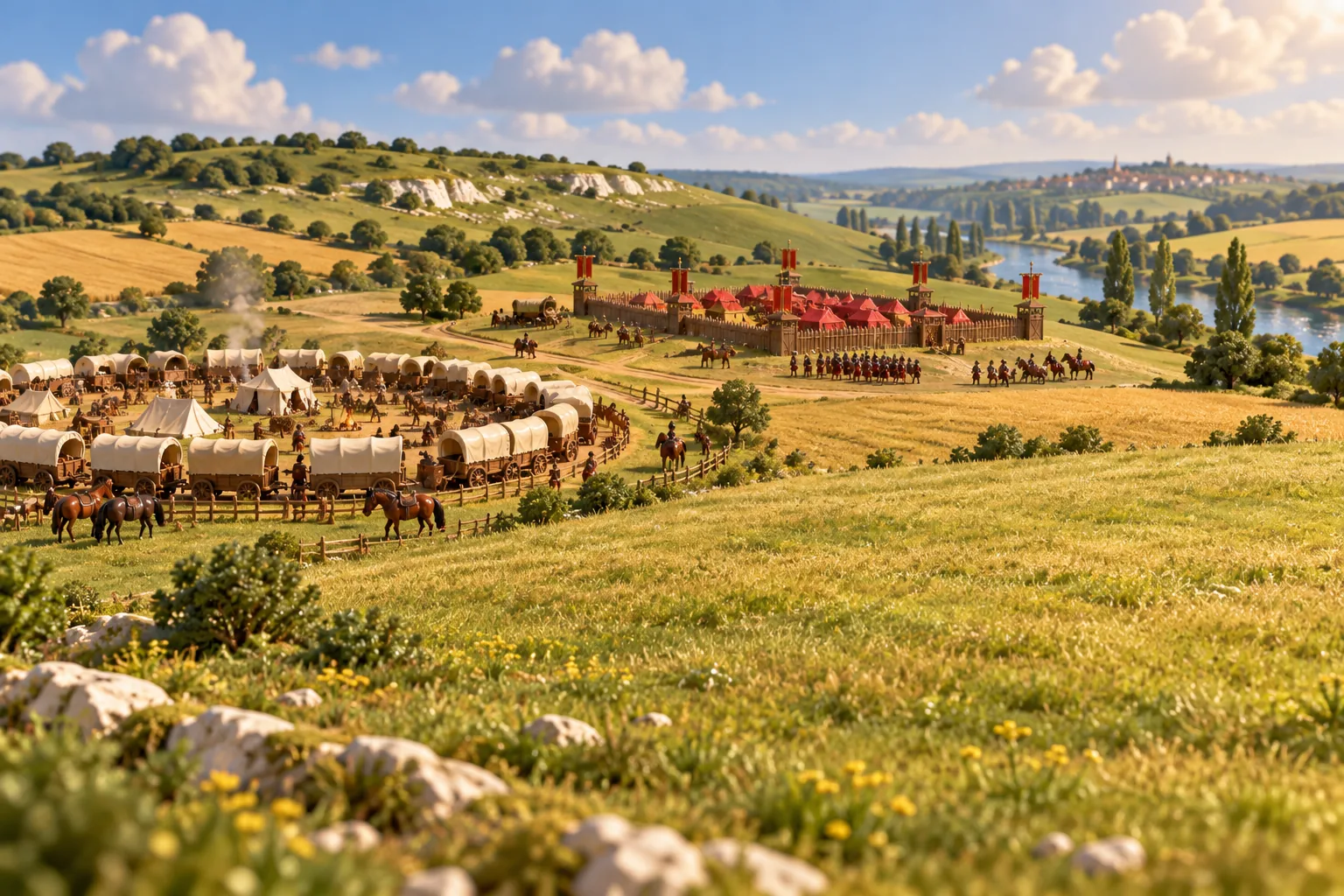
Surrounded in his wagon camp after the battle, Attila built a funeral pyre of horse saddles, ready to throw himself into the flames rather than be taken.
Early in 451 Attila, king of the Huns, crossed the Rhine into Roman Gaul with his own people and a great host of subject tribes. One story says the emperor's sister Honoria had sent him her ring asking for help, and that he claimed her as a bride, with half the empire as dowry. His army plundered city after city and by June was besieging Aurelianum, today's Orléans. The Roman general Flavius Aetius hurried from Italy with few regular troops, but he won over Rome's Germanic allies in Gaul, above all the Visigoths of King Theodoric I, along with Alans, Franks and Burgundians.
The coalition relieved Orléans and followed Attila as he withdrew east. On 20 June 451 the armies met on the Catalaunian Plains, somewhere near Châlons or Troyes. According to the historian Jordanes, the fight centred on a ridge. The Visigoths broke Attila's own household troops and drove him back into his camp, fortified with a ring of wagons. Theodoric was killed in the fighting, and his son Thorismund, lost in the dark, blundered into the Hunnic camp and was wounded.
The next day the allies found the field 'piled high with bodies' and besieged Attila's camp, but Aetius persuaded Thorismund to hurry home to secure his throne, and the Huns were allowed to retreat. Historians still argue whether it was a victory or a draw. A year later Attila invaded Italy instead, and he died in 453.
Read more on Wikipedia
Sources: en.wikipedia.org/wiki/Battle of the Catalaunian Plains


