Industrial age · war
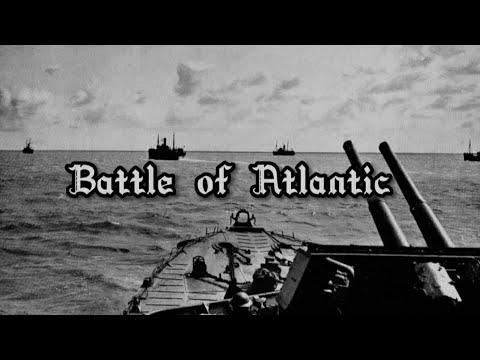
Battle of the Atlantic
Churchill wrote that the only thing that really frightened him during the whole war was the U-boat peril, more even than the Battle of Britain.
Britain, an island, needed more than a million tons of imported goods every week to survive and fight. When war began in September 1939, Britain blockaded Germany, and Germany struck back at the ships bringing food, fuel and weapons across the Atlantic. Within hours of the declaration of war the submarine U-30 sank the liner SS Athenia, against its orders. The U-boat commander, Karl Dönitz, believed that enough submarines could strangle the British economy.
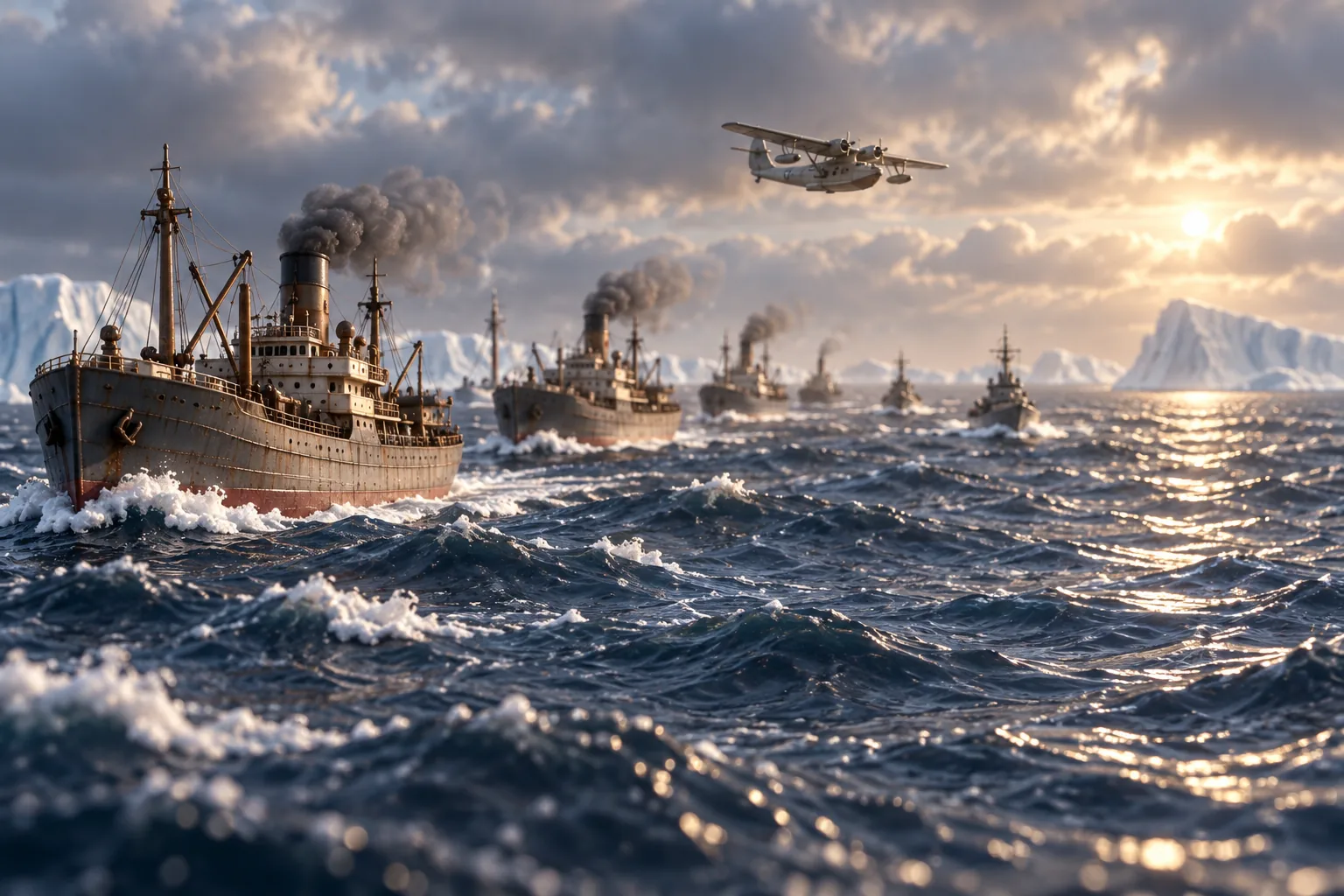
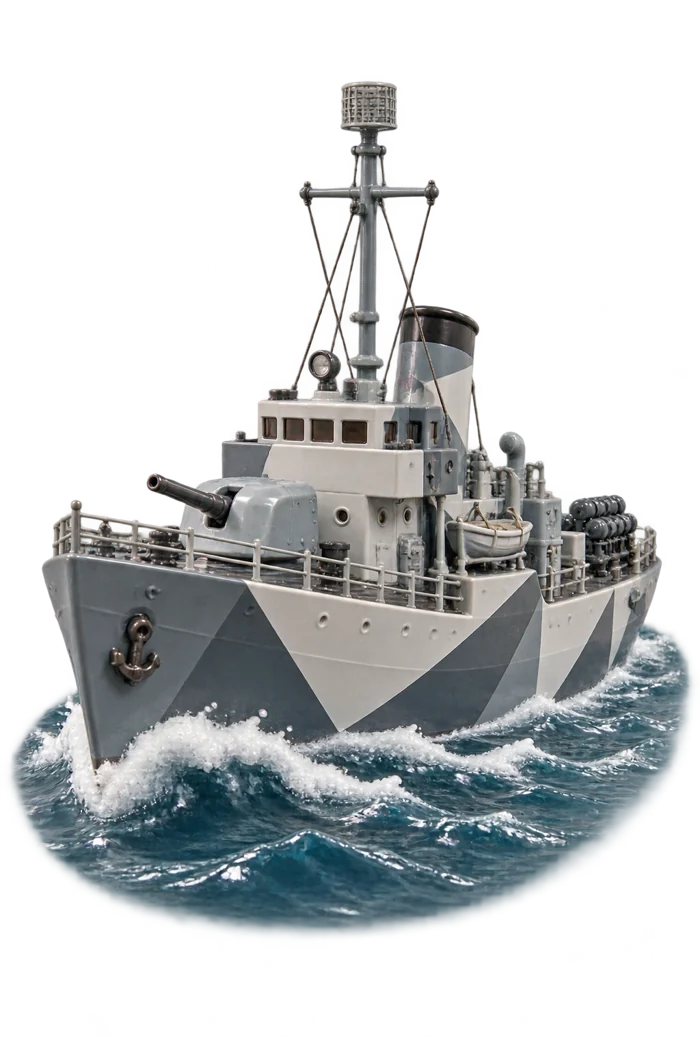
Merchant ships crossed in convoys guarded mainly by British and Canadian warships and aircraft, joined by the United States Navy from September 1941. Dönitz answered with wolf packs: lines of U-boats that searched for a convoy, then gathered and attacked together at night on the surface. In October 1942 alone, 56 ships were sunk in the "air gap" between Greenland and Iceland, beyond the reach of land-based planes. Against them the Allies brought radar, radio direction-finding, long-range aircraft and the codebreakers who were reading German Enigma messages.
The turning point came in the spring of 1943. The slow convoy ONS 5, 43 merchant ships with 16 escorts, was attacked by a pack of 30 U-boats; it lost 13 ships, but six U-boats were sunk. In May so many U-boats were lost that the Germans called it Black May. The battle went on until Germany surrendered in May 1945. In all, about 3,500 merchant ships and 175 warships were sunk in the Atlantic, and 783 U-boats were lost.
Read more on Wikipedia