Industrial age · war
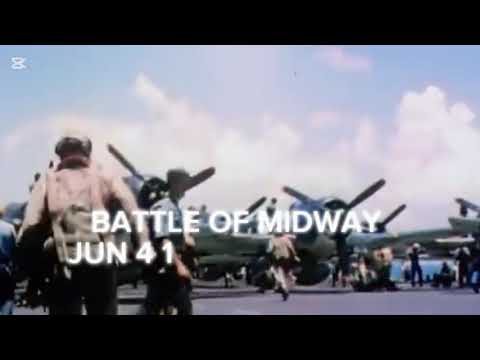
Battle of Midway
The battle was won partly by a fake message about a broken water machine, sent so that Japan would give away its own plans.
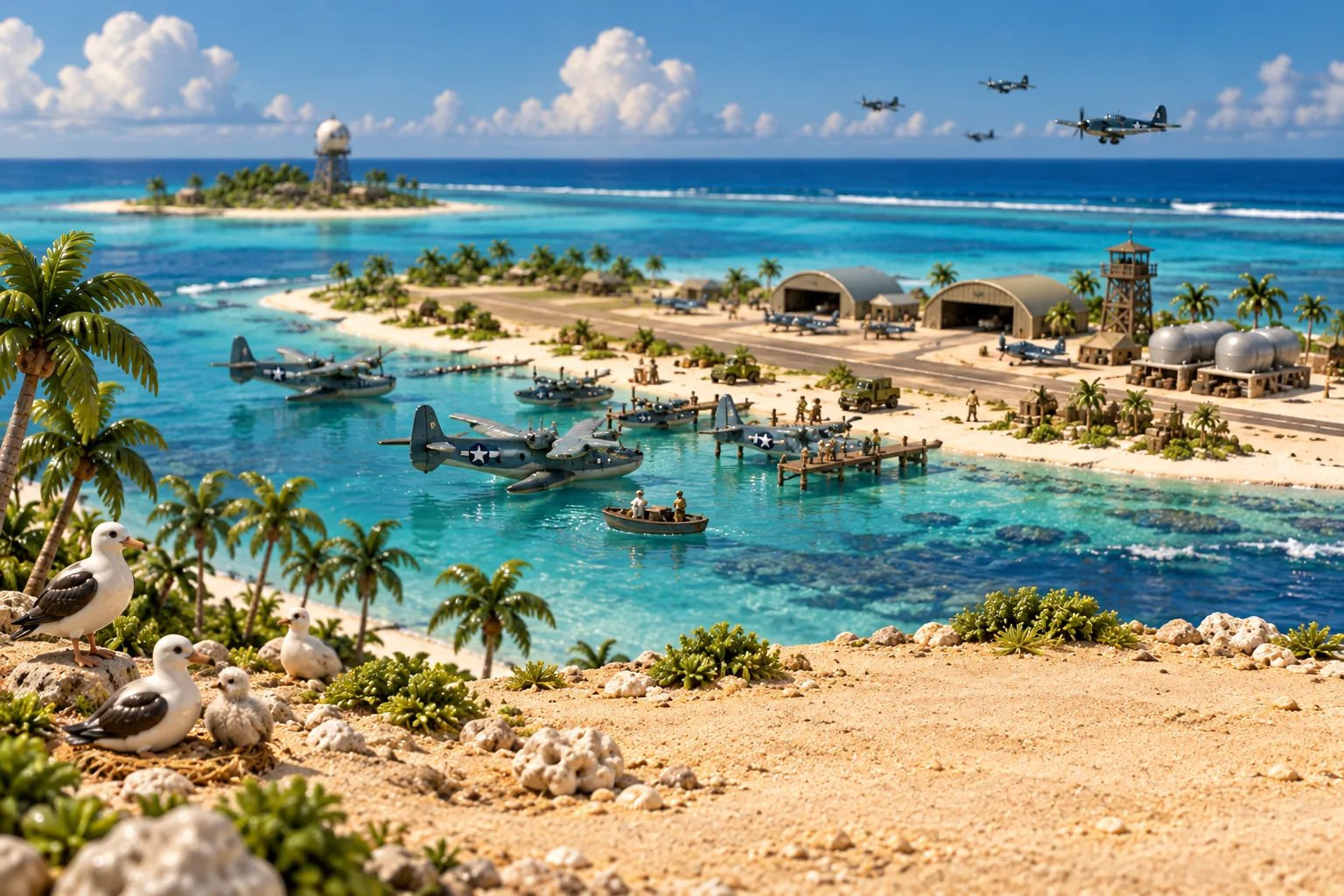
Six months after Pearl Harbor, Admiral Isoroku Yamamoto planned to capture Midway, a small atoll about 2,100 kilometres northwest of Oahu, and lure the American carriers that had escaped in December into a trap. But American code breakers had partly broken the Japanese navy's main code. They knew an attack was coming on a target called "AF" and, thanks to a ruse, confirmed that AF was Midway, probably on 4 or 5 June. Admiral Chester Nimitz sent his carriers Enterprise, Hornet and Yorktown to wait northeast of the island.
On the morning of 4 June Japanese planes bombed Midway. American torpedo bombers attacked Admiral Nagumo's carriers and were slaughtered: most were shot down, and their torpedoes missed or failed to explode. Then, beginning at 10:22, dive bombers from Enterprise and Yorktown arrived while the Japanese carriers were rearming and refuelling their planes, with bombs and fuel lying on their decks. Akagi was set ablaze by a single direct hit; within six minutes Kaga and Sōryū were burning from end to end. The last carrier, Hiryū, struck back and crippled Yorktown, but that afternoon American bombers left her ablaze too.
All four Japanese fleet carriers in the battle, Akagi, Kaga, Sōryū and Hiryū, were sunk, along with the heavy cruiser Mikuma. Japan lost about 3,000 men, including many experienced pilots who were hard to replace. The Americans lost Yorktown and the destroyer Hammann. Midway is often called the turning point of the war in the Pacific.
Read more on Wikipedia