Antiquity · war
Battle of Marathon
Athens faced the Persian Empire with no help from Sparta, and won so clearly that the Spartans arrived only to tour the battlefield.
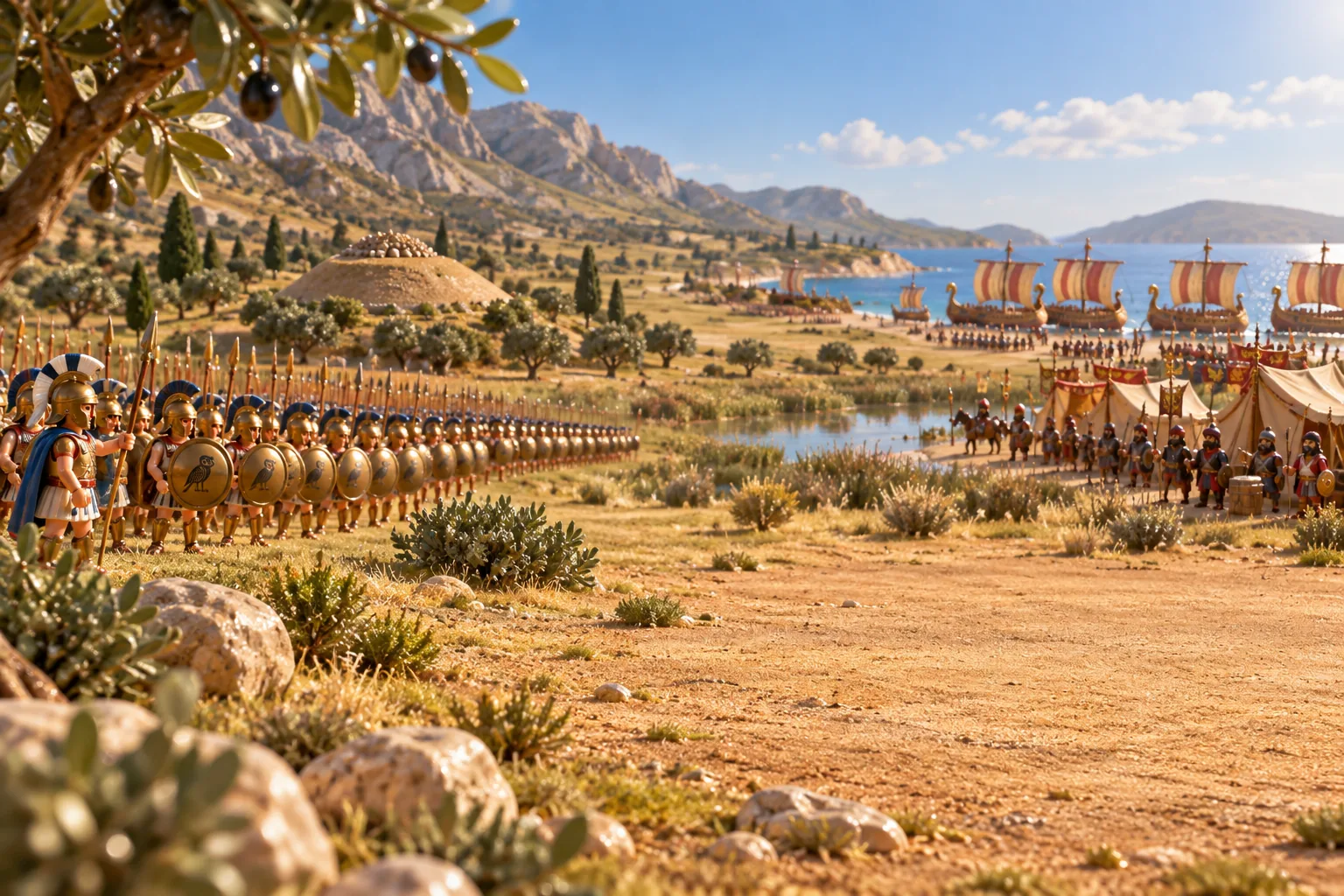
Athens had helped the Greek cities of Ionia rebel against Persia and had joined in burning Sardis. Herodotus says King Darius I ordered a servant to remind him three times before every dinner: 'Master, remember the Athenians.' In 490 BC his fleet, led by Datis and Artaphernes, captured Eretria and then landed in the bay of Marathon, about 27 kilometres northeast of Athens, guided by Hippias, the city's exiled tyrant.
The Athenians, joined by a small force from Plataea, marched out and blocked the exits from the plain. They begged Sparta for help, but the Spartans were in the middle of a religious festival and would not march yet. For about five days the two armies faced each other. Then the general Miltiades attacked. He kept his centre thin and made his wings strong; the Persians broke through the middle, but the Greek wings routed their opponents and turned inward, trapping the Persian centre. The Persians fled to their ships, and some ran into the marshes and drowned.
Herodotus counted 6,400 Persian dead against 192 Athenians, among them the war archon Callimachus. The Persian fleet then sailed around Cape Sounion to strike Athens itself, but the army marched home in time and the ships turned away. Marathon ended the first Persian invasion of Greece and showed the Greeks that Persia could be beaten, and that they could win without the Spartans.
Read more on Wikipedia


