Early modern · war
Battle of Lepanto
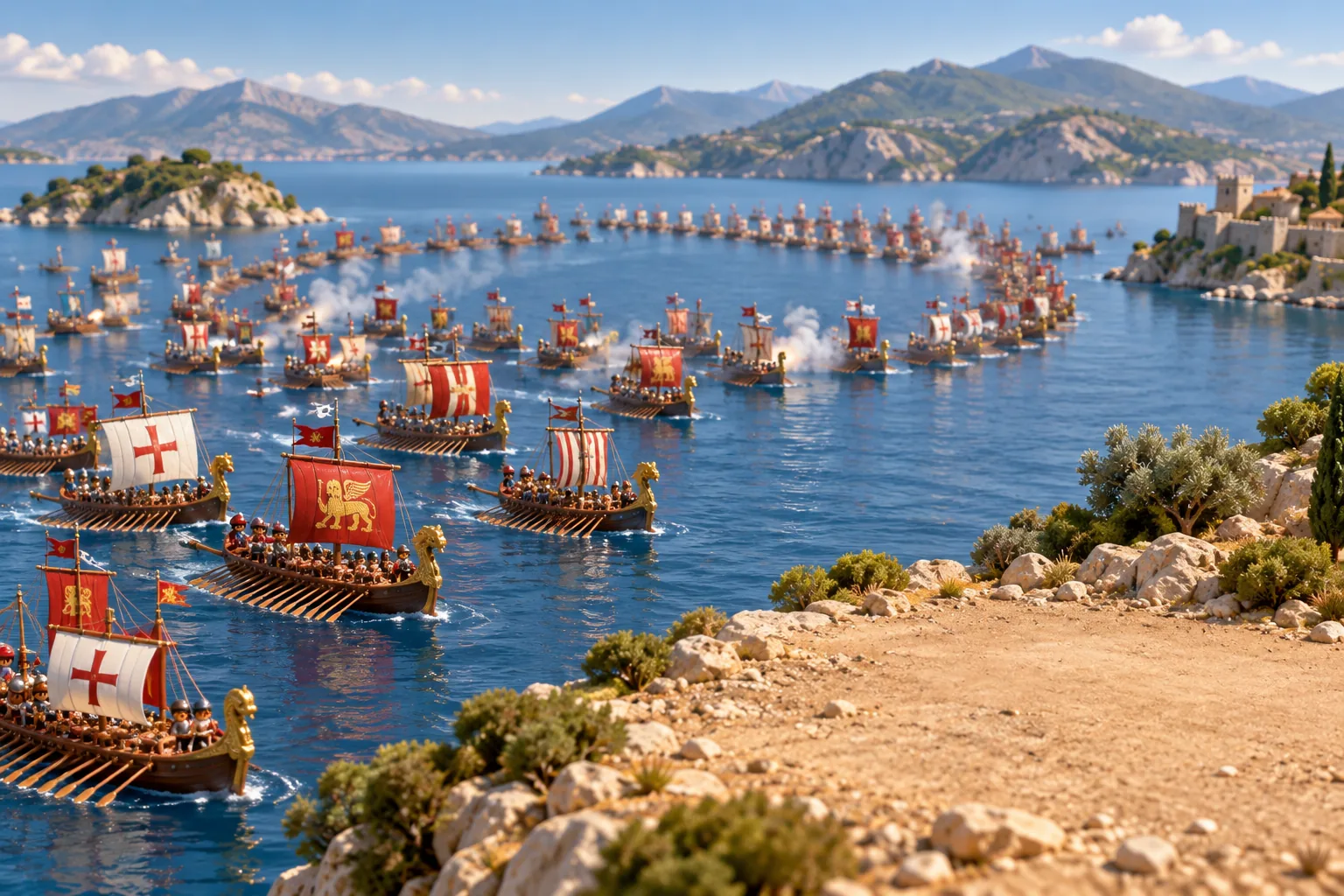
More than 450 oared warships crashed together off the coast of Greece in a sea battle that was really an infantry fight on floating platforms.
On 7 October 1571, the fleet of the Holy League, a Catholic alliance assembled by Pope Pius V and led by Spain and Venice, met the Ottoman fleet at the mouth of the Gulf of Patras in western Greece. The League had been formed to save Venetian Cyprus. It came too late: Famagusta had already surrendered, and its commander, Marco Antonio Bragadin, had been flayed alive.
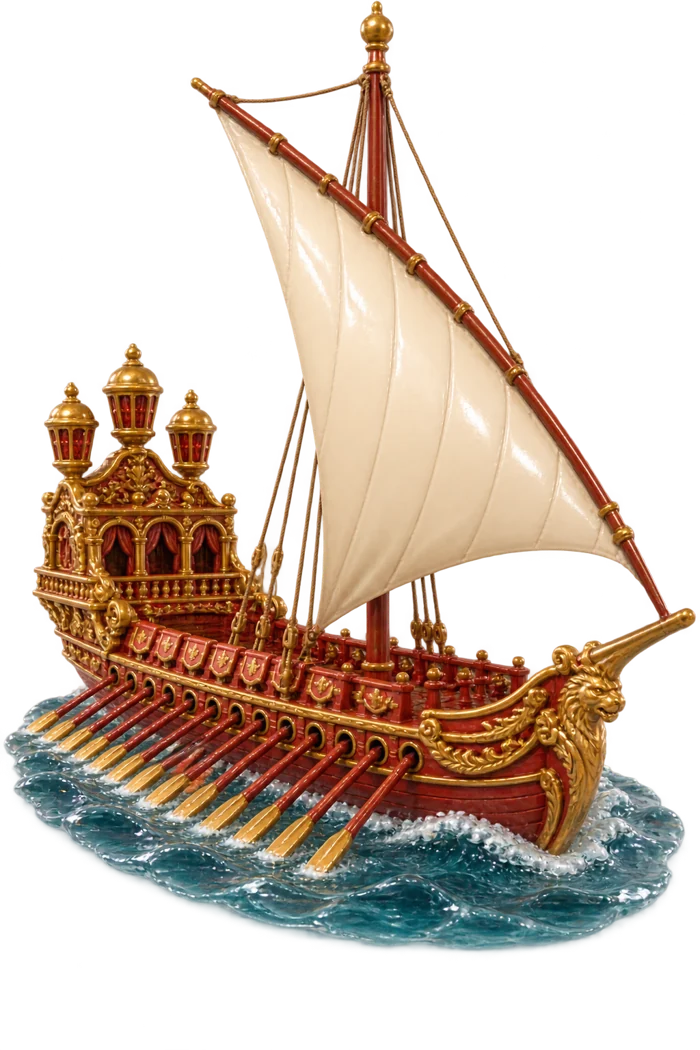
John of Austria, half-brother of Philip II of Spain, led 206 galleys and six galleasses, big Venetian galleys carrying sails and heavy guns. The Ottoman admiral Ali Pasha brought 211 war galleys and dozens of smaller ships. It was the last major battle in the West fought almost entirely by rowing ships, and the largest since antiquity. In the centre, Ali Pasha's flagship drove into John's galley, the Real, as far as its fourth rowing bench. Spanish infantry and janissaries fought hand to hand until the Ottoman flagship was boarded and Ali Pasha was killed with his entire crew.
By evening the League had captured 117 galleys and sunk or destroyed about 83 more. Many thousands of Christian galley slaves were freed. Around 7,500 Christians and 30,000 Ottomans died. Yet the Ottomans built more than 150 new galleys in about six months and kept Cyprus. Their Grand Vizier told the Venetian envoy that taking Cyprus had cut off Venice's arm, while Lepanto had only shaved the Ottoman beard, and a shaved beard grows back thicker.
Read more on Wikipedia


