Industrial age · war
Battle of Isandlwana
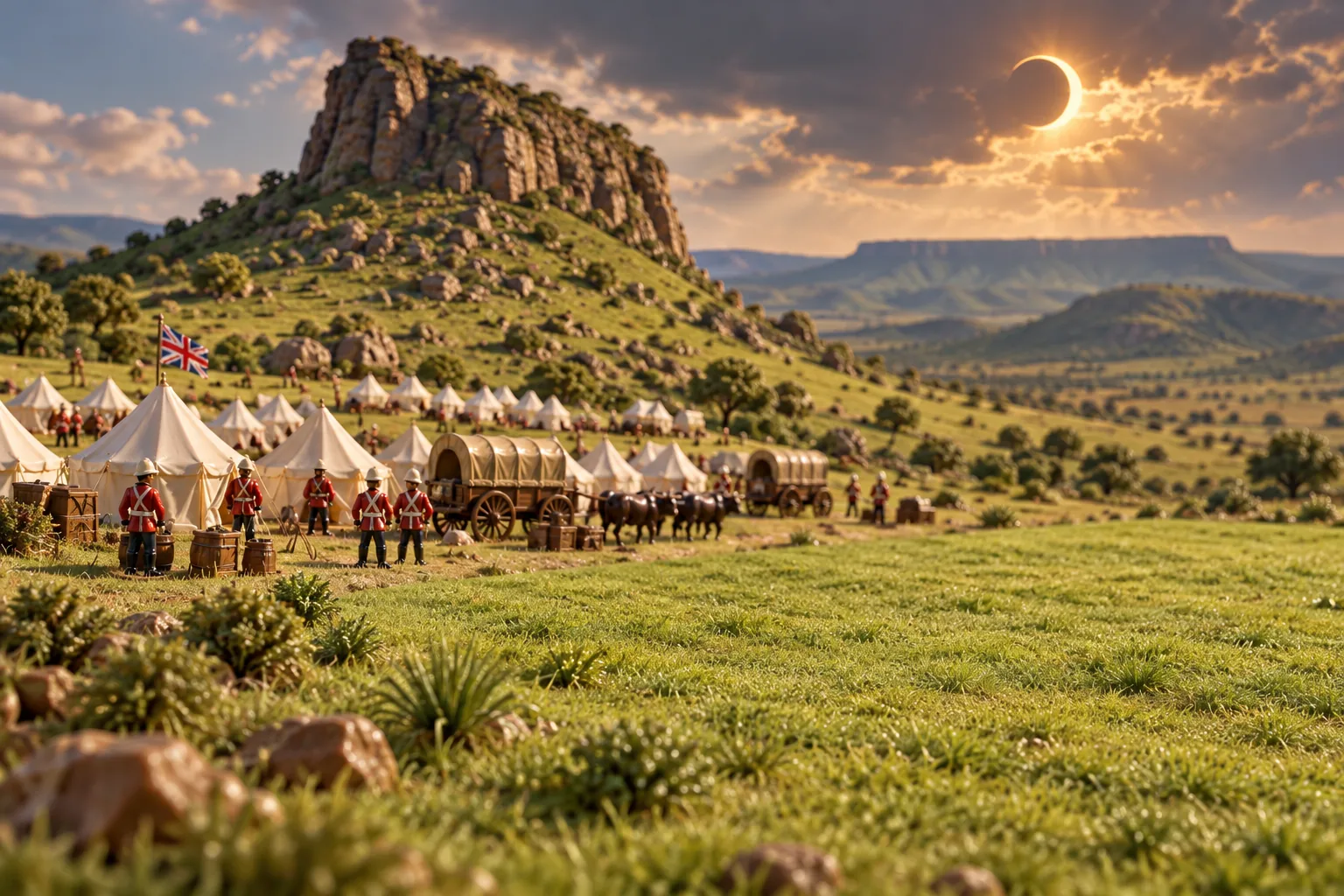
In the middle of the battle the sun went dark in an eclipse, and when it came back the British camp below the hill had vanished.
In December 1878 the British High Commissioner, Sir Bartle Frere, acting on his own, sent the Zulu king Cetshwayo an ultimatum he could not possibly meet. On 11 January 1879 Lord Chelmsford's central column crossed the Buffalo River at Rorke's Drift into Zululand. Cetshwayo sent his main army of about 24,000 from near Ulundi with the order: 'March slowly, attack at dawn and eat up the red soldiers.' On 20 January Chelmsford camped below the steep hill of Isandlwana, but did not entrench or circle his wagons.
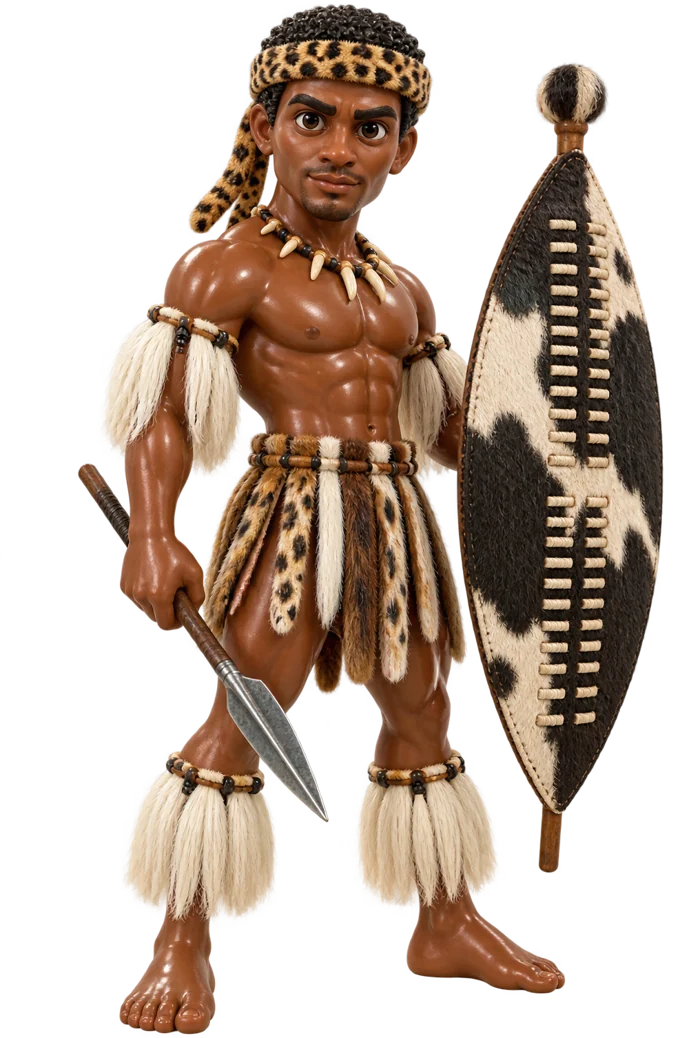
Early on 22 January Chelmsford led part of his force away after what he took to be the main Zulu army. He left about 1,800 soldiers, colonial troops and African auxiliaries, plus some 350 civilians, under Lieutenant Colonel Henry Pulleine, an administrator with no experience of front-line command. The real Zulu army, some 20,000 strong under Ntshingwayo kaMahole, had slipped round behind him. It attacked in its classic 'horns and chest of the buffalo' formation. For an hour the British rifles held, but as the horns closed around the camp the line broke.
More than 1,300 of the camp's defenders were killed, and the Zulus lost between 1,000 and 3,000. Britain had suffered its worst defeat against an enemy with far simpler weapons, and it answered with a much larger second invasion.
Read more on Wikipedia