Middle Ages · war
Battle of Hattin
The Crusader army lost before the fighting began: it spent a night on a waterless plateau while Saladin's camels carried water up from the lake.
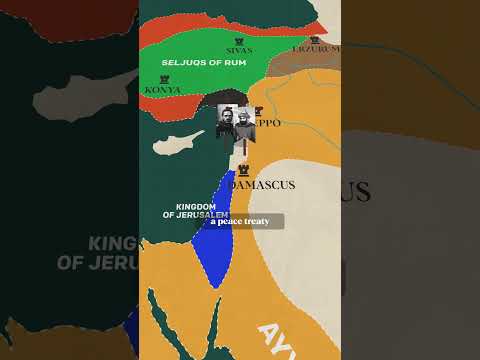
In 1187 the Kingdom of Jerusalem was split between King Guy of Lusignan and his rival Raymond III of Tripoli. Saladin, sultan of Egypt and Syria, had united the Muslim lands around it. When the Crusader lord Raynald of Châtillon raided a Muslim pilgrim caravan during a truce, Saladin swore to kill him. At the end of June he crossed the Jordan with the largest army he had ever commanded, about 40,000 men, and besieged Tiberias, where Raymond's wife Eschiva was trapped. Raymond himself urged Guy not to fight, but the Templar master Gerard de Ridefort persuaded him to march.
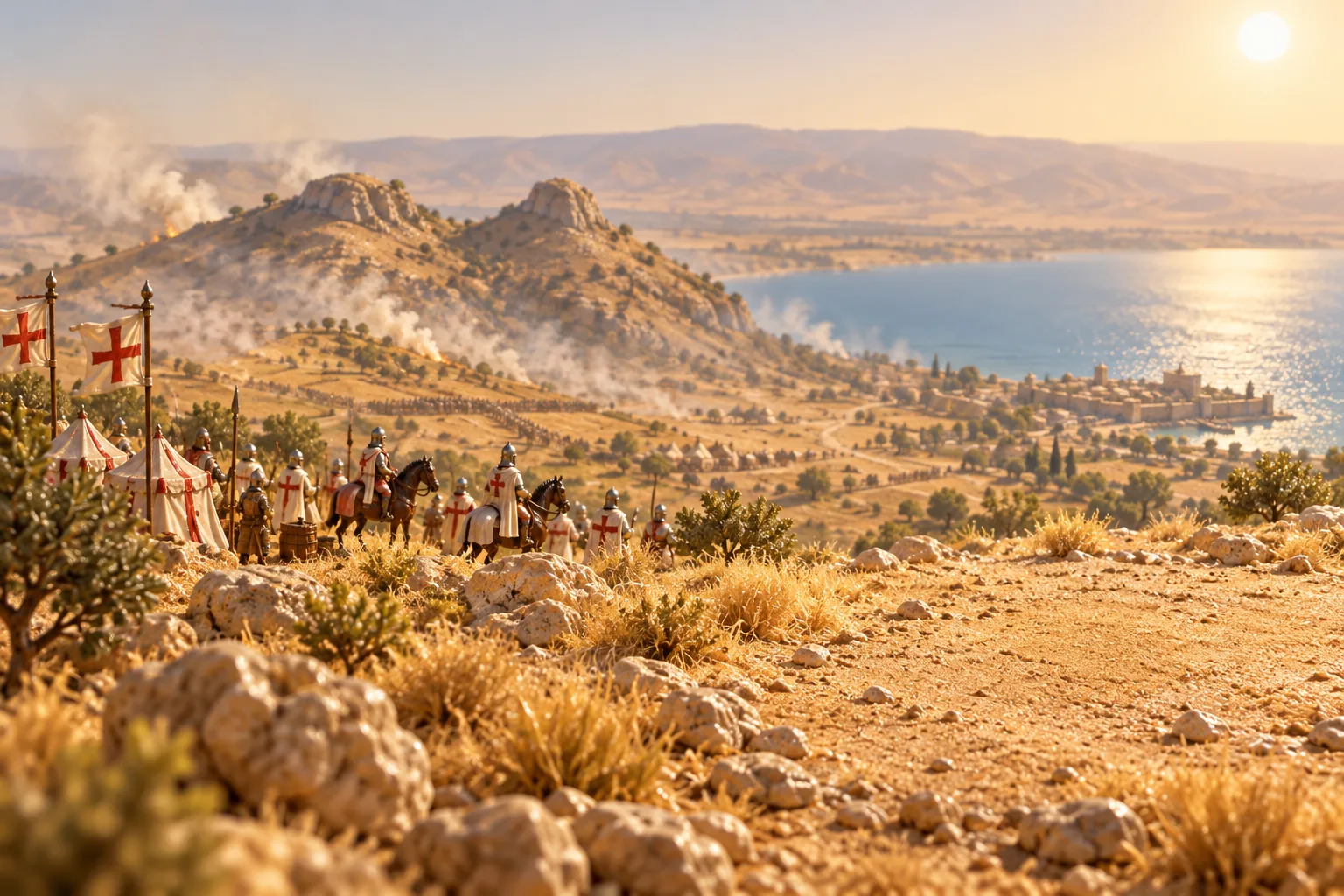
The Crusaders, about 18,000 to 20,000 men carrying the relic of the True Cross as their standard, left the springs of La Saphorie and set out across dry hills in the July heat. They were forced to camp on an arid plateau, surrounded so closely that "a cat could not have escaped". In the night Saladin's men set fire to the dry grass, while camels brought them water from the Sea of Galilee. On 4 July, blinded by smoke and tormented by thirst, the Franks were broken up around the twin hill called the Horns of Hattin and defeated.
Guy and his barons were taken prisoner, and the True Cross was captured. Saladin then took most of the Crusader cities and castles, and on 2 October Jerusalem surrendered to him. The news led to the Third Crusade.
Read more on Wikipedia