Industrial age · war
Battle of Antietam
A Confederate battle plan found wrapped around three cigars led to the bloodiest single day in American history.
After his victory at Second Bull Run, Robert E. Lee led the Confederate Army of Northern Virginia, about 55,000 men, into Maryland on 3 September 1862, taking the Civil War onto Union soil. As George B. McClellan's 87,000-strong Army of the Potomac moved to stop him, two Union soldiers of the 27th Indiana found a lost copy of Lee's orders, Special Order 191, wrapped around three cigars. It showed that Lee had split his army. McClellan waited about 18 hours before acting on it, and by 17 September Lee's army stood in defensive positions behind Antietam Creek, near the village of Sharpsburg.
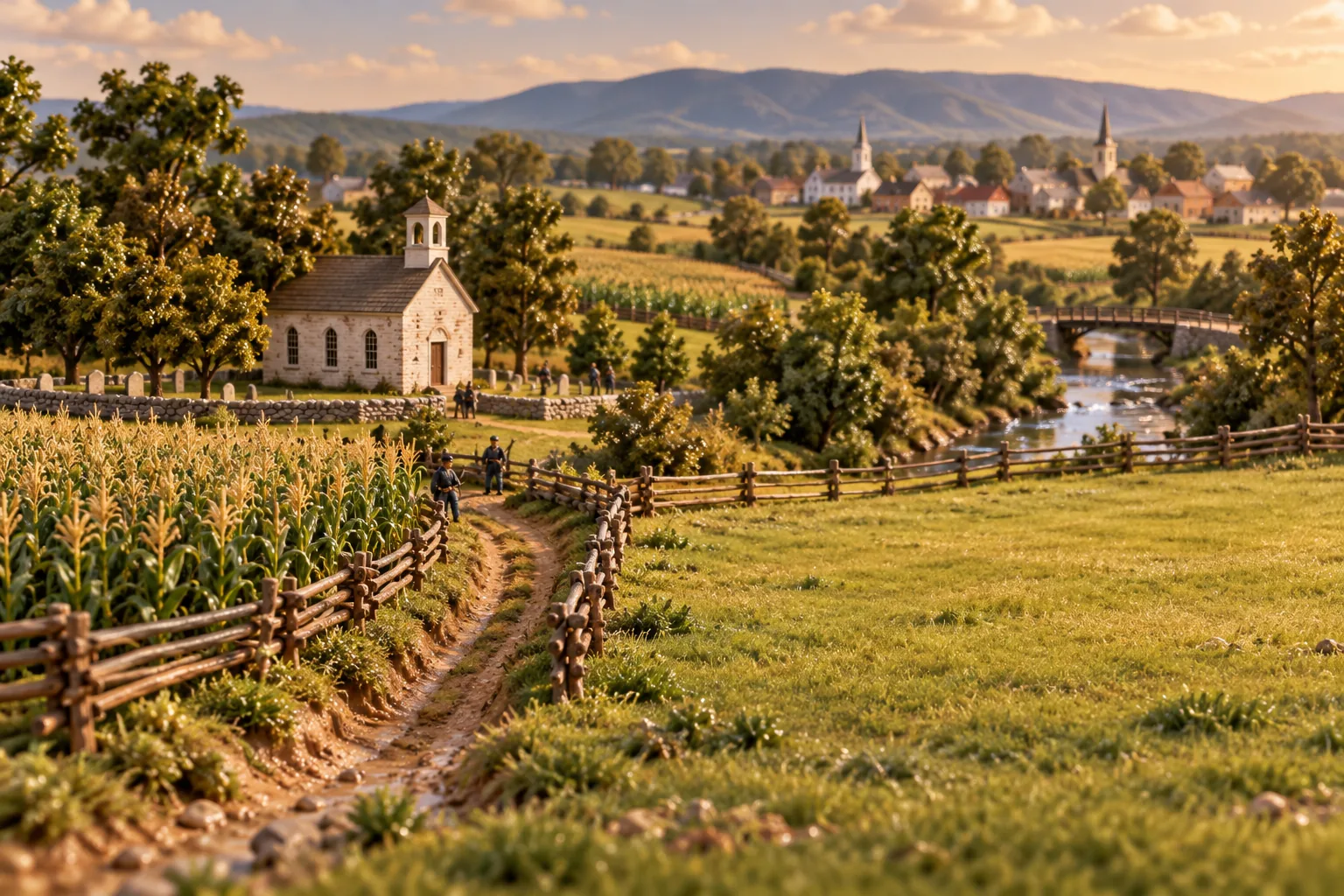
At dawn on 17 September Joseph Hooker's corps struck Lee's left. Attacks and counterattacks swept back and forth across Miller's Cornfield and around the little Dunker Church. In the middle of the day, Union troops fought for a sunken farm road that became known as Bloody Lane, which left about 5,600 casualties along 800 yards. In the afternoon Ambrose Burnside's corps took a stone bridge over the creek, but A. P. Hill's Confederate division arrived from Harpers Ferry and drove it back, ending the battle.
The day cost 22,726 men dead, wounded or missing. Lee slipped back across the Potomac, and the Union could claim a strategic victory. Five days later, on 22 September, Abraham Lincoln issued the preliminary Emancipation Proclamation, which made it much harder for Britain and France to side with the Confederacy. Unhappy that McClellan had not pursued Lee, Lincoln removed him from command in November.
Read more on Wikipedia


