Antiquity · war
Battle of Alesia
Caesar built a wall around his enemy, then a second, longer wall around himself, and fought facing both ways at once.
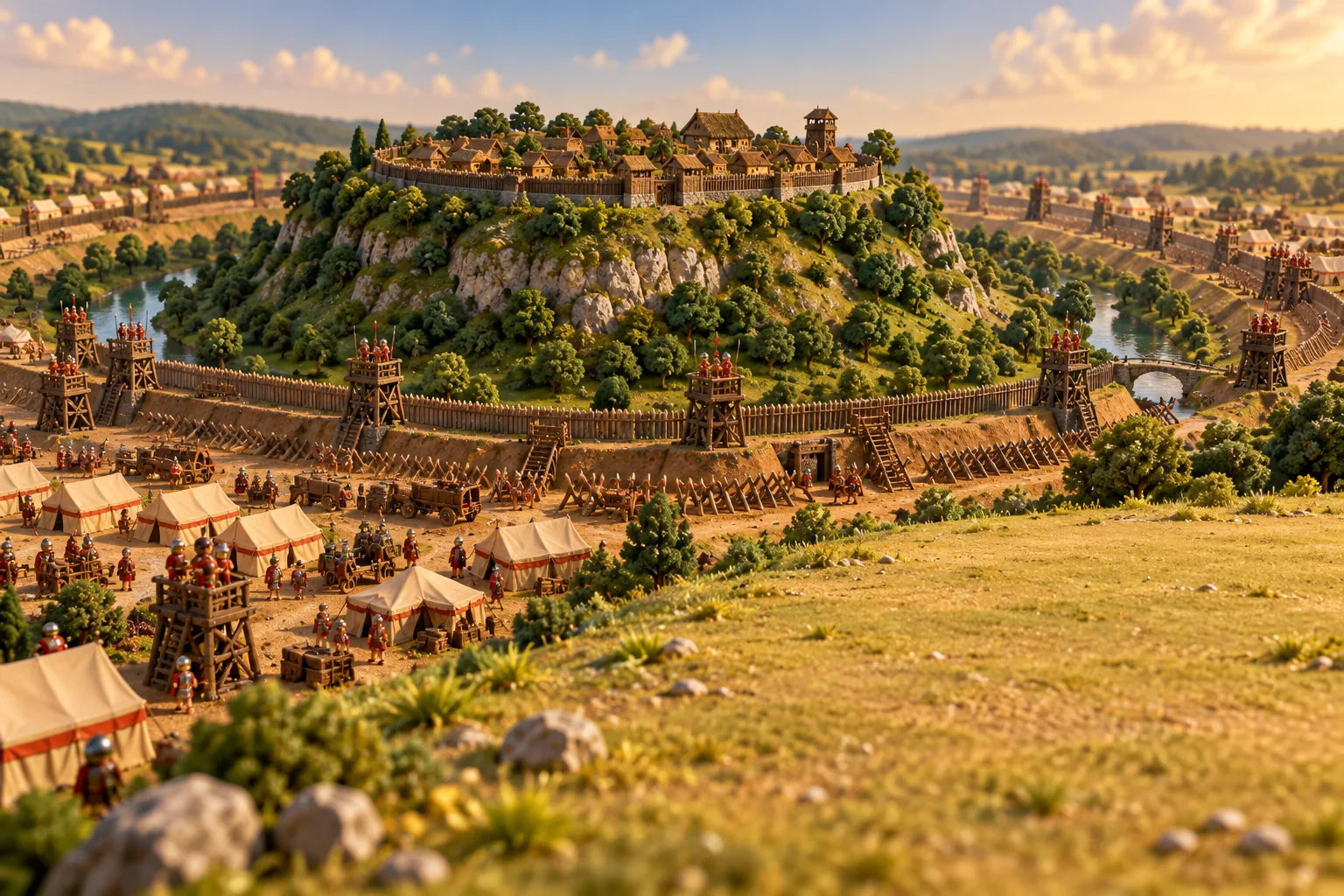
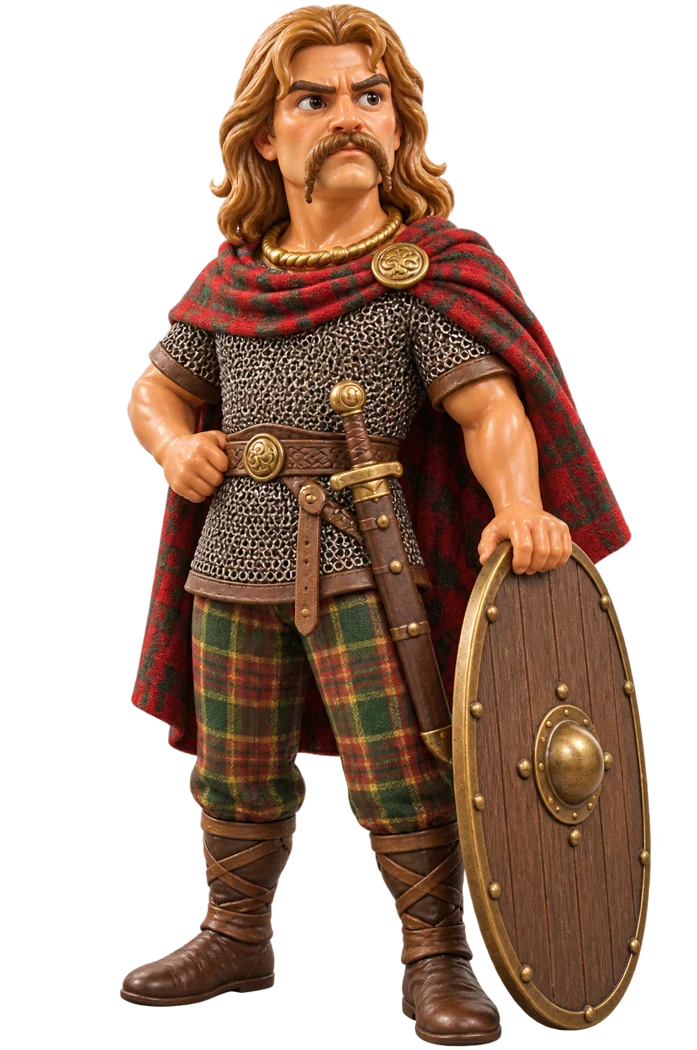
By 53 BC Julius Caesar had been conquering Gaul for five years, and he announced that it would now be treated as a Roman province. In 52 BC the Gallic tribes, usually divided, rose together under a noble of the Arverni, Vercingetorix. He beat Caesar at Gergovia, but after his cavalry was routed he withdrew with about 80,000 men to Alesia, a fortified town of the Mandubii tribe on a steep hill between two rivers. Caesar decided not to storm it but to starve it out.
His legions dug an inner ring of ditches and walls, about 16 kilometres long with 23 towers, to keep the Gauls in, guarded by sharpened stakes and hidden pits. Before the ring was closed, Vercingetorix sent his cavalry out to raise a relief army, so Caesar built a second ring facing outward, about 21 kilometres around. Food in Alesia ran out; the old, the sick, women and children were sent out of the town, but Caesar would not let them through, and they were left between the lines.
The Gallic relief army arrived and attacked the outer wall while Vercingetorix struck the inner one. The last great assault fell on a weak Roman camp on a hillside, and Caesar himself led fresh troops to throw it back. The relief army melted away. The next day Vercingetorix surrendered. He was later paraded in Caesar's triumph in Rome and executed in 46 BC.
Read more on Wikipedia


