Antiquity · war
Battle of Actium
In the middle of the battle that would decide who ruled Rome, Cleopatra's ships hoisted their sails and left, and Antony followed her.
By 32 BC the alliance between Octavian, Julius Caesar's adopted son, and Mark Antony had collapsed. Antony had left his wife, Octavian's sister Octavia, for Cleopatra, queen of Egypt, and Octavian persuaded Rome to see him as a threat to the Republic. In 31 BC Antony and Cleopatra camped at Actium on the west coast of Greece with a large fleet and army. Octavian's admiral, Marcus Agrippa, cut their supply lines to Egypt, and as the months dragged on, disease and desertion emptied Antony's camp. One of his generals, Quintus Dellius, went over to Octavian with the battle plans.
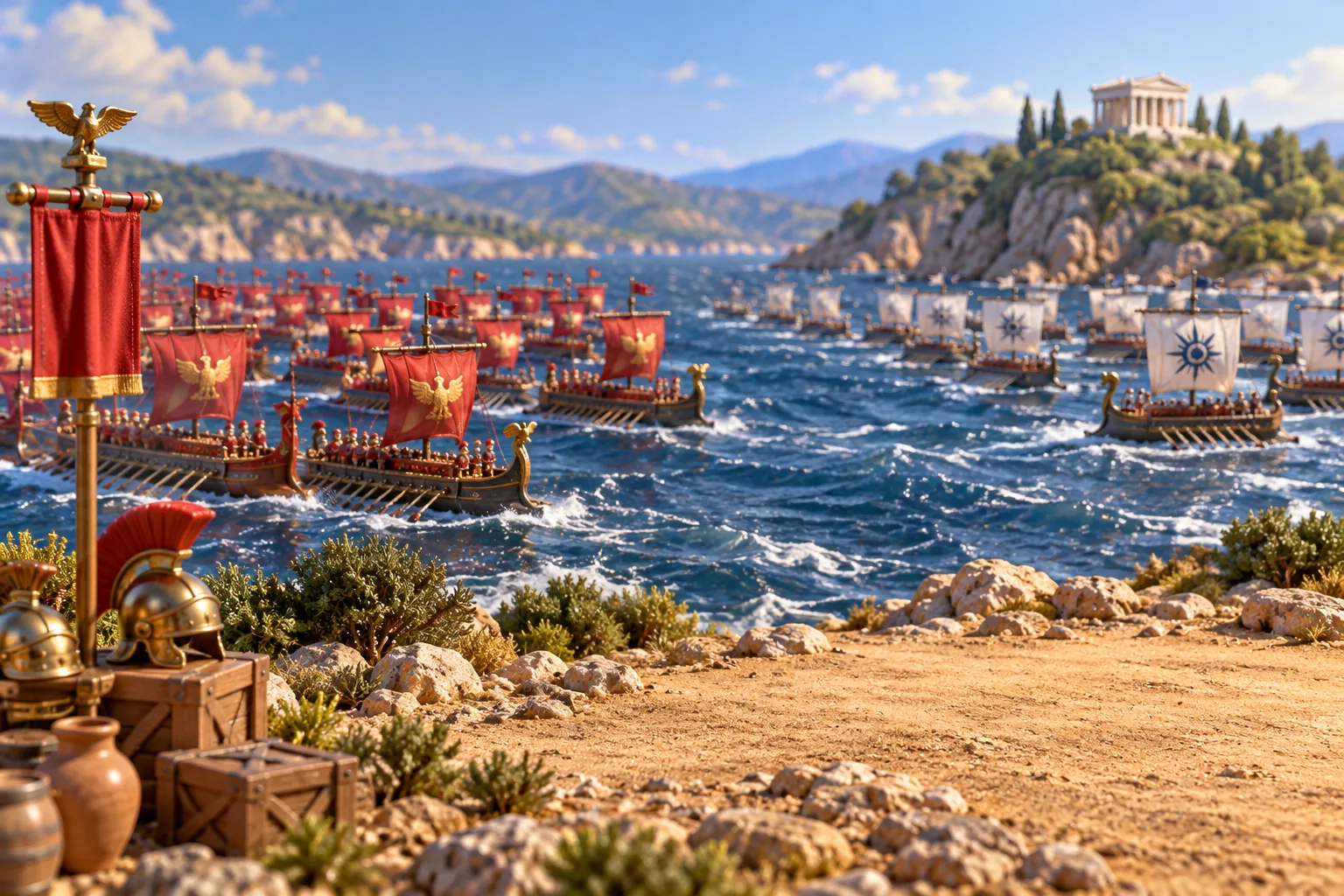
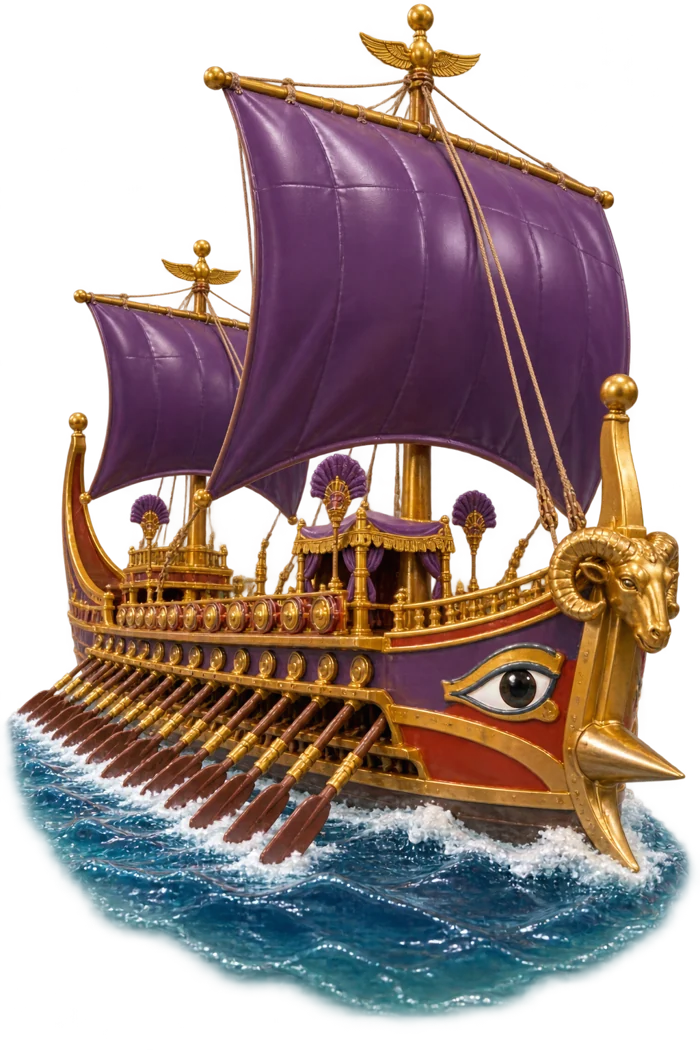
On 2 September Antony tried to break out. He could man only around 140 ships, big galleys with towers full of soldiers, against about 260 smaller, quicker ships led by Agrippa. The battle went on all afternoon without a decision. Then Cleopatra's squadron in the rear raised sail and caught a favourable breeze to the open sea. Antony followed in a smaller ship with a few escorts. Many of the ships left behind fought on until long after dark, as burning vessels lit up the bay.
Antony's army of some 19 legions deserted soon after. Octavian followed the couple to Egypt, and after his victory at Alexandria in August 30 BC both took their own lives. In 27 BC the Senate gave Octavian the title Augustus. Historians usually take this as the end of the Roman Republic and the start of the Empire.
Read more on Wikipedia


