Our time · war
Bangladesh Liberation War
A country whose two halves lay on opposite sides of India broke apart in nine months, and the eastern half became the world's seventh most populous nation.
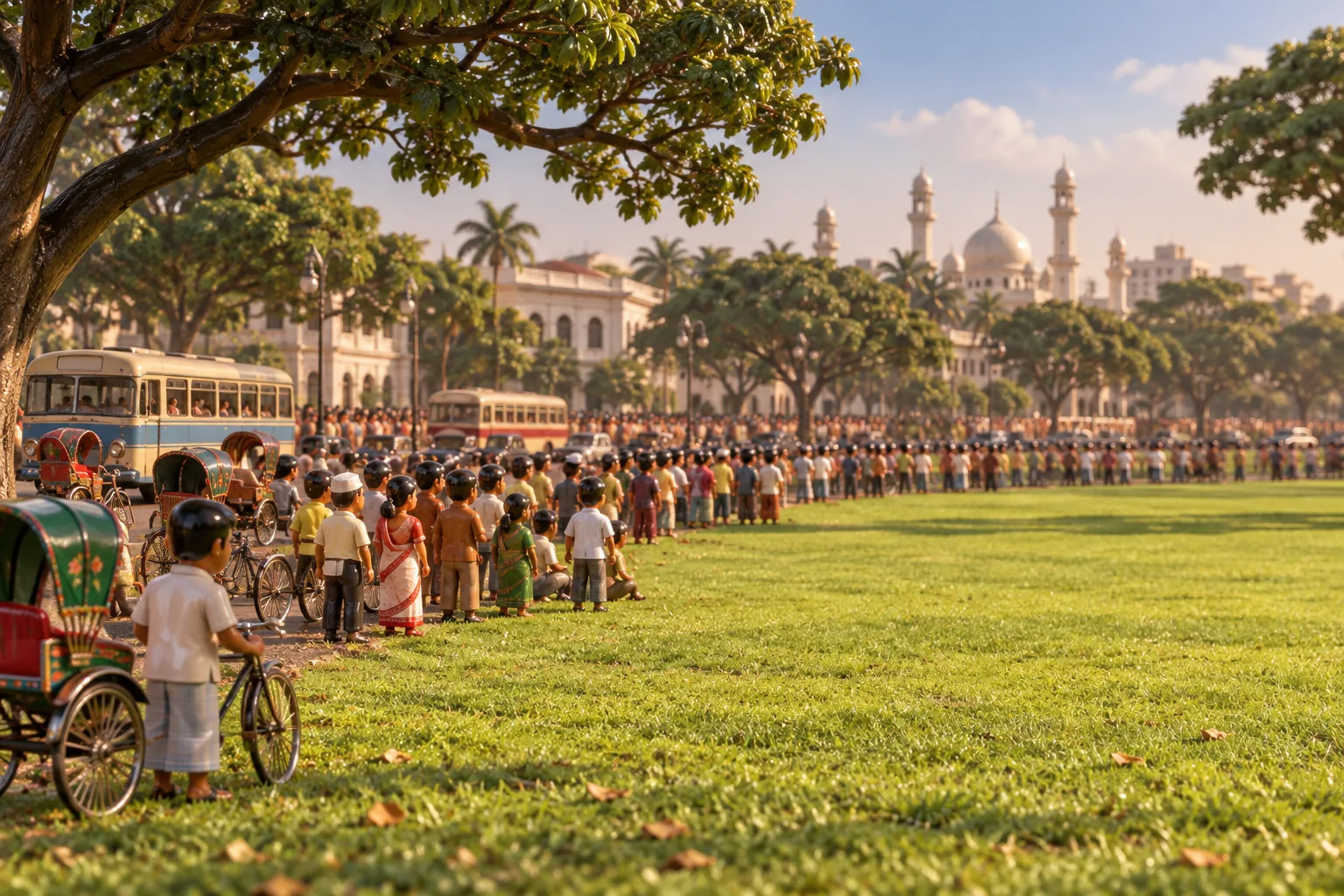
When Pakistan was created in 1947, its eastern wing in Bengal was separated from the western wing by India. More than half of all Pakistanis spoke Bengali, yet in 1948 Muhammad Ali Jinnah declared that Urdu alone would be the national language, and power stayed with the West and its army. In the December 1970 election Sheikh Mujibur Rahman's Awami League won 167 of East Pakistan's 169 seats and with them a majority in the whole national assembly, but the generals and western politicians would not hand over power.
On the night of 25 March 1971 the army of President Yahya Khan launched Operation Searchlight in Dhaka and arrested Mujib. The next day Major Ziaur Rahman read a declaration of independence on his behalf over a radio station near Chittagong, and 26 March is still Bangladesh's Independence Day. The army and allied militias killed an estimated 300,000 to 3,000,000 people, and some 10 million refugees fled to India, while Bengali fighters of the Mukti Bahini waged a guerrilla war.
India, led by Indira Gandhi, backed the guerrillas and entered the war on 3 December after Pakistani air strikes on northern India. Indian and Bengali forces advanced quickly on Dhaka, and on 16 December 1971 General Amir Abdullah Khan Niazi signed the surrender there. More than 93,000 Pakistani troops laid down their arms.
Read more on Wikipedia