Early modern · person
Babur
Driven from his homeland and three times from Samarkand, a Timurid prince with a far smaller army lashed 700 carts together on the plain of Panipat and won an empire in India.
Zahir ud-Din Muhammad, nicknamed Babur, from the Persian word for "tiger", was born on 14 February 1483 in Andijan in the Fergana Valley, the eldest son of its Timurid ruler Umar Shaikh Mirza II. Through his father he descended from Timur and through his mother from Genghis Khan. He took the throne of Fergana at twelve in 1494 and won Samarkand two years later, only to lose both; in 1501 the Uzbek prince Muhammad Shaybani defeated him.
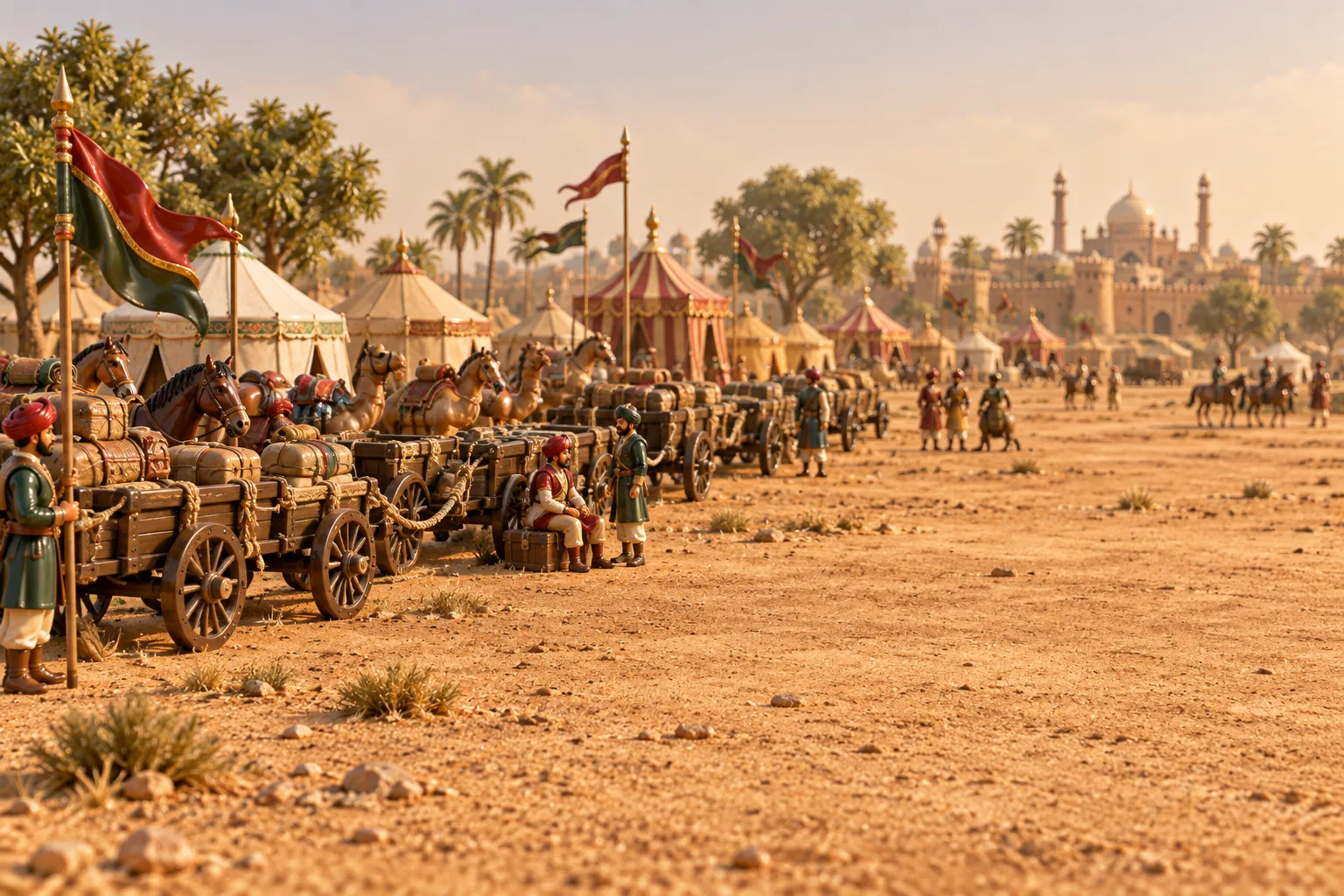
In 1504 the exiled Babur took Kabul. With help from the Safavid shah Ismail I he regained Samarkand in 1511 but lost it again, and then turned to India, invited by rebels against the Sultan of Delhi, Ibrahim Lodi. He reached Panipat on 20 April 1526 and faced an army of about 100,000 men and 1,000 elephants. In the battle that began the next day he lashed some 700 baggage carts together as a barricade, with guns directed by two Ottoman master-gunners behind it. Ibrahim Lodi died, ending the Lodi dynasty, and Babur took Delhi and Agra.
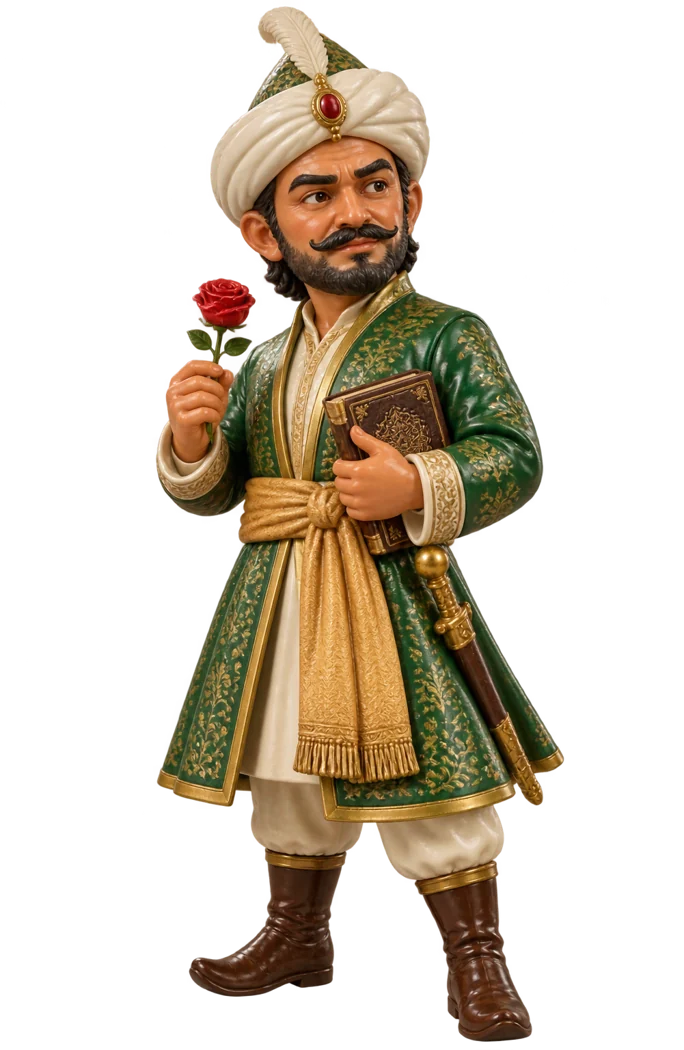
On 16 March 1527 he defeated the Rajput ruler Rana Sanga at Khanwa. A passionate gardener, he laid out the first four-part charbagh gardens of the north Indian plains on the Yamuna at Agra. He wrote his memoirs, the Baburnama, in Chagatai Turkic. He died at Agra on 26 December 1530; his son Humayun succeeded him, and his remains were later moved to Kabul as he had wished.
Read more on Wikipedia
Sources: en.wikipedia.org/wiki/Babur


