Early modern · state
Ayutthaya Kingdom
For four centuries one of Asia's great trading capitals, it was burned by a Burmese army in 1767 and abandoned as capital.
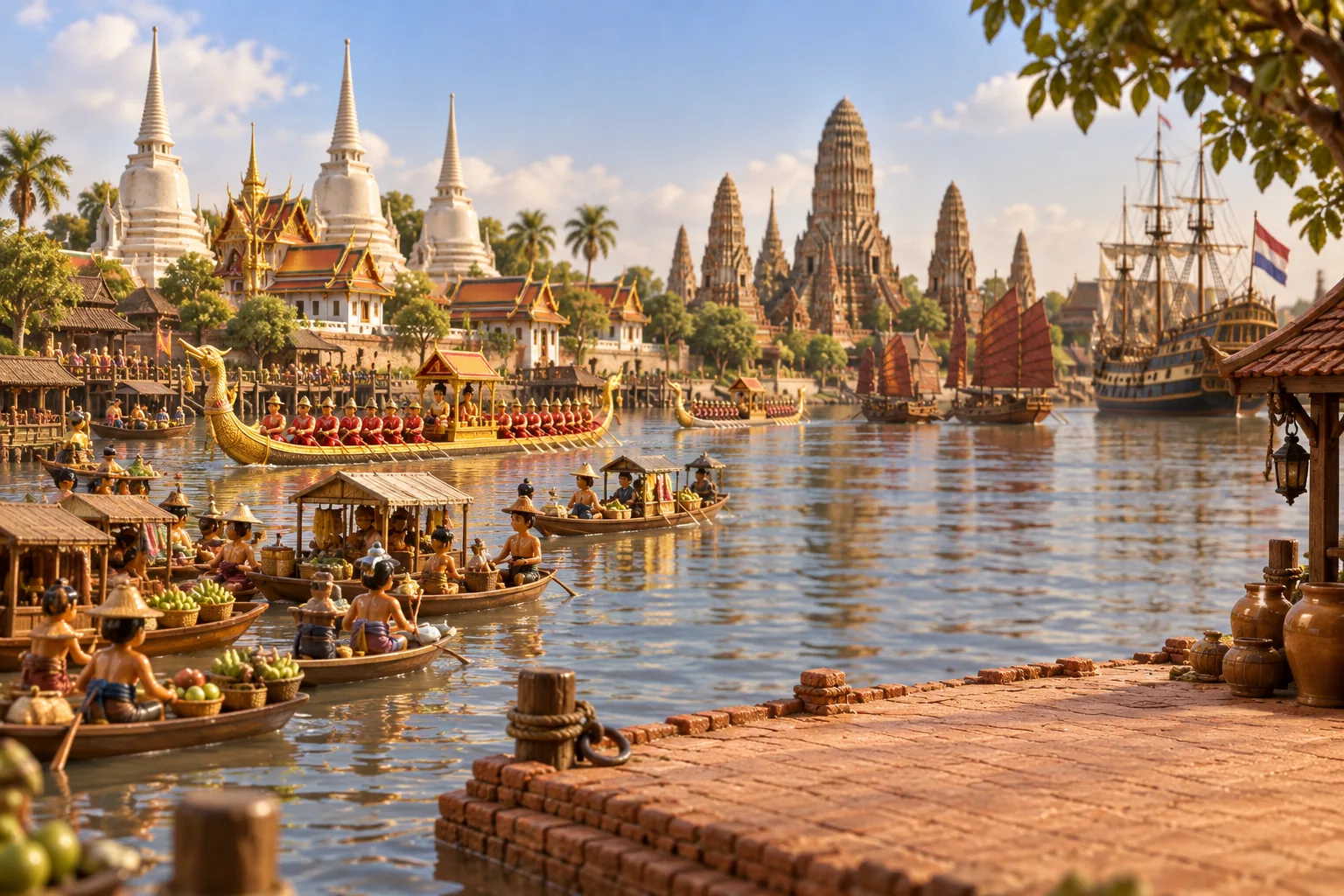
The date usually given for the founding of Ayutthaya is 4 March 1351, when a ruler remembered as U Thong brought four towns of the lower Chao Phraya valley under one crown. The capital took its name from Ayodhya, the city of Rama, by way of the Thai epic Ramakien, and Persian merchants called it the New City. European travellers of the early 16th century counted it among the three great powers of Asia, alongside Vijayanagara and Ming China.
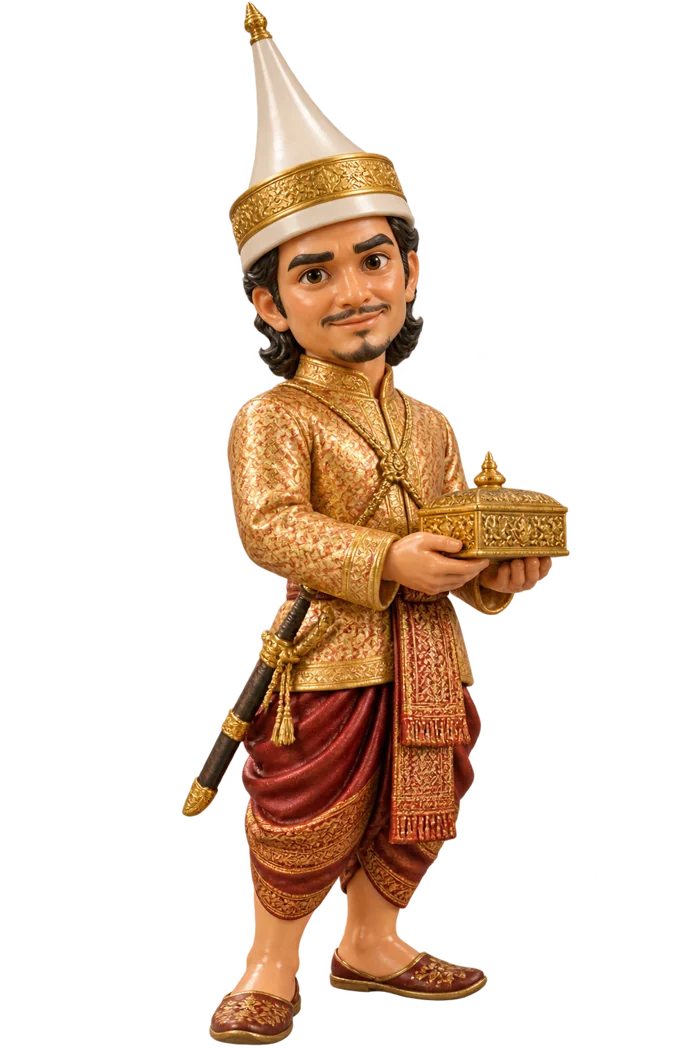
From 1569 to 1584 Ayutthaya was a vassal of Toungoo Burma, until Naresuan proclaimed its independence in May 1584. In the 17th century the city became a crossroads of trade, with Chinese, Persian, Dutch, Portuguese and Japanese merchants and mercenaries. King Narai, who reigned from 1657 to 1688, made the Greek adventurer Constantine Phaulkon his chief minister and sent an embassy to Louis XIV in 1686. When Narai fell ill in 1688, his elephant commander Phetracha arrested him and Phaulkon and took the throne.
Quarrels over the succession kept weakening the court. Armies of the Burmese Konbaung dynasty invaded in 1759–1760 and again from 1765. In April 1767, after a siege of 14 months, the city fell and was destroyed, ending a kingdom of 417 years. The general Taksin rallied the Siamese and set up a new capital at Thonburi, and within fifteen years power had moved to Bangkok.
Read more on Wikipedia

